

Winnipeg Youth Leader Says Muslim Female Athletes Face Gaps in Inclusion, Support

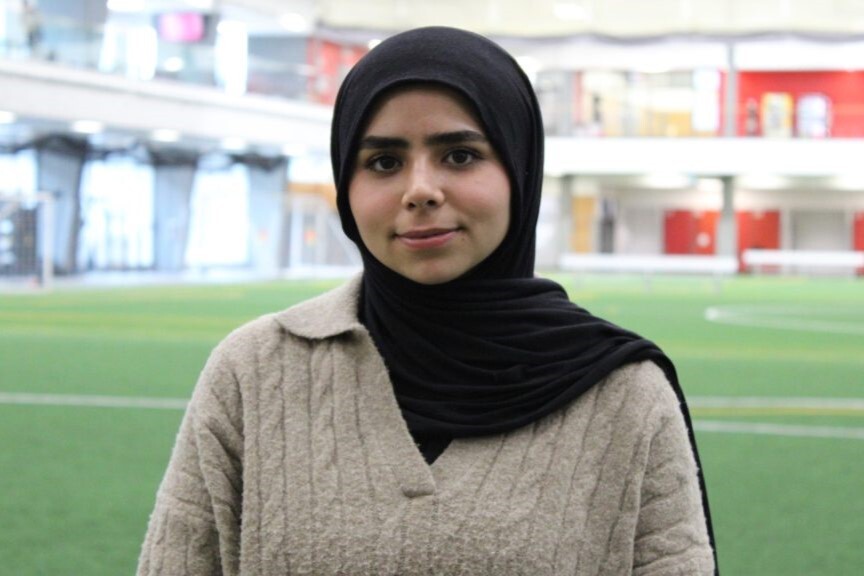
Samira Jahmoun, who works with the Winnipeg Newcomer Sports Academy, said newcomer athletes regularly struggle to find teams where their concerns are taken seriously, City News reported on Wednesday.
She noted that simple requests related to religious practice can be dismissed. She explained that some coaches are reluctant to adapt uniform requirements, pointing to situations where athletes say they cannot wear shorts for faith-based reasons.
“Sometimes it’s not completely accepted by coaches, when you go and approach: ‘hey, I can’t be wearing shorts, for example. It’s not part of my faith.’ Some of them are not willing to take it in,” she said.
Jahmoun said modest attire remains the most common barrier for Muslim women in sport, and the lack of flexibility discourages participation at an early age.
Read More:
She added that all athletes should feel welcomed in environments where they can compete comfortably, saying: “And, I think, it shouldn’t be that way. It’s very important especially for female athletes, regardless of their religion or their faith to be welcomed in sports the way they feel comfortable to be represented.”
The Winnipeg Newcomer Sports Academy recently published a report examining Islamophobia and exclusion in local sporting environments.
Founder Carolyn Trono said the study did not uncover explicit acts of Islamophobia but did highlight patterns of separation between Muslim teams and the broader sports community.
She said this isolation often prevents young athletes from feeling part of the wider system.
“Not feeling welcome, not feeling comfortable, not feeling like the environment is set for them,” she said, adding that this separation results in Muslim and non-Muslim teams operating independently, with little interaction.
Read More:
As part of the research, the academy organised joint activities to bring both groups together.
Trono said these sessions helped reduce misconceptions and encouraged new connections.
She noted that one participant even went on to join a curling club, saying the experience broadened perspectives.
“It makes our worldview expand a little bit. And friends were made. One woman from that group joined a curling club. And you go: ‘oh!’”
Source: Agencies
