


Rise in Demand for Quran Translations in Swedish after Quran Desecration
IQNA – Following an incident of Quran desecration in front of the Stockholm Grand Mosque, demands to buy translations of the Holy Quran in Swedish have increased significantly.
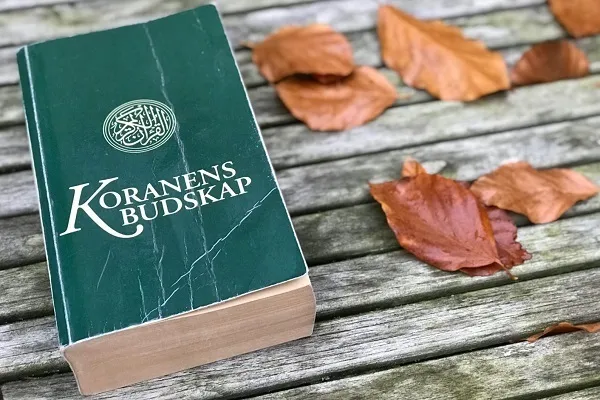

According to a report by Alkompis, after the Quran burning in front of the Stockholm Grand Mosque, requests to purchase a translation of the Holy Quran in Swedish increased significantly, and perhaps this is one of the positive effects of this tragic incident in Sweden.
There have been several Quran translations in Sweden over the years, and many people have made great efforts to present the concepts of the Holy Quran to the Muslims of the European country.
Currently, there are 8 different translations of the Holy Quran in Swedish, the first translation being done in the 18th century and the last in the past few years.
It came out after the establishment of the Scandinavian Education Foundation on December 3, 2022, which took steps towards translating the Holy Quran.
Read More:
Each translation of the Quran into Swedish has its own differences from the other, and it is surprising that more than half of the existing translations were made by non-Muslim Swedes and followers of other religions, including Judaism and Christianity, because they were very interested in learning about the Quran and also felt responsible for their community, so they translated the Holy Quran into Swedish and published it.
Qurans translated by Swedish orientalists
1. The first famous translation of the Quran was made by Bishop Johan Adam Tingstadius (1748-1827), but it was never published.
2. The first published translation into Swedish was made by Johan Fredrik Sebastian Kronstolp (1801-1882), which was published in 1843.
3. Between 1873 and 1874, Carl Johan Turnberry (1807-1877) presented a new translation.
4. In 1917, a complete translation of the Quran into Swedish was published.
5. In 1961, a Swedish translation of parts of the Quran by Ake Ollmark was published.
6. A new translation of the Quran with commentary, Koranen Budeskap or Messages of the Quran, was published in 1998 by former Swedish diplomat Mohammed Knut Brannström, followed by a second edition in 2000.
This Swedish translation is distinguished from other translations by receiving official approval from the Department of Islamic Research, Writing and Translation at Al-Azhar University.
In addition to the commentary, Brannström also included the original Arabic text of the Quran. This translation contains many commentaries, footnotes and explanations that contradict Islamic teachings.
Dr. Abdullah Al-Suwaidi, a graduate of the Islamic University of Medina, has described in detail the doctrinal errors in this translation in his master’s thesis.
7. Another translation into Swedish was done by Quneita Sadaqah, entitled “The Holy Quran”. In this translation, each page is divided into two columns, with the left column containing the translation of the Quran in Swedish and the right column containing the text of the Quran in Arabic.
8. The Scandinavian Education Foundation also published a translation entitled DEN ÄDLA KORANEN in 2022, which is the latest translation of the Holy Quran in Swedish.

How is the Quran translated?
Jan Eyarpe, a professor of the history of religions in Sweden, says, “The main duty of a believer in his religious life is to recite the Quran with humility from its Arabic text with Tajweed. Therefore, the text of the Quran, which is written in Arabic script, is a sacred text.”
The Holy Quran is recited in Tarteel and in eloquent Arabic on various occasions, but most Muslims in the world do not understand it although it has amazing beauty. The text of the Quran must be translated and interpreted in order to be understood.
In an article titled “Translating the Quran into Swedish”, published in 2005, Christopher Toll took a comprehensive look at the history and personalities who translated the Quran into Swedish. Academic articles and theses in Sweden also looked at parts of the Quran translated into Latin or Swedish.
From the end of the 18th century to the first decades of the 19th century, these theses formed the basis of a number of master’s theses and were used by a very limited group of teachers and students.
The Arabic language articles were related to the subject of Oriental languages (which also included Greek), and Arabic was essential for comparison with the Semitic languages, especially Hebrew and Syriac, which were used for the interpretation of the Bible and the study of church bishops.
Complete translations of the Quran into Latin, English, German and French were available to the public. In the field of Quranic studies, the Latin translations made by Ludovico Marracci in 1698 were also of great importance for a very long time.
Over time, the Swedish government showed greater interest in Oriental studies, culminating in the International Oriental Conference in Stockholm, which was held with the participation of King Oscar II in 1889.
At the same time, universities began to take a broader approach to the field. During this period, Carl Johannes Thornberg, professor of Oriental languages at Lund University, published his Swedish translation of the Holy Quran in pamphlets in 1873–74.
Thornberg had been closely associated with European Orientalists in the mid-19th century. He made some interpretative additions to the original text of his translation, which contained precise and close interpretations of the Quranic text, and also added explanations.
Zetterstéen’s translation
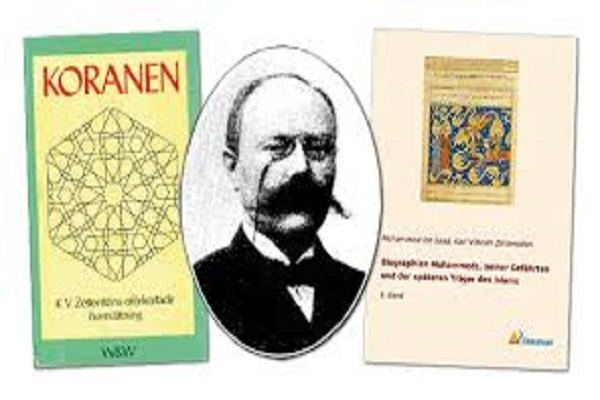
Karl Vilhelm Zetterstéen, professor of Oriental languages at Lund University from 1895 to 1904, and then professor of Semitic languages at Uppsala until 1931, produced a remarkable translation.
Translations of the latter half of the 20th century
Ake Ullmarks rewrote a translation of parts of the Quran in 1961 based on Ludwig Ullmann’s German translation of 1840. These translations are unreliable to a considerable extent.
A Swedish translation was also produced in 1988 based on the beliefs of the Ahmadiyya, reflecting their interpretation of the Quran’s content, and having a limited audience. Swedish Islamic authorities consider it heretical or un-Islamic.
Sweden now has a large population of Muslim background, which was not the case in the 20th century. A translation of the Quran into Swedish, which is now highly secular and at the same time multi-religious, has a different audience.
Bernström, a Swedish diplomat, has served twice as ambassador in Madrid and Rabat. Bernström, who converted to Islam in the mid-1980s, saw society in need of a new translation of the Holy Quran into Swedish. When Zetterstéen began translating the Quran in the 20th century for students and scholars, Bernström wondered how modern Muslims could understand the concepts of the Quran, which originated in the 6th century in the Arabian Peninsula. Bernström’s target audience was Swedish Muslims.
Read More:
Bernström’s religious upbringing further explains this problem. He was born in 1919 into a Protestant-Catholic family and converted to Catholicism at a young age. But in the 1960s, when the Second Vatican Council chose the motto “to update,” Catholicism became problematic for him. This motto conflicted with the idea that religion was something fixed and permanent.
Bernström’s stay in Morocco was very important. He found there the permanence of Islam and the Quran, and its Arabic text, which is eternally sacred. But how could he understand this sacred text?
The book “The Message of the Quran” by Muhammad Assad (a convert from Judaism to Islam) in 1980 greatly helped Bernström in translating the Quran. In “The Message of the Quran”, Assad provided an edited and completed commentary.
According to Jan Eyarpe, a Swedish professor of the history of religions, this is not a translation, but a rewriting.
4324613
