


Cleric Names Nine Prophetic Community Traits Based on Surah al-Fath
IQNA – A senior Iranian scholar has outlined nine characteristics of the Prophet’s (PBUH) community as described in Surah al-Fath, highlighting their relevance for contemporary Islamic societies.
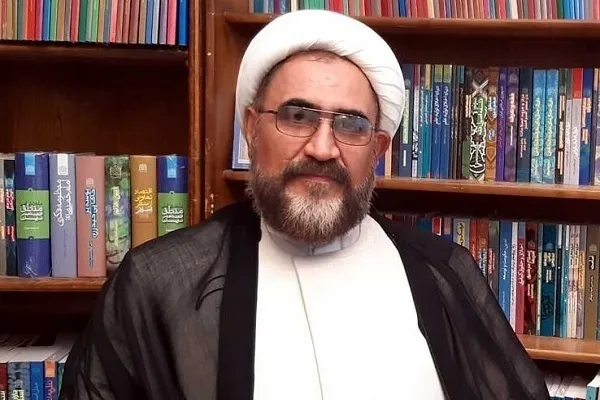
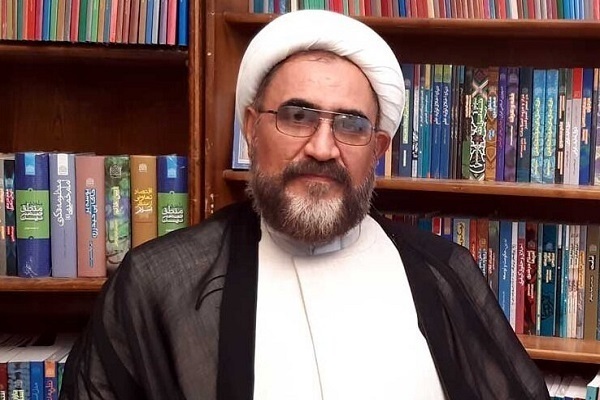
At a scholarly forum in Qom, Hojat-ol-Islam Mohsen Mohajernia, head of the Tolou-e-Mehr Institute for Islamic Revolution Studies, discussed the closing verse of Surah al-Fath (48:29).
Mohajernia, who also serves on the board of the Iranian Association for Quran and Transformation of Knowledge, said verse 29 presents a compact model of the prophetic community across political, social, spiritual and economic dimensions.
He identified the first criterion as a firm approach in foreign policy, reflected in the phrase “hard against the faithless.”
He said the second feature is inner solidarity and compassion—“merciful amongst themselves”—noting that a religious society is “not merely a collection of good individuals but a single interconnected whole built on affection and mercy.”
Read More:
The third criterion, he argued, is widespread spirituality grounded in the phrase “You see them bowing and prostrating,”. In an ideal society, he said, citizens cultivate a deep relationship with God, and this collective devotion shapes the moral character of the entire community. Many social problems, he added, arise from individuals not being spiritually nurtured.
Mohajernia described a God-centered economic outlook—“seeking grace from Allah”—as the fourth trait. This does not negate effort, he said, but expresses the belief that ultimate outcomes rest with God and should not depend on submission to non-divine powers.
The fifth criterion is pursuit of divine satisfaction. He said a society shaped by favoritism, deception or corruption “can never be an Islamic society,” emphasizing that seeking God’s pleasure must permeate all aspects of life.
Turning to the sixth trait, Mohajernia argued that the verse “Their mark is on their faces, from the effect of prostration,” refers to an inner radiance, not physical calluses. He said the Quran speaks of sincerity and illumination that emerge from genuine worship.
Read More:
The seventh feature, based on the promise of “forgiveness and a great reward,” is belief in the Hereafter. Hope in divine mercy and accountability, he said, prevents arrogance and motivates continuous effort.
He identified firmness and rootedness—also mentioned in the Torah—as the eighth trait.
The ninth is organic growth and independence, described in the parable “like a crop that puts forth its shoot… then it stands firm on its stalk.” This, he said, represents a community that grows from within rather than relying on borrowed strength.
Mohajernia noted that Surah al-Fath offers “a complete image of a renewed Islamic civilization”—one that is resilient outwardly, compassionate inwardly, self-reliant and spiritually anchored—and argued that its principles can guide modern governance and social behavior.
