


Official Highlights Popular Nature of Arbaeen Procession
IQNA – An Iranian official emphasized the popular nature of the Arbaeen procession and said governments and official institutions only facilitate and support the organization of the annual event.
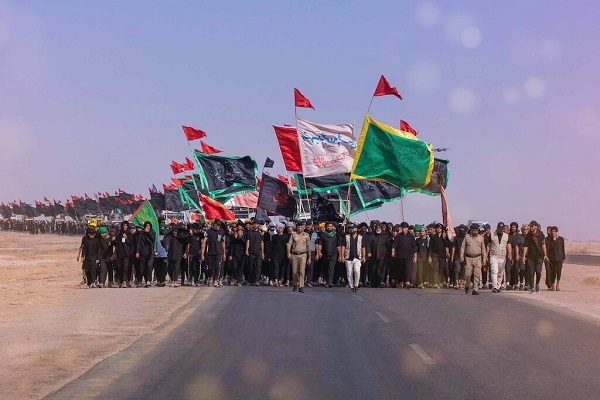
Ali Akbar Pourjamshidian, deputy minister of interior for security and law enforcement and head of the Arbaeen Central Headquarters, made the remarks at the closing ceremony of the fifth International Congress of Arbaeen Cultural Activists held in Mashhad.
He expressed his gratitude to the organizers of the congress and emphasized the strategic position of Arbaeen as a great cultural, popular, and global movement.
Pourjamshidian said the Arbaeen procession is essentially a cultural movement and that all service, security, and administrative measures related to Arbaeen must have a cultural attachment.
He said this view is the main strategy of the Arbaeen Central Headquarters in the Islamic Republic of Iran, a view that, according to him, is also being followed seriously in Iraq as well.
Referring to the popular nature of the Arbaeen movement, he added, “The role of governments and official institutions is simply to support popular movements and there is no intervention in this great movement, although without the infrastructural, security, and logistical support of governments, it would not be possible to hold this ceremony safely and in an orderly manner.”
Highlighting the unprecedented security of Arbaeen procession in 2026, the official said that despite concerns arising from regional developments and the 12-day imposed war, this year’s Arbaeen was held in Iran and Iraq in the safest and most secure way possible, and not a single security incident was recorded, a matter that is the result of close interaction between the security and military institutions of Iran and Iraq.
Read More:
Pourjamshidian considered the Arbaeen pilgrimage to be beyond geographical and religious borders and said, “Arbaeen does not belong only to Shias or the people of Iran and Iraq, but rather is a global movement in which followers of different Islamic sects, divine religions, and nations from Asia, Africa, and the Caucasus are present, and this great capacity can pave the way for regional cohesion and even sustainable security in West Asia.”
Emphasizing the unique unity under the banner of Imam Hussein (AS), he stated, “On the path of Arbaeen, all political, cultural and religious tastes come together, and even in Sunni areas and among religious minorities such as Armenians and Assyrians, unique manifestations of service and love for the pilgrims of Imam Hussein (AS) are observed.”
Elsewhere in his remarks, the deputy interior minister considered one of the important missions of the Arbaeen congresses to be the scientific explanation of the Arbaeen slogan, saying the slogan must be formulated based on in-depth research and with the participation of the countries of the resistance axis, especially Iran and Iraq, so that the global message of this great movement can be conveyed correctly.
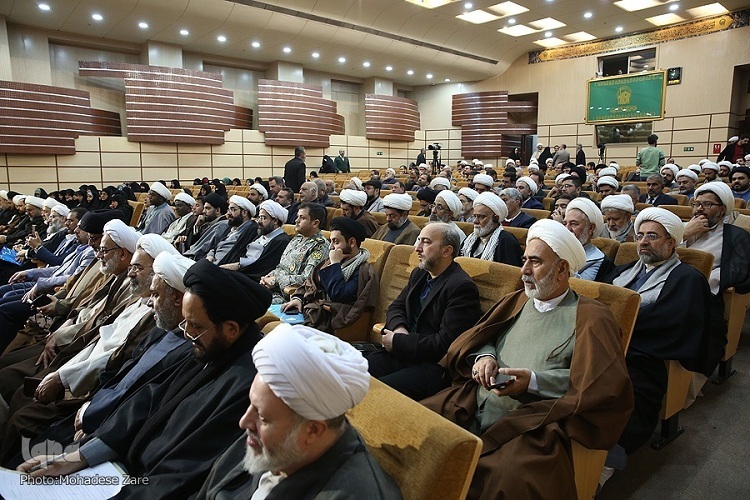
He also expressed special appreciation to the officials, scholars, custodians of the holy shrines, and the generous people of Iraq, and said the policy of the Islamic Republic of Iran on Arbaeen is non-interference in the administrative affairs of Iraq and complete transfer of the management of the ceremony to the government and people of this country, and Iran will only provide sincere support upon request.
He further noted that in the 2026 Arbaeen, about 3.8 million Iranian pilgrims participated in the procession, which is a four percent increase compared to the previous year.
Read More:
He said the planning of the Arbaeen Central Headquarters for the coming years is to prepare for a 5 to 10 percent increase in the number of pilgrims.
At the end of his address, Pourjamshidian emphasized the strategy of easy, cheap, safe, and dignified travel for Arbaeen pilgrims, and said the first priority of the Arbaeen Central Headquarters is maintaining a cultural perspective on this great movement.
The Arbaeen mourning ceremony, which fell on August 14 this year, is one of the largest religious gatherings in the world.
It marks the 40th day after Ashura, the martyrdom anniversary of the grandson of Prophet Mohammad (PBUH), Imam Hussein (AS).
Each year, a huge crowd of Shias flock to Karbala, where the holy shrine of Imam Hussein (AS) is located, to perform mourning rites.
The pilgrims, mainly from Iraq and Iran, travel long routes on foot to the holy city.
4323855
