


‘No Place for Islamophobia’: Banner at Indian University Ceremony Slams Hijab Discrimination
IQNA – A protest banner unveiled during Jadavpur University's convocation in Kolkata, India, has brought allegations of Islamophobia to the fore, specifically claims that Muslim students were asked to remove their hijabs during examinations.
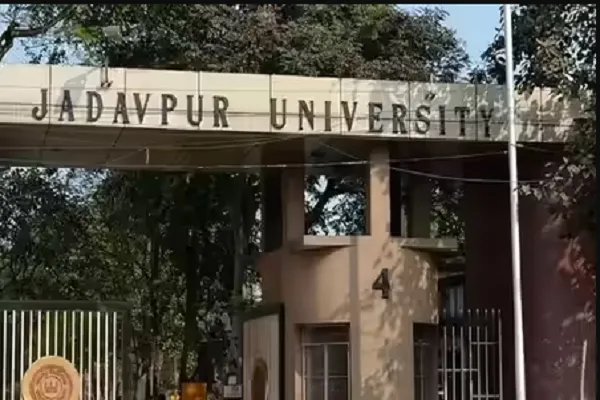
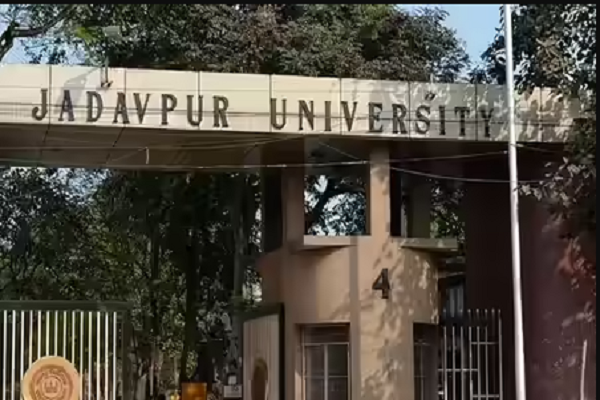
The silent but powerful protest against alleged Islamophobia unfolded on the stage of Jadavpur University during its annual convocation, as a banner reading “There is no place for Islamophobia in Jadavpur University” was displayed in full public view.
The banner was aimed at drawing attention to a recent incident involving Muslim women students and their hijab, which has caused deep anger and fear among students on the campus. The protest was led by first-year postgraduate students of the English department, who were attending the convocation to receive their graduation degrees.
Students said the protest was not planned to disrupt the ceremony but to make sure their voices were seen and heard at a time when the university leadership, faculty, and guests were present.
According to students, the issue began during an undergraduate examination when Prof Saswati Haldar allegedly asked two third-year Muslim students to remove their hijab in the final hour of the exam. The students said the teacher accused them of cheating and suspected they were using earphones.
They said the checking process consumed the last part of their exam time, directly affecting their performance.
“The students were forced to remove their hijab in front of everyone in the class, including male students,” said Jahit Khan, a student of international relations at Jadavpur University. “This was deeply humiliating and hurt their dignity.”
Students further said that when a student objected, she was taken to another room and asked to remove her hijab in private. Even there, she faced repeated questions about her religious practice.
“Prof Haldar kept asking her why she wears the hijab and whether she wears it at home,” Jahit Khan said. “He even asked if she felt suffocated because of it. This shows a clear bias against Muslim women and their faith.”
Another Muslim student was asked to remove part of her hijab in a separate exam room. Students said both students only lifted a small section of their hijab to show they were not using earphones.
The students later submitted a written complaint to Vice-Chancellor Chiranjeeb Bhattacharjee. In the letter, they accused the teacher of targeting Muslim students and creating an atmosphere of fear and shame.
“We want the monitoring to be sensitive and fair, respecting different religious and cultural customs and dress codes,” the students wrote in their complaint. “No student should feel unsafe or singled out because of their faith.”
Read More:
Several attempts to contact Prof Haldar for his response went unanswered.
The students said many Muslim women are now afraid of retaliation and worry that speaking out could harm their academic future. They stressed that the issue is not about exam checks but about the way Muslim identity was treated.
While confirming that the complaint had been received, the vice-chancellor said, “We are investigating the matter.”
Faculty members of the English department denied the allegations. They said the checks were carried out after recent incidents of copying using hidden headphones and were not aimed at any one community.
A senior faculty member claimed that students from different backgrounds were checked and that some hijab-wearing students, including one with special needs, were not asked to remove their hijab.
Teachers also expressed anger over the protest. One senior professor said that allegations of Islamophobia against staff could affect their ability to work freely. Faculty members insisted that no action was driven by religious prejudice.
Students, however, rejected this claim and said the experience of Muslim students cannot be dismissed so easily.
“This is not just about rules,” a student said. “This is about respect, dignity, and the right of Muslim students to study without being shamed for who they are.”
Read More:
The protest took place on the same day as the 68th annual convocation of Jadavpur University, which was presided over by West Bengal Governor and Chancellor of State Universities C V Anand Bose. More than 4,400 students received degrees and certificates during the ceremony.
For many Muslim students, the banner on the convocation stage was a reminder that academic success cannot hide the daily struggles faced by minorities. They say the university must send a clear message that discrimination, especially against Muslim students, will not be tolerated.
Source: clarionindia.net
