


Ayatollah Mesbah Yazdi’s Contribution to Contemporary Iranian Philosophical Thought
IQNA – Ayatollah Mohammad Taqi Mesbah Yazdi can rightly be described as a “time-conscious philosopher” who pursued philosophy not as a static body of doctrines, but as a dynamic, living tradition.
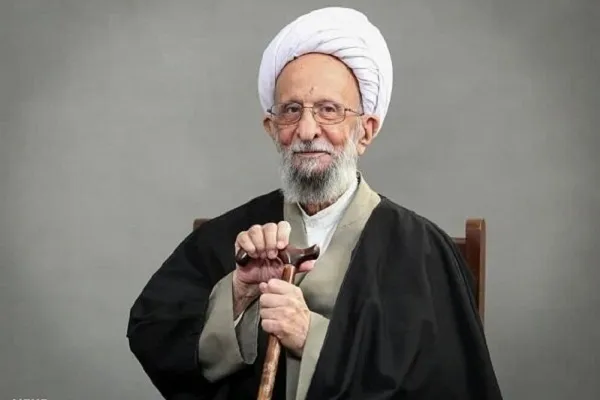

In this way, he played an effective role in the expansion and development of philosophical thought in Iran, Professor Mohammad Fanaei Eshkevari added.
In an address to the World Conference on the Islamic Humanities, held in Tehran on December 30, 2025, Professor Eshkevari highlighted different aspects of Ayatollah Mesbah Yazdi’s thought and his contribution to philosophical thought in Iran.
Here is an overview of the lecture:
Ayatollah Mohammad-Taqi Mesbah Yazdi is regarded as a distinguished philosopher and a prominent exemplar of authentic Islamic philosophical thinking in the contemporary era. He can rightly be described as a “time-conscious philosopher” who pursued philosophy not as a static body of doctrines, but as a dynamic, living tradition. In this way, he played an effective role in the expansion and development of philosophical thought in Iran. His engagement with philosophy has multiple dimensions which, taken together, present a complete picture of an influential contemporary philosopher.
From Study to Ijtihad
He began his study of Islamic philosophy under great masters such as Allameh Tabataba’i, and through extensive and profound study continued this path to the level of ijtihad (Independent Scholarly Reasoning) and innovation in philosophy.
Ijtihadi and Critical Teaching
Ayatollah Mesbah was a highly capable teacher of traditional and demanding philosophical texts. He taught major philosophical works such as Ilahiyyat al-Shifa, Burhan al-Shifa, al-Asfar al-Arba‘a, and Nihayat al-Hikmah. In addition to clarifying difficult passages, he engaged in deep analysis and substantive critique of their contents. This approach shaped what can be known as his “ijtihadi–critical method of teaching.”
Commentary and Interpretation of Philosophical Texts
His analytical and critical style of teaching provided the foundation for writing detailed and systematic commentaries on classical texts of Islamic philosophy, such as al-Shifa, al-Asfar, and Nihayat al-Hikmah.
Theory-Building and Innovation
He was not merely a teacher and commentator, but a creative and independent thinker. While drawing upon the legacy of earlier philosophers, Mesbah Yazdi did not adhere imitatively to any one of them. Relying on rational argumentation, he critically examined the views of Ibn Sina, Suhrawardi, and Mulla Sadra, and at times presented independent theories of his own. This critical and ijtihadi spirit, especially in the fields of epistemology, ontology, and philosophical anthropology, led to numerous innovations that some scholars have described as constituting an “independent philosophical intellectual system.”
Read More:
Critique of Western Philosophy
In addition to his mastery of Islamic philosophy, Ayatollah Mesbah was familiar with Western philosophy and undertook the critique and examination of views and fondations of certain schools, such as Marxism and positivism.
Comparative Philosophy
His command of Islamic philosophy and familiarity with Western philosophy provided the groundwork for his engagement in the field of “comparative philosophy.” He examined many issues—such as epistemology and moral philosophy—comparatively across these two intellectual traditions.
Pioneering the Expansion of “Applied Philosophies”
One of the distinguishing features of Ayatollah Mesbah’s intellectual legacy is his attention to “applied philosophies” and to the “social extension of philosophy.” Through authoring works in areas such as moral philosophy, philosophy of history, law, politics, education, and management, he demonstrated that Islamic wisdom can have concrete applications in individual and social life and can respond to the intellectual needs of contemporary society.
Read More:
Integrating Philosophical Rationality and Religious Knowledge
Another distinctive aspect of his thought was his “simultaneous ijtihad in philosophy and religious sciences.” With deep mastery of Islamic teachings, he used philosophical reasoning to achieve a more precise understanding of religion, and drew upon revealed teachings to correct and deepen the philosophical system. This method offers a model of “integrated religious rationality,” in which these two sources of knowledge benefit from one another without either being sacrificed; rather, they converge and complement each other.
Public Education in Philosophy
Through writing works such as "Teaching Philosophy" in clear and accessible Persian and employing modern pedagogical methods, Ayatollah Mesbah elevated the teaching of philosophy. This made philosophical education accessible to a wide range of interested readers and opened a new path for philosophy instructors after him.
A Model for Philosophical Practice in the Contemporary Age
Taken together—ijtihadi teaching, critical commentary, innovative theory-building, comparative philosophy, expansion of applied philosophies, integration of philosophical thinking with religious ijtihad, and the development of philosophical education—these dimensions present a unified image of a “fully accomplished philosopher.” Ayatollah Mesbah Yazdi was not only an outstanding teacher and thinker, but also a “successful model” for students of philosophy, practicing philosophers, and all those interested in reviving critical, profound, and time-conscious thought within the context of Islamic civilization. His intellectual legacy shows that Islamic philosophy, through engagement with other fields of knowledge and attention to the concrete issues of life, can be a dynamic, influential philosophy capable of responding to the challenges of the contemporary world.
