


Quranic Course in Brazilian Islamic Center Strengthens Children’s Connection to Faith
IQNA – The Islamic Center of Vila Cajon in São Paulo, Brazil, has provided a family-friendly environment alongside education for children participating in the “Quran and Hadith Course 2026”.
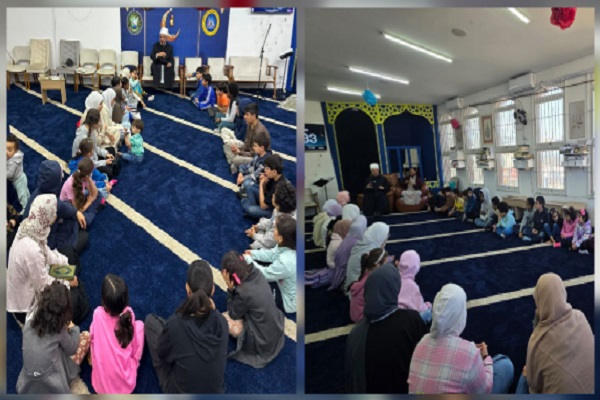
According to the Muslimsaroundtheworld website, in societies where Muslims are a minority, the effort to preserve Islamic identity does not begin at the doors of mosques, but in the hearts of children. As cultural influences spread and educational environments become more diverse, teaching the Quran and Islamic values to new generations has become a shared daily responsibility between families, mosques, and Islamic centers.
In Brazil, the largest country in Latin America by area and population, this message is clearly embodied. Mosques and Islamic centers have become comprehensive educational centers whose mission goes beyond the mere performance of religious rituals. They focus on building the character of the Muslim child, strengthening their connection to their faith, and creating a strong bond between families and their children in a faith-based environment that combines education, character development, and social interaction.
In a unique initiative since the inception of the “Quran and Hadith Annual Course,” the Vila Cajon Islamic Center in São Paulo has introduced a weekly system to honor children participating in the “Quran and Hadith 2026 Course.” The goal of the initiative is to create a supportive environment that encourages them to be diligent and disciplined in memorizing the Holy Quran and learning the Sunnah of the Holy Prophet (PBUH). The initiative is part of a course that the center organizes annually during the school holidays in July.
The course is part of a comprehensive educational project overseen by Abdulhamid Mutawali, president of the Vila Cajon Islamic Center. The project aims to use the school holidays to consolidate Islamic identity, strengthen children’s connection to the mosque, and involve parents in the educational process in a comprehensive environment based on faith and community.
Abdul Hamid Mutawalli, the president of the center and the supervisor of the “Quran and Hadith Course 2026,” explained in a statement that the most distinctive feature of this year’s course is the introduction of a weekly recognition system for outstanding children instead of a single ceremony at the end of the course. He emphasized that this initiative has helped foster a positive competitive spirit among the children, increase their commitment and attendance, improve their memorization skills, and instill positive behavior.
He explained that the recognition is held at the end of each week, on Fridays, in a cheerful atmosphere. Cash gifts and prizes are distributed to the outstanding children along with sweets, creating a happy and festive atmosphere for all participants. He added that the selection of those to be recognized is based on three main criteria: consistent attendance and punctuality, good behavior and ethics, and adherence to the etiquette of the learning circle, as well as the level of retention, understanding, and mastery.
He added that seeing peers receiving awards and gifts at the end of each week motivates the children to work harder, hoping to be recognized the following week. This is clearly reflected in their attendance and commitment, good behavior in study circles, and their level of retention and mastery.
He said the impact of this experience was not limited to the participating children; it encouraged other children to enroll in the course and encouraged more families to ensure their children’s participation in mosque activities. This strengthened the social presence of the course and expanded its reach.
Read More:
He added that the “Quran and Hadith Course 2026” is not limited to teaching children the Holy Quran and the Prophetic Sunnah. Rather, it is a comprehensive family educational project that aims to strengthen Islamic identity and connect all family members with the Holy Quran and the mosque through the participation of fathers, mothers, and children in a single educational and faith-based program.”
Therefore, separate sessions are organized for children, fathers and mothers, supervised by male and female specialist teachers. This allows each group to benefit from the program in a way that is tailored to their educational and developmental needs.
During the intensive course weeks in July, activities are held on Tuesday, Wednesday and Thursday mornings, followed by a communal lunch that brings children together with their fathers and mothers inside the mosque. This scene reflects a spirit of harmony and solidarity, strengthens the family’s connection with the mosque and instills in the children a sense of belonging to a cohesive Muslim community.
With this vision, the Modern Quranic Education Course 2026 goes beyond the concept of traditional educational circles to offer an integrated educational model that combines education and motivation, character building, strengthening the role of the family, and strengthening the relationship with the mosque, in a way that helps prepare a generation that is more connected to the Holy Quran, the Prophetic tradition, and the values of Islam.
4365127
