


Islamophobia: A Global License to Kill Muslims
IQNA – Islamophobia has evolved beyond social prejudice into a global system that legitimizes violence and the mass killing of Muslim populations, argues researcher Amina Shareef in an article for Middle East Eye, highlighting the central role of Israel's occupation of Palestine in shaping and spreading this system.
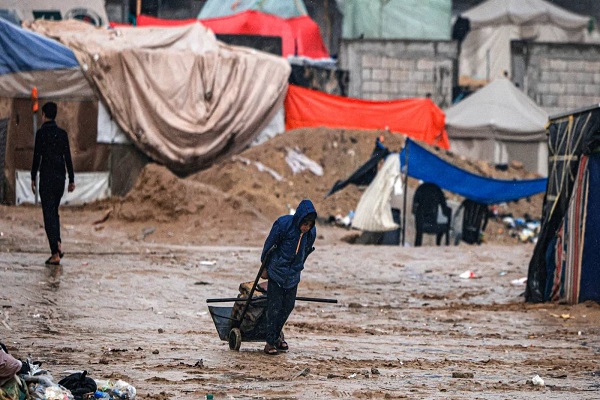
Islamophobia is far more than individual prejudice, fear or hatred of Islam and Muslims. It has developed into a global system of racial discrimination that portrays Muslim populations, and those perceived to be Muslim, as security threats, making violence against them politically acceptable, researcher Amina Shareef argues.
In an article, Shareef contends that the ongoing destruction in Gaza, alongside attacks on Iran and Lebanon, should not be viewed as a series of isolated conflicts. Instead, she places them within a broader pattern in which Muslim and Muslim-associated populations have been subjected to violence, abandonment and systematic control.
She draws parallels between the destruction of civilian infrastructure in Gaza, Lebanon and Iran, US drone strikes in Yemen, the treatment of refugees attempting to reach Europe across the Mediterranean, and the confinement of millions of displaced Syrians in camps surrounded by barbed wire.
According to Shareef, what connects these cases is the political discourse of terrorism. This discourse does not simply identify certain populations as security threats; it also provides justification for managing those perceived threats through lethal measures.
The author argues that the figure of the "Muslim terrorist" is central to this process. Muslims are frequently portrayed not merely as individuals who may engage in violence, but as members of a group supposedly predisposed to it. This transforms the terrorist into a racialized figure, one perceived as fundamentally different and inherently dangerous.
Within this framework, Muslims are divided into "good" and "bad" categories. The former are characterized as modern, secular and liberal, while the latter are portrayed as religiously observant individuals who seek to make Islamic teachings the basis of their personal and political lives.
Shareef stresses that this racialization is not limited to Muslims themselves. Individuals who are associated with Muslim identity through their political positions, cultural practices or physical appearance can also be subjected to the same treatment, even if they are not Muslim.
She further argues that anti-Muslim racism goes beyond negative representations and discrimination. It operates through policies and practices that determine whose lives are valued and whose are exposed to premature death. These include restrictions on access to healthcare, education, employment and adequate housing, as well as detention without charge, torture, political abandonment and targeted drone killings.
Shareef describes this interconnected system as a global "necro-structure": an architecture of racial governance through which Muslim populations are assigned unequal value and can be abandoned, controlled or exposed to death.
A central part of her argument concerns the role of Palestine in the development of this system.
The author describes Palestine as a colonial territory where racial hierarchies are enforced through occupation, dispossession, displacement and the management of the indigenous population. However, she argues that the significance of Palestine extends beyond its geographical boundaries.
Using the concept of the "Palestine boomerang," Shareef suggests that the methods of control, technologies of surveillance and forms of violence developed through the occupation of Palestine circulate beyond the occupied territories and are adapted in other political and geographical contexts.
She argues that what spreads is not merely the techniques of colonial control, but also the underlying rationale that makes violence against Muslim populations appear legitimate.
The author traces the contemporary political construction of the terrorist figure partly to the history of the Zionist project in Palestine. She identifies the 1979 Jerusalem (al-Quds) Conference on International Terrorism as an important moment in the international consolidation of a discourse that framed terrorism as a civilizational threat to democracy and the West.
However, Shareef emphasizes that global anti-Muslim racism predates the post-September 11 "War on Terror." Its roots, she argues, can be traced further back to medieval European Christianity, the Crusades and the racial hierarchies established through European colonial expansion.
The same logic, according to the article, can be observed in Iran, Lebanon, Kashmir, Syria, Yemen, Iraq and Afghanistan. Although these countries have distinct political contexts and histories, the author argues that the portrayal of Muslim populations as security threats has repeatedly helped justify violence against them.
She describes this process as a "necro-boomerang," arguing that the occupation of Palestine has helped consolidate a wider system in which Muslim lives can be treated as expendable whenever political circumstances demand it.
Concluding her article, Shareef argues that the struggle against Islamophobia is ultimately about defending the conditions necessary for human life and dignity. It requires challenging the political, social and economic structures that expose certain populations to both immediate and gradual forms of death.
"The task ahead is not easy," she writes, calling for sustained and strategic efforts to pursue justice, even when progress appears limited or the costs of resistance are considerable.
For Shareef, the responsibility is not to guarantee an outcome that may not be witnessed within one's lifetime, but to persist in the daily struggle for justice.
Source: MEE
