


Gen. Soleimani Redefined Concept of Resistance: Iraqi Analyst
IQNA – An Iraqi political analyst believes that by transcending traditional geography and redefining the concept of resistance, the martyred General Hajj Qassem Soleimani changed the security equations of West Asia.

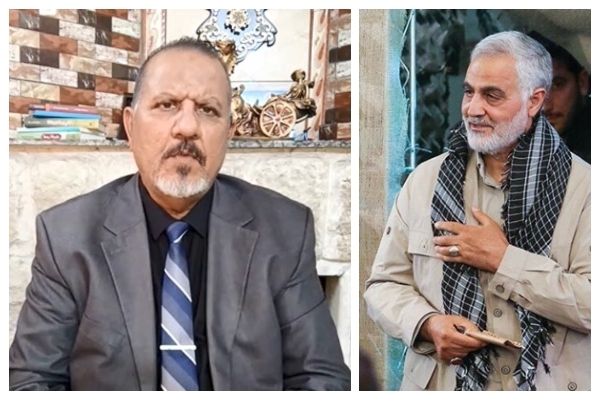
Lt. General Qassem Soleimani did so in such a way that even after his martyrdom, the deterrence of the axis of resistance has been maintained, and the manifestation of this strategic legacy can be seen in the reluctance of major powers to enter a widespread regional war, despite the escalation of tensions, Hassan Darbash Al-Amiri told IQNA in an interview on the anniversary of the martyrdom of General Soleimani.
Following is the text of the interview:
IQNA: In your opinion, what is the intellectual and practical legacy of General Soleimani in the field of geography of resistance and how does he figure in today’s regional equations?
Al-Amiri: The most important legacy left by Martyr Soleimani can be summarized in the concept of “applied geography of resistance” – and not traditional geography.
Martyr Soleimani transcended official borders and transformed it into a space for influence, movement, and unity in the field of confrontation (with the enemy). He proposed the idea that military weakness could be compensated for by dispersion, flexibility, and multiple fronts to confuse the enemy. He changed the conflict from “center against center” to “network against system.”
Martyr Soleimani created interconnected strategic corridors (Iraq-Syria-Lebanon) that connected the region logistically and in terms of manpower. This approach turned some fragile countries into calculable players in regional power equations and raised the cost of any full-scale confrontation with the axis of resistance to an unaffordable level; So that the enemy was forced to accept costly wars of attrition.
The manifestation of this legacy (the applied geography of resistance) in the region today can be seen in the reluctance of the great powers to enter a widespread regional war, despite the escalation of tensions.
Also, the continuation of asymmetric deterrence, despite huge military disparities and the constant presence of the Palestinian issue in regional calculations - not only as a moral concern, but also as a strategic factor - are other manifestations of it.
Read More:
In short, General Qassem Soleimani was not just a field commander, but was considered a prominent architect in the arena of modern wars.
IQNA: The enemies of the resistance axis are trying to change the concept of resistance through media and diplomacy. How can the intellectual legacy of General Soleimani be preserved in the arena of narrative war?
Al-Amiri: Years after the assassination of General Qassem Soleimani, it can be said that the axis of resistance has not retreated, but has moved from the stage of centralized charismatic leadership to the stage of networked and multipolar management.
The strategies that Soleimani established are still effective, but in a more complex environment and face new regional and international challenges.
What remains effective: The idea of linking the fronts (Iraq, Syria, Lebanon, Palestine and Yemen); although under heavy pressure and its scope has become more limited, it still relies on local ideological actors as a flexible and deterrent force, instead of classic armies.
Also, the combination of military action with political, psychological and media pressure through media affiliated with the resistance movement continues.
What has changed or weakened: The lack of a personality with the ability to coordinate all parties and fronts;
The increase in local and individual initiatives, which sometimes comes at the cost of losing a comprehensive strategic vision;
The increase in economic and social pressures in the countries of the resistance axis, which has limited the scope of maneuver;
And the loss of some efficient leaders, which has reduced the initiative in some axes.
However, this strategy is still in place; although its coherence has not reached the level of the era of the martyred General Soleimani - that is, an era with decision-making based on unified wisdom and a precise understanding of the balance of power.
IQNA: Some movements in the region and the Western world are calling for the disarmament of the resistance groups. Given the field experiences of the resistance axis, how should this demand be analyzed? Is this demand within the framework of regional security or is it a project to weaken the deterrent power of nations?
Al-Amiri: Disarmament of the resistance cannot be considered as a neutral technical slogan, but rather should be deconstructed politically and empirically based on what the realities of the region have created in the past decades.
In this context, the following points should be noted:
First: The discourse of “regional security”:
The West and some regional movements raise this demand under titles such as monopoly of weapons in the hands of the state, prevention of military instability, avoidance of proxy wars, and maintenance of internal security.
At a theoretical level, these concepts are consistent with the model of the modern state, but the problem lies in the selective nature of implementation and the hidden intentions behind these slogans.
Second: Realistic study; what does experience say?
Experience shows that wherever the resistance has been disarmed before the formation of a powerful state, the result has been vulnerability, not stability;
Examples of this claim are southern Lebanon before 2000, Gaza after the attempted partition, and Iraq after the dissolution of the army in 2003.
At the same time, no real deterrent alternative has been offered to these countries; no security guarantees, no just defense umbrella, and no real international commitment to protect sovereignty.
This demand is also selective, as it never includes Israel and its nuclear arsenals.
Third; the practical consequences of this demand:
According to the realities on the ground, the demand for the disarmament of the resistance often leads to the following:
The loss of asymmetric deterrence;
The return of unilateral hegemony;
And the transformation of a “costly war” for the enemy into “costless pressure.”
In a more precise sense, the purpose of disarming the resistance is to end its deterrent function.
Fourth; When is disarmament legitimate?
Only when a country is truly independent, a national army has the capacity to deter, a just regional order prevails, and the roots of resistance formation (occupation, intimidation, and inequality) have been eliminated.
Otherwise, disarmament not only does not bring security, but also new instability.
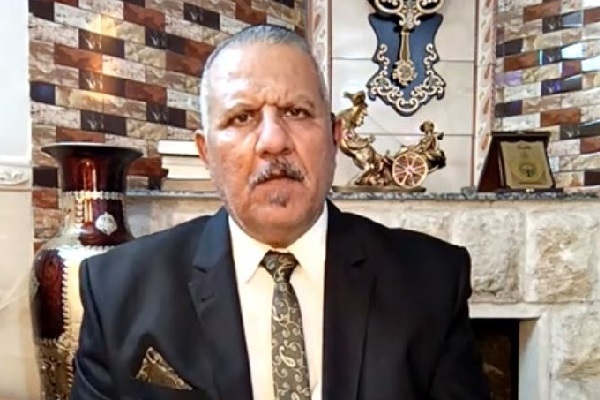
IQNA: Given the growth of anti-American currents and developments in Palestine, Lebanon, and Iraq, how do you see the future of the resistance axis in the coming decade?
Al-Amiri: The future of the resistance axis in the next 10 years will not have a linear upward trajectory and will depend on three parallel factors: international developments, the internal conditions of the axis member countries, and the way the conflict with the United States and Israel is managed.
Read More:
At the global level, the decline of American unipolarity has opened up space for non-traditional actors, but this does not mean complete freedom of action.
At the regional level, Palestine remains the symbolic and practical focus of this war, and Lebanon and Iraq will be sensitive areas of balance between the government and the resistance. Any domestic economic or political failure in these countries could become a factor in weakening the resistance axis.
At the structural level, the resistance axis will move towards greater decentralization, strengthening local capacities, and investing in low-cost deterrence.
Overall, this axis will remain, but more cautious, less vocal, and more focused on domestic issues; and local governments will put more pressure on it.
IQNA: Are there signs of the resistance’s transition from a defensive force to an influential regional power?
Al-Amiri: Yes, this transformation is taking place, but not at the ideological level but at the practical level.
Its signs include the ability to influence the course of events, play a role in war and peace decisions, and impose red lines on great powers.
But this power is not the power of direct rule; rather, it is the power of deterrence and prevention of imposition.
In short, in the coming decade, the resistance will neither achieve a classic victory nor be destroyed; rather, it will remain an effective force for adjusting the equations of domination.
IQNA: If we were to summarize General Soleimani’s message and strategy today in a short statement, what would that message be for the nations of the region and the younger generation?
Al-Amiri: The message could be expressed as follows: This region will not be protected by fragile alliances, but by the creation of a self-sufficient force that knows when to fight and when to be patient. Sovereignty is not granted, but is earned through long-term awareness, not through fleeting emotions. Power without ethics becomes tyranny, and ethics without power remains merely an intention. Create an equation that prevents the enemy from achieving a definitive victory, because survival is the first form of victory, and do not forget that if power is not managed with the wisdom of the state, it will become a burden on its own lands.
Read More:
But a message for the younger generation: Resistance is not a constant excitement or epic discourse, but the product of awareness, order, discipline and strategic patience. The real battle is not only on the front lines, but in protecting society from division, corruption and loss of meaning.
And a message for the countries of the region: There will be no security without balance, no stability without justice, and no sovereignty without independent decision-making.
4327468
