


Expert Urges Qaris to Shift From Technical Recitation to Meaning-Based Delivery
IQNA – A senior textbook specialist has warned that excessive focus on technical and artistic performance in Quran recitation is widening the gap between qaris and listeners.
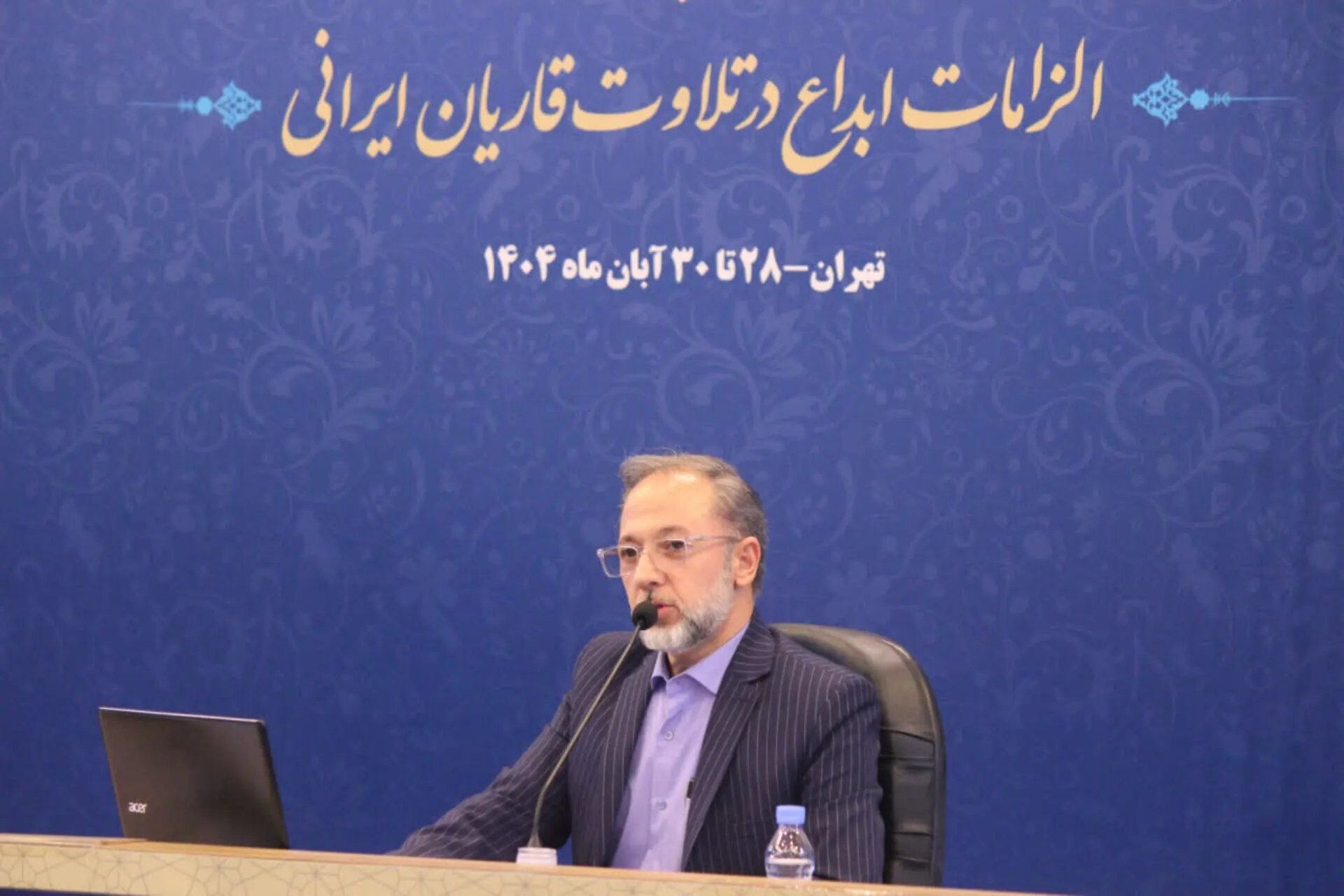
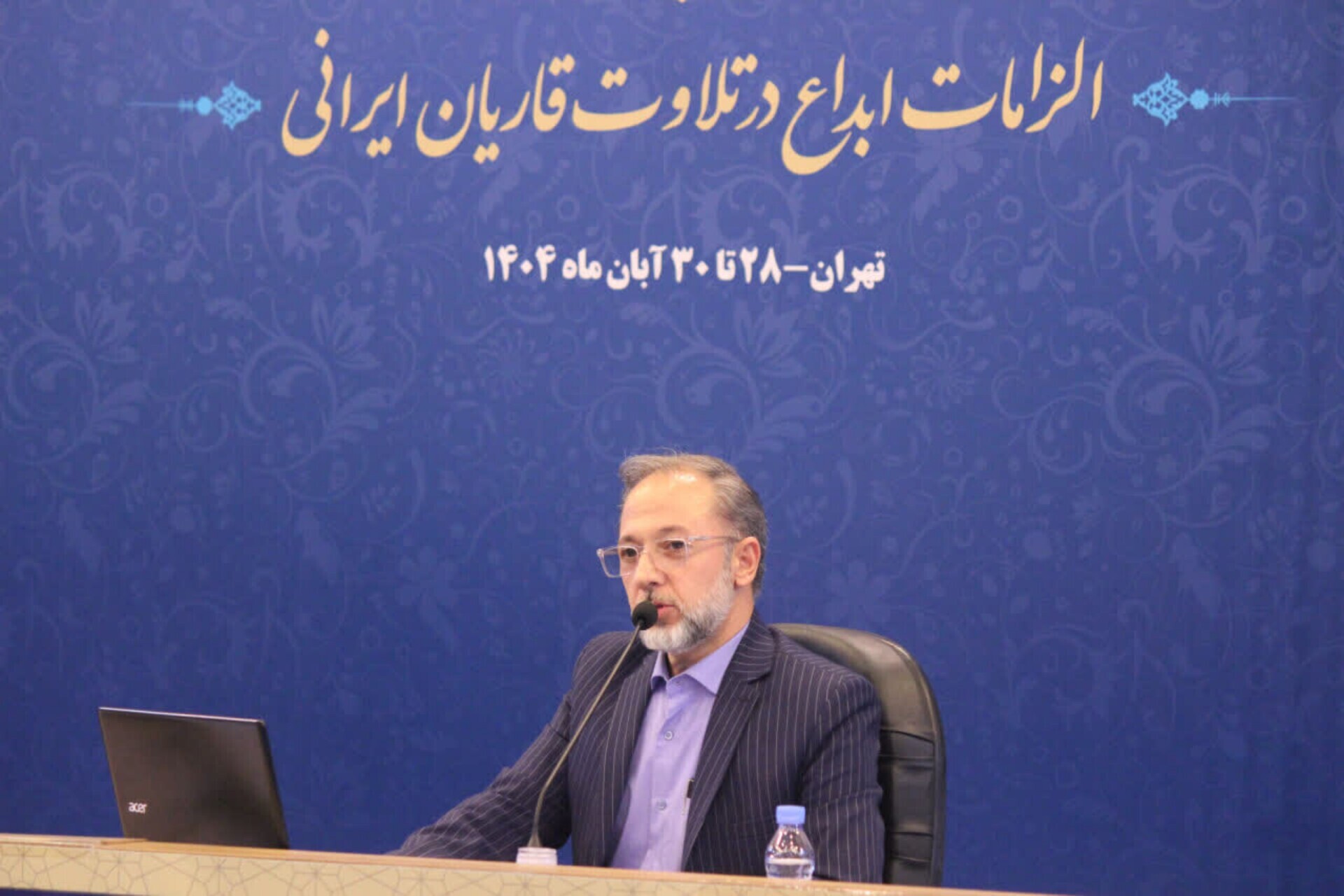
The comments were made by Reza Nabati, a researcher and curriculum expert at Iran’s Organization for Educational Research and Planning, during the 20th expert forum of Quran teachers, qaris and memorizers, held Friday by the Supreme Quran Council.
Nabati said true creativity in recitation begins with understanding. “The Iranian listener’s language is far from Arabic, so proper comprehension does not happen. Because the audience struggles to grasp meanings, creativity from the qari also does not occur as it should.”
He said most qaris today concentrate on technical and aesthetic elements, while traditional translation approaches also emphasize high-frequency vocabulary rather than full chains of meaning. “In understanding the Quran, a network of connected words must be considered,” he noted.
Read More:
“What does the Quran expect from a qari?” he asked. “A qari must be able to represent the dignity of the Quran through an appropriate melodic delivery.” He said this corresponds to tadabbur-centered recitation, a principle emphasized in recent years but still lacking a clear model.
Nabati highlighted a growing gap between professional recitation and public understanding. Because of this, he said, “there is little interest in professional recitations among general audiences.”
He called for a shift toward meaning-oriented recitation, adding that this approach is “a lower level than fully meaning-driven recitation, but it may help bring a wider range of listeners closer to the divine message.”
He described meaning-oriented recitation as highly effective in conveying Quranic concepts to audiences who have been overshadowed by the dominance of technical performance. This approach, he said, can raise “the listener’s awareness and level of understanding.”
Read More:
Nabati also emphasized the principle of pragmatics in recitation, arguing that the aim of recitation is comprehension and the practical application of Quranic teachings. “Yet despite repeated emphasis, recitation often remains at the level of words and does not become a discourse,” he said.
He described the qari as a “meaning-producing actor,” whose creative delivery can reshape the listener’s taste and encourage deeper engagement with the Quran.
Nabati called on qaris to strengthen the emotional bond with their audiences and suggested techniques such as alternating between word-based and sentence-based delivery to enrich communication.
4318365
