


Centuries-Old Quran in Thailand’s Narathiwat Ranks among Region’s Finest Islamic Artefacts
IQNA – It is no ordinary display at the Museum of Islamic Cultural Heritage and Al-Quran Learning Center.
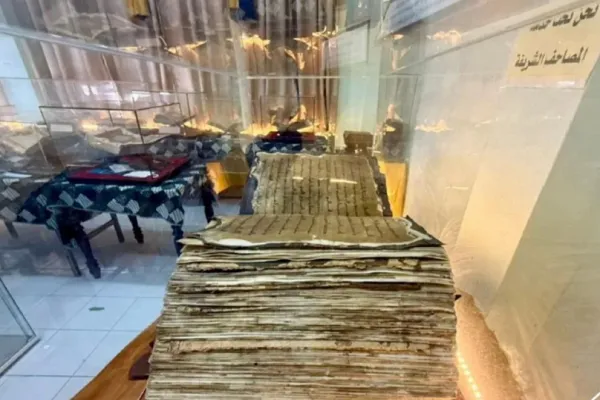
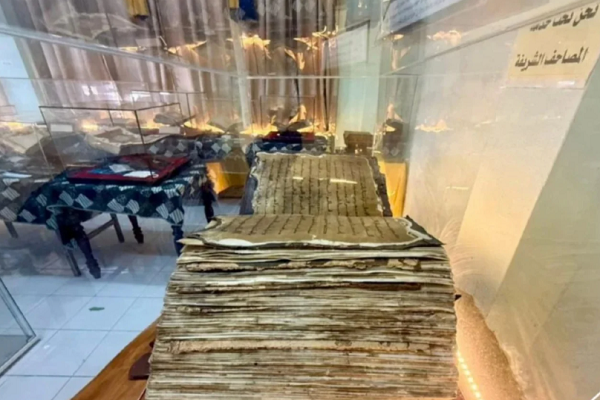
A Quran manuscript believed to be more than 1,000 years old and displayed at the Museum of Islamic Cultural Heritage and Al-Quran Learning Centre in Narathiwat, Thailand, not only holds immense Islamic historical value, but also reflects the ingenuity of early civilizations in utilizing natural organic materials to produce the sacred text.
Weighing about 50 kilograms, the manuscript was produced during the Abbasid era using 346 sheets made from animal skin and carbon-based ink derived from natural materials, making it one of the rare and valuable ancient Islamic artefacts preserved in the region.
Museum officer Nik Ilham Nik Yusup said the museum's oldest artefact was produced with exceptional craftsmanship using hundreds of processed animal skins to create durable sheets for Quranic writing.
"All the basic materials were specially sourced from Hadhramaut in Yemen," he told Bernama recently.
Beyond the use of natural materials, the manuscript also reflects the resourcefulness of early Muslim communities in using elements from their surroundings.
Written entirely by hand in ancient Kufi script, the manuscript used organic carbon ink produced from natural sources.
"People in the past used materials obtained directly from nature. A mixture of wood and date palm bark was burned to produce ink before being combined with several other organic materials from the forest," he said.
Read More:
As the manuscript was produced entirely from ancient organic elements, preserving it requires meticulous conservation methods free from modern chemicals and solvents. Cleaning and restoration works are carried out every six months.
"The surface of these animal skin pages is extremely sensitive. The use of chemicals or alcohol-based liquids could cause the original ink to crack, while the texture of the sheets could also be damaged.
"That is why we only use organic preservation methods to maintain the value and authenticity of this treasure," said Nik Ilham.
He said the manuscript began its journey from Yemen to the Malay Archipelago during the era of early Islamic preacher Sheikh Jumadil Kubra.
According to him, the manuscript was preserved in Indonesia for over 500 years before being brought to Narathiwat about five years ago during the Covid-19 pandemic.
"To ensure this invaluable heritage of Islamic civilization continues to be preserved, strict security procedures are implemented and visitors are not allowed to touch the artefact," he said.
Source: nst.com.my
