


Charity Commission Hails 'Sheer Scale' of Fundraising by British Muslims During Ramadan
TEHRAN (IQNA) – British Muslims have been praised by the Charity Commission for donating vast amounts of money to good causes.
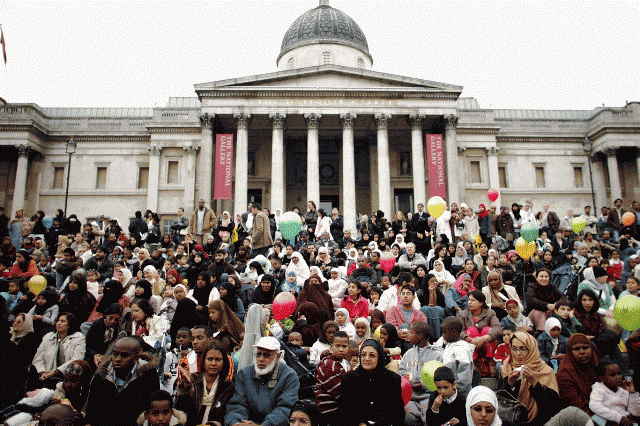
During the holy month of Ramadan,British Muslims as a whole have donated money at a rate of £38 per second during Ramadan, or £371 per individual over the year,the Commission said.
Nick Donaldson,outreach manager at the Commission, blogged in praise of projects in the UK, Syria, Somaliland and elsewhere that had been supported during Ramadan, The Independent reported.
"The sheer scale of the work is immediately apparent. One Muslim-led charity –not one of the largest –estimates that its work last Ramadan had helped over one million people," he said.
"Charity may begin at home, but it certainly doesn't end there. Dozens of countries were named as areas of benefit, from Europe to North America, and right around the world."
Other donations this yearwent toflood-affected areas in Carlisle andhoney-bee farms in Palestine and Pakistan, while also fundinghygiene kits and food in Haiti and"micro-dams" in Mali, which catchwater from flash floods.
Muslim leaders welcomed the recognition of their communities' efforts.
Muhammad Abdulbari, former secretary-general of the Muslim Council of Britain, told The Independent: "On this month, because we are hungry, we can empathise with people who are hungry around the world.
"Muslims are not supposed to be just helping themselves. The idea of neighbourhood and reaching out to other communities is important in Islam."
Central to the Islamic concept of charity iszakah, a compulsory duty within the religion to contribute 2.5 per cent of their yearly income to those in need.
Ramadan, whichis regarded as a month ofselflessness and spirituality, sees this duty paid particular attention.
The Qu'ran also says the Prophet Muhammad answered the question "who is my neighbour?" with"forty houses to your right and forty houses to your left." The implied lesson was that neighbourliness has no limit, said Dr Abdulbari.
Many British Muslims donated single gifts of up to £30,000 each, according to research carried out by ICM in 2013,the Charity Commission added.
