


Systemic, Not Sporadic: NGO Report Highlights Worsening Hostility toward Muslims in Austria
IQNA – Anti-Muslim racism in Austria has reached its highest recorded level, according to a new report by the Documentation and Counselling Centre for Anti-Muslim Racism (Documentation Centre Austria).
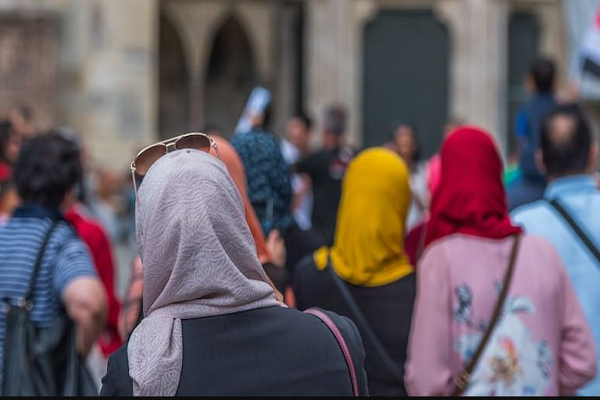
And the problem is no longer just about isolated hate crimes, but systemic discrimination embedded in Austrian institutions.
According to the 11th Anti-Muslim Racism Report presented on Thursday, 1,684 incidents were recorded—the highest number since the center was founded in 2014.
These include a murder case suspected to be anti-Muslim in nature, which the Documentation Centre Austria does not elaborate on in its report.
According to the organization, experts estimate that the actual number of unreported cases of anti-Muslim racism is significantly higher.
This year’s report by the NGO is titled “Not an Isolated Case, but a System” and focuses on the structural roots of the problem.
The report examined the conditions under which anti-Muslim racism arises, is legitimized, and becomes entrenched in everyday life.
According to the organization, in addition to politics and the media, health care and legal systems are also coming under greater scrutiny.
The report sees a connection to political debates, particularly surrounding the so-called “zero-tolerance” policy of the ruling Austrian People’s Party (OVP), as well as the discussion and passage of a headscarf ban for girls under the age of 14.
Under the slogan “zero tolerance,” the Austrian federal government—and the OVP in particular—pursues a hardline political stance that focuses primarily on migration, security, and the fight against extremism.
The figures in the NGO report also show which areas of public life significantly shape the discourse. According to the organization, media content accounts for 33 percent of the documented cases, while political communication accounts for another 27.1 percent.
Both areas contribute to anti-Muslim narratives being repeatedly taken up and reinforced in the public sphere, the report notes.
Read More:
The organization also points out that women are particularly affected.
Eighty-seven percent of religion-related discrimination cases reported to the Office of the Commissioner for Equal Treatment involve Muslims or people perceived as Muslim, 90 percent of whom are women.
As a result, the Austrian Documentation Centre is calling for the official recognition of anti-Muslim racism as a social problem, the expansion of independent counselling centers, and stronger measures against discrimination in government institutions.
Source: TRT World
