


Zionists’ Excavations in Al-Quds: Stealing History, Destroying Islamic Monuments
IQNA – The Zionist regime has been carrying out extensive excavations in Jerusalem al-Quds for several decades, especially in and around Al-Aqsa Mosque, with the aim of changing the identity of the holy city, Judaizing it, and destroying Islamic monuments.
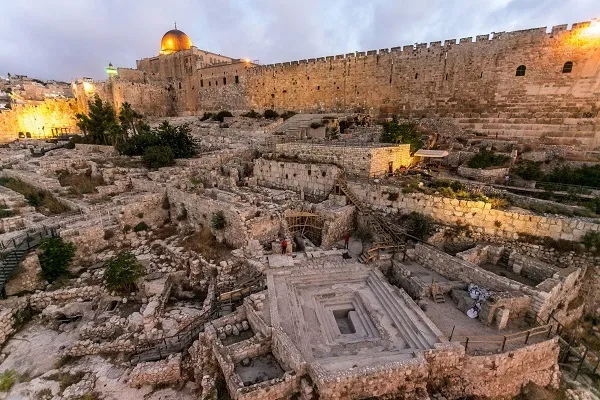
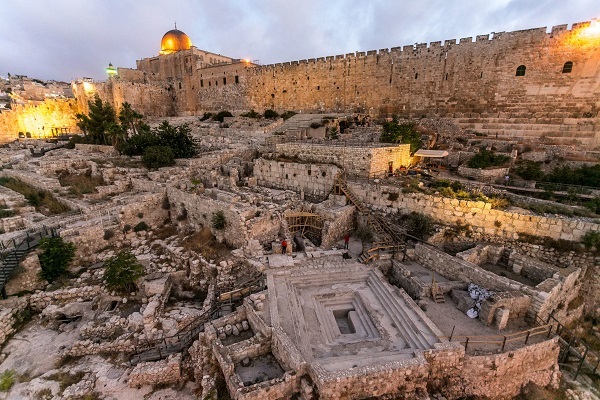
According to Al Jazeera, excavations under and around Al-Aqsa Mosque have continued for several periods, but their pace has increased significantly after the occupation of al-Quds by the Zionist regime of Israel in the June 1967 war. Since then, Israeli authorities have continued to build extensive networks of excavations and tunnels, financed by the regime’s antiquities authority and several settler organizations, especially the El-Ad Organization.
Despite the lack of definitive archaeological evidence, the Israeli narrative claims that these activities are aimed at discovering the remains of what is called the City of David.
As part of their use of the tunnels for propaganda purposes, the occupation authorities put on audio and video shows to attract visitors, along with programs about the alleged temple.
The first excavations in al-Quds
In 1863, al-Quds saw the first French excavation mission, led by archaeologist De Soussi. The mission discovered the tombs of kings outside the walls of the Old City, claiming that they dated back to the reign of David, which Jews believe dates back to around 1000 BC.
Four years later, the British Palestine Exploration Fund, established in 1865, began a series of extensive excavations at dozens of sites under the leadership of Colonel Charles Warren. The excavations focused on the Al-Aqsa Mosque and the Silwan neighborhood in search of the remains of the alleged temple.
At the same time, German engineer Konrad Schick, in collaboration with the Palestine Exploration Fund, conducted several excavations, uncovering important archaeological sites such as Solomon’s Cave, the Pool of Bethesda, and the Roman aqueduct.
Excavations continued in the following decades until, after the occupation of al-Quds by the Israeli regime in 1967, the regime’s ministry of religious services began extensive excavations under the western wall of the Al-Aqsa Mosque compound, extending northward to the area of the Umayyad Palaces. Over time, these excavations developed into a network of deep and extensive tunnels.
Read More:
Experts on al-Quds affairs have pointed to the existence of numerous excavations and tunnels scattered under and around the walls of Al-Aqsa Mosque. Some of these tunnels reach the bedrock at a depth of nearly 9 meters below the floor of the mosque, posing a direct threat to the stability of its structure.
Due to the secrecy surrounding most of the excavation work and its ongoing operations, it is difficult to document the exact extent of these tunnels.
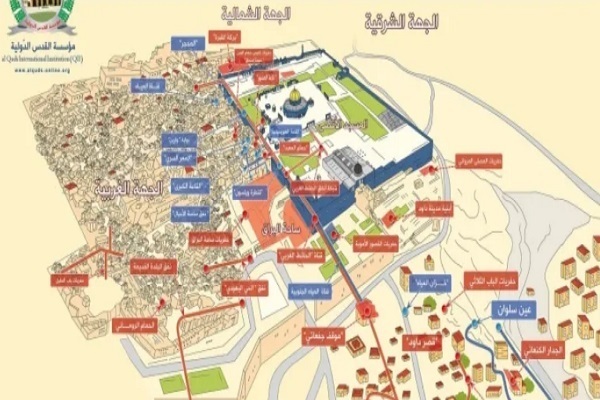
In late 1967, the Hebrew University began extensive excavations under the southern wall of Al-Aqsa Mosque, measuring 70 meters long and 14 meters deep. The excavations included the area of the women's prayer room, the Islamic Museum, and the Al-Fakhri Minaret. The excavations caused visible cracks in the southern wall and some parts of the mosque. During the excavations, in addition to Roman and Byzantine remains, Islamic artifacts from the Umayyad period were also discovered.
Later, the occupiers continued to expand the excavations by another 80 meters, proceeding along the north of the mosque until they reached Bab Al-Magharbeh.
In 1973, excavations began in the southeast of Al-Aqsa Mosque and continued for a full year. The excavations extended approximately 80 meters eastward, passing through the southern wall of the mosque.
On August 21, 1981, the Israeli occupiers reopened a tunnel that ran eastward from Bab Al-Qattanin to the Dome of the Rock. The tunnel was discovered in 1867 by Colonel Warren.
The excavation reached the area of the Qaytbay Well within the Al-Aqsa Mosque compound, prompting a sit-in by the residents of al-Quds to prevent further excavation.
Read More:
The aim of the tunnel’s reopening was to extend its route to the base of the Dome of the Rock. Due to cracks appearing in the western portico of Al-Aqsa above the tunnel site, the Islamic Awqaf (Endowments) intervened and blocked its entrance with reinforced concrete to prevent structural damage.
Excavations under the Al-Aqsa courtyards: These included leveling the topsoil and drawing maps depicting an alleged “temple,” with the aim of expanding control over the area beneath the courtyards.
Official institutions and Israeli settler organizations, as well as archaeologists, have participated in, supported, and supervised the excavations around Al-Aqsa Mosque.
The objectives of the occupiers in these excavations include:
Search for Jewish antiquities to demonstrate the historical presence of Jews in al-Quds.
Search for evidence of the First or Second Temple, as a prelude to promoting the idea of building an alleged Third Temple.
Extending excavations to the walls of Al-Aqsa in the vicinity of the Umayyad palaces.
Creating a fake Hebrew history by linking archaeological findings to the Hebrew era, to strengthen the Israeli narrative about al-Quds.
Judaizing the area around Al-Aqsa Mosque and hiding its historical and cultural monuments.
Erasing and destroying Islamic and Arab antiquities.
Attracting Jews to Palestine to consolidate the Judaization of the city.
Creating a historical Jewish city in al-Quds.
Building synagogues and Talmudic shrines under Al-Aqsa Mosque.
Threatening the structural integrity of Al-Aqsa Mosque with the aim of attempting to destroy it.
Consolidating Israeli control above and below ground.
Some of the dangers associated with Israeli excavations around Al-Aqsa are as follows:
The threat to the foundations of Al-Aqsa Mosque, which could lead to its collapse at any moment.
Attempts to erase Arab and Islamic history in al-Quds.
Theft of Islamic, Christian and Arabic antiquities discovered during excavations.
Destruction of ancient layers dating back to the Arab and Islamic periods.
The conversion of the area under Al-Aqsa Mosque into settlement facilities in the service of the Zionist project.
Palestinian reactions
On April 7, 2016, Sheikh Omar Al-Kiswani, the director of Al-Aqsa Mosque, announced that the Islamic Awqaf Authority was collecting information about the excavations and presenting it to the Jordanian Ministry of Awqaf, which has been in contact with the Ministry of Foreign Affairs to apply diplomatic pressure to stop the excavations and attacks on antiquities, Al-Aqsa Mosque and the Old City of al-Quds.
In July 2017, the UNESCO World Heritage Committee condemned the excavations carried out by the Israeli antiquities authority in al-Quds.
Read More:
On October 22, 2015, the al-Quds governorate warned of the dangers of these excavations, stressing that they target Palestinian historical and religious sites and violate the status quo.
The governorate added that these actions are aimed at imposing Israeli control over the holy sites and threatening the future of the city and its Palestinian identity, as part of a long-term political project to Judaize the Old City and change its characteristics.
4319105
