


Cleric Underlines Reviving Islamic Unity
IQNA – A cleric considered the Gaza tragedy - despite its great pain and suffering - an opportunity to revive Islamic unity and solidarity.
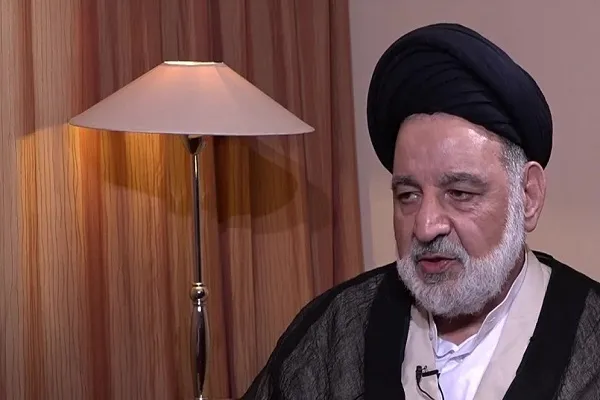
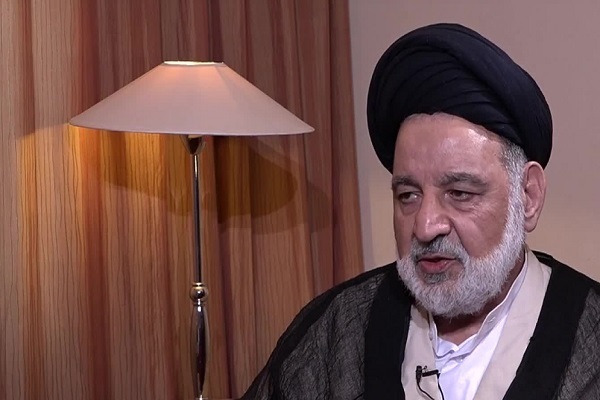
Speaking in the “Special Dialogue” program of the Al-Kawthar Global Network, Hojat-ol-Islam Seyed Moussa Mousavi described the current situation as similar to the early Islamic era; when Muslims came together in the field of jihad and true brotherhood was formed at the height of hardship.
He emphasized that the path of Islamic unity has undergone a profound transformation in recent decades; a transformation that, according to him, is due to the insight and foresight of Imam Khomeini (RA) and Leader of the Islamic Revolution Ayatollah Seyed Ali Khamenei.
He said that although the principle of unity is one of the pillars of Islamic thought, this concept has remained on the sidelines for years and has been the victim of conspiracies and distortions of enemies in many periods.
Hojat-ol-Islam Mousavi explained that in the past, compassionate figures who tried to strengthen unity were often marginalized and sectarian thinking cast a shadow over Muslim societies.
As a result, he stated, the Islamic Ummah, which should have been a united Ummah, was divided for many years.
“However, the victory of the Islamic Revolution in Iran was a turning point that changed the path of unity, and under the leadership of Imam Khomeini and then Imam Khamenei, a new spirit was breathed into the body of the Islamic world.”
He considered the culmination of this process in the important statement of the Leader of the Islamic Revolution to the foreign participants of the International Islamic Unity Conference, in which the Leader emphasized that today in the Islamic world, there is no virtue greater than unity and no vice greater than division.
In another part of his remarks, Hojat-ol-Islam Mousavi considered the Gaza tragedy - despite its great pain and suffering - an opportunity to revive Islamic solidarity.
He described this situation as similar to the early days of Islam, when Muslims came together in the field of jihad and true brotherhood was formed at the height of hardship.
He said the cooperation and unity of purpose between Hezbollah and Hamas in the field of resistance is a contemporary manifestation of the same common spirit; a spirit that can reunite the Islamic Ummah.
Read More:
In his belief, the Islamic world today has two practical and tangible reasons for the possibility of realizing unity: the cohesion of the resistance in Gaza and the model of coexistence between Shias and Sunnis in the Islamic Republic of Iran.
He emphasized that Iran’s experience has shown that unity is not merely a political or ideal slogan, but rather a realizable reality that can be sustainably formed within the context of society and government.
In the final part of his speech, Mousavi mentioned the “lack of correct and mutual recognition” as the greatest challenge of the Islamic world and explained that in past periods, many Sunni academic and research centers did not have reliable and direct sources about Shias, and the image presented through Western sources or hostile media was an incorrect and distorted image.
“Similarly, some Shia scholars also had misconceptions about Sunni views in the past; but direct communication between scholars of the two schools of thought has shown that the real differences are much less than what the enemy’s propaganda suggests."
Hojat-ol-Islam Mousavi concluded by emphasizing that today, with increased awareness, shared field experiences, and effective leadership, the path to Islamic unity is clearer and more achievable than ever before; an unparalleled path that can free the Islamic world from division and lead it towards authority and excellence.
4319863
