


Right-Wing Backlash Sparks Debate over Japan's Space for Muslim Burials
IQNA – A viral video of a right-wing Japanese lawmaker arguing against Muslim burials has reignited debate over the country’s acceptance of religious diversity.
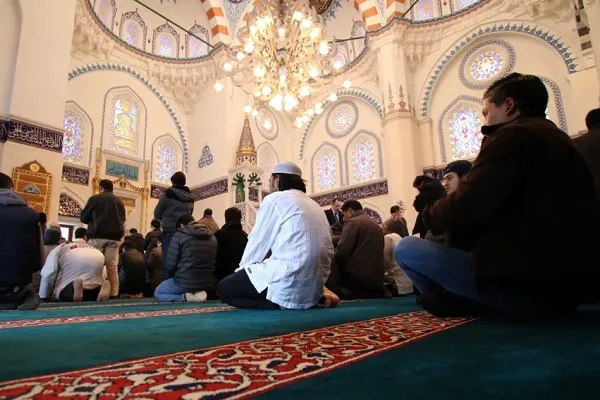
Japan’s struggle to accept outsiders has been exposed once again after the video of the right-wing lawmaker arguing against Muslim burials went viral.
The video showed Mizuho Umemura, a House of Councilors member from the populist Sanseito party, objecting to the burial of Muslim residents during a parliamentary debate late last month.
She argued that cremation was a vital national custom practiced by more than 99 per cent of Japanese people and said that approving new burial grounds for Muslims would be inappropriate given land constraints and concerns about groundwater contamination.
Responding to calls for Muslim residents’ burial options to be expanded, Umemura reportedly said that foreigners settling in Japan should be told that if they die “they can either be cremated or have their remains repatriated” at their own expense.
Her remarks triggered a wave of online debate about balancing respect for cultural heritage with the realities of a changing population in the ageing nation.
“The foreigners should respect the country’s laws and traditions,” read one reply to a social media post on the controversy. “What about the Muslim citizens of Japan?” asked another. “Those who are not foreigners are actually natives born there. They believe in the Islamic way.”
Read More:
Japan’s Muslim population has grown from about 30,000 in 1990 to roughly 350,000 today, according to rough estimates by sociology professor Hirofumi Tanada of Waseda University.
But Japanese media reported earlier this year that limited burial plots had made many Muslims considering permanent residence in the country anxious.
‘Self-inflicted wound’
Analysts warn that right-wing rhetoric risks undermining Tokyo’s efforts to project openness even as its ageing society grows ever more reliant on workers from overseas.
Umemura’s remarks would likely reinforce negative perceptions about Japan, said Mark Cogan, an associate professor of peace and conflict studies at Kansai Gaidai University in Osaka.
“In reality, Japan is far less divisive than it appears to be. For conservative politicians, it looks like a win, but it’s a self-inflicted wound,” he said.
Although presented as a debate over land use and public health, the larger question was whether Japan was prepared to accommodate its growing foreign population, Cogan told This Week in Asia.
The issue has surfaced repeatedly across the country over the past year, particularly in conservative regions such as Kyushu island’s Oita prefecture, where Cogan says Sanseito politicians have used it to fan “nationalist sentiments disguised as cultural preservation”.
Sanseito, known for its “Japanese First” platform and anti-globalist stance, advocates stricter immigration controls and oversight of foreign residents.
Japan has no national restrictions on burial, which was once common throughout the country before cremation became the norm from the 1930s onwards, and local cemeteries usually decide whether to allow the practice.
Read More:
Cogan said that past disputes had centered on designating land for burial sites, “not whether it is a matter of culture”, adding that Umemura’s comments were emblematic of a broader pattern among reactionary nationalist politicians.
In one recent example, a plan to establish a Muslim cemetery in Hiji town, Oita prefecture, was scrapped by right-wing mayor Tetsuya Abe. Abe, a vocal opponent of the project proposed by the Beppu Muslim Association, cited public health concerns and halted the land sale for the burial site.
Nationalist sentiment could not dictate long-term policy as Japan’s Muslim population continued to grow, Cogan said, noting that the country had made efforts to accommodate Muslims, such as by providing prayer rooms at schools and universities.
Weaponising insecurity
Stephen Nagy, a professor of politics and international studies at the International Christian University in Tokyo, said Umemura’s remarks reflected the views of a small but vocal segment of Japan’s population who were prone to criticize certain groups of foreigners for failing to adapt.
Her comments were intended to highlight what she viewed as cultural differences between foreign residents and wider Japanese society while promoting Sanseito’s “unfriendly policies”, Nagy told This Week in Asia.
“This is just one bad story in the overall news about foreigners,” he said, pointing to more positive examples of integration such as international graduates from Ritsumeikan Asia Pacific University who had made lives for themselves in southeastern Oita prefecture, joining local companies, marrying and raising families.
“They coexist with the local community very well, adopt Japanese behavior for the most part and keep the city’s economy going by working in the local economy.”
Read More:
Sanseito’s rhetoric did not reflect Japan’s society as a whole and the party was merely “weaponizing insecurity” of voters, Nagy said.
He noted that Saitama prefecture, near Tokyo, had recently appointed Indonesian Muslim influencer Nazaya Zulaikha as a public relations ambassador, adding that most Japanese people, if asked, would acknowledge the need to abide by and respect local customs if they happened to live in a Muslim country.
Source:scmp.com
