


Mosques in Thailand Prepare for Ramadan
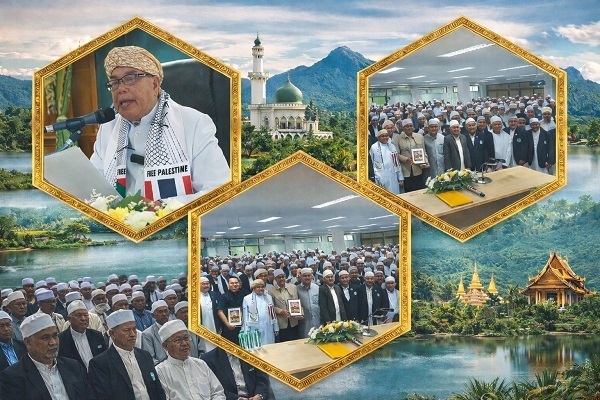
IQNA – Officials of 420 mosques attended the annual meeting of the Islamic Affairs Committee of Songkhla Province in Thailand to prepare for Ramadan.

According to the Muslimsaroundtheworld, preparations for Ramadan are no longer limited to the religious aspects alone. In many areas, these preparations have become a comprehensive pattern of religious, administrative and social planning.
Official Islamic institutions, along with government officials, imams and mosque directors, participate in this organized institutional effort that begins weeks before the holy month.
In this regard, the Islamic Affairs Committee of Songkhla Province, in southern Thailand, held its regular annual meeting for the year 2569 (Thai calendar) on Sunday, January 25. The meeting saw a wide participation, including 30 members of the provincial Islamic Affairs Committee, as well as imams and representatives of 420 mosques. This indicates a high level of organization and institutional commitment on the eve of the holy month of Ramadan 1447 AH.
This extensive meeting is an example of early planning, combining religious preparation, administrative organization, and community coordination, reflecting the development of religious affairs management at the local level.
The most notable aspect of this experience is the early preparation for Ramadan, through discussions on religious dates and the necessary arrangements for sighting the Ramadan crescent, in addition to developing clear plans for the holy month’s programs, rather than relying on late announcements or seasonal decisions.
This approach reflects the institutional awareness that Ramadan is not a fleeting event, but a religious and social season that requires careful planning to ensure effective organization, consistency of outreach efforts, and a clear and consistent presentation of the religious message to the community.
The session discussed the role of imams and mosque leaders in preparing the community for the holy month, whether through sermons, lessons or awareness-raising activities, while emphasizing the importance of unifying religious discourse and linking acts of worship with the moral and social values embodied in Ramadan.
Educational and outreach programs targeting different groups were also discussed, reinforcing the role of the mosque as a center for guidance and reform, not just a place of worship.
Read More:
The Songkhla experience shows that Ramadan preparations can be transformed into a comprehensive institutional process that combines religious principles, management and community participation. This model is applicable to different regions within a single country, regardless of their size or circumstances.
Documenting such experiences not only highlights a local event, but also provides a roadmap for the conscious and systematic management of Ramadan affairs and fosters a culture of proactive planning in regional Islamic work.
4330988
