


Unified Ethical Framework Governing AI Urged
IQNA – A unified ethical framework to govern artificial intelligence is necessary, according to the secretary-general of the Muslim World League.
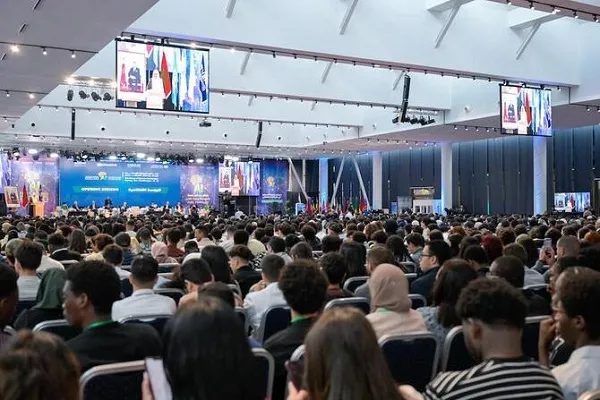
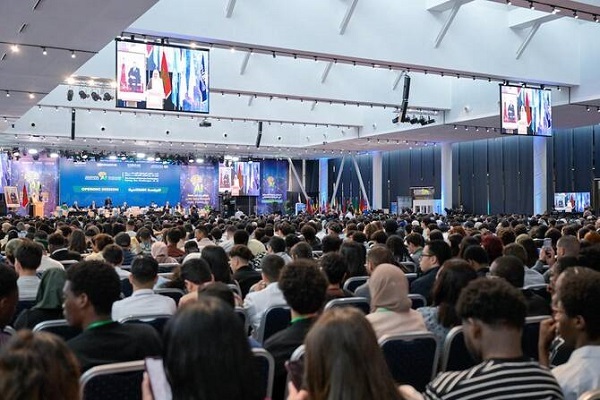
Mohammed Al-Issa delivered the keynote speech at the opening of “The Future of Human Civilization in the Age of Artificial Intelligence,” a major international conference in Morocco attended by more than 2,000 people this week.
The event, hosted by the Euro-Mediterranean University of Fez, brought together international officials, including the UN’s high representative for the Alliance of Civilizations, alongside academics, experts and thinkers from 75 countries.
In his address, Al-Issa highlighted the significance of the conference’s theme, which he described as central to “understanding the evolution of human civilization and its intellectual transformation.”
He traced this trajectory from the knowledge revolution of the 16th and 17th centuries, when scientific thinking expanded beyond traditional frameworks, to the present-day AI revolution, which has transformed machines from tools of data storage into systems capable of analyzing and generating ideas.
He noted that the foundations of the experimental scientific method had been laid centuries earlier by Muslim scholars, and suggested that the current technological shift represented another pivotal moment in human development.
Advances in AI must be guided by shared human values to ensure they serve as a force for good, Al-Issa said. He warned against the risks of unregulated systems, particularly in sensitive areas such as religion, race and culture, in which misuse could fuel division, hatred and conflict.
He called for the establishment of clear ethical standards before the further development of AI systems, alongside greater transparency and more accountability for companies operating in the field. He also underscored the need for strict limitations on use in high-risk domains, especially those that involve critical decision-making, insisting that ultimate authority must always remain in human hands.
Drawing a distinction between humans and machines, Al-Issa said that while the former possess the freedom to think and reach sound conclusions for themselves, AI systems are shaped entirely by the data and inputs they receive, whether accurate or misleading.
Read More:
Such systems lack awareness and independent will, and therefore cannot be treated as autonomous entities, he added.
Al-Issa concluded his remarks by noting that technology ultimately reflects the human choices and values included within the parameters set by its developers.
Source: Arab News
