


Taiwanese Society’s Attitude towards Muslims Has Changed Positively, Scholar Says
IQNA – A professor of Islamic studies at National Taiwan University highlighted the positive change in Taiwanese society’s perception of Islam.
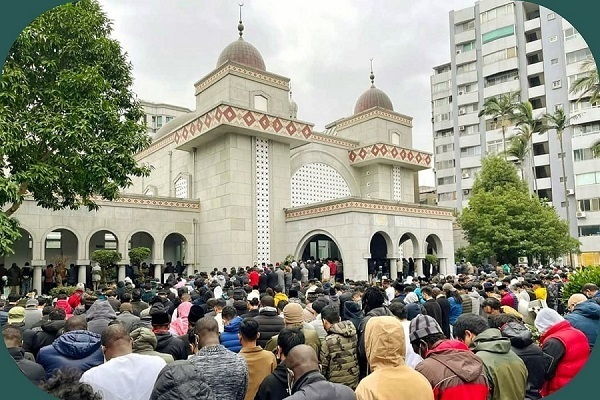
Osman Cubuk, a Turkish scholar of Islamic culture, said that perception of Islam in Taiwan has undergone positive changes over the past two decades, RTI reported.
At a time when global discourse focuses on the challenges faced by Muslims in non-Muslim societies, Cubuk offers a different perspective based on his more than twenty years of experience in Taiwan. He explains how knowledge, dialogue and coexistence can change perceptions of Islam, and how Islamic education becomes the most important guarantee for maintaining this progress.
Cubuk is a researcher who combines Islamic studies at Al-Azhar University with academic experience in Taiwan, where he works as an assistant professor, lecturer and researcher in Islamic studies. This has given him the opportunity to witness firsthand the development of the Muslim community on the island.
The researcher emphasizes that Taiwanese society’s perception of Islam has undergone a significant positive transformation over the past two decades. The presence of Muslims in public life has become more visible and the number of halal restaurants, prayer rooms and services dedicated to Muslims has increased.
He believes that this development is not the result of fleeting media campaigns, but rather the fruit of years of coexistence, direct contact and calm dialogue that have helped to increase mutual understanding and correct many stereotypes about Islam and Muslims.
He believes that the Taiwanese experience provides an example of how building trust between people and cultures can bring about real change in societies’ perceptions of Islam, when there are opportunities for mutual understanding and respect.
Despite these positive indicators, Cubuk warns that the future of the Muslim community in Taiwan faces a challenge that is no less important than improving its image: limited access to Islamic educational resources for new generations.
He emphasizes that expanding halal services or increasing the number of Muslims alone is not enough to ensure the continuity of Islamic identity unless it is accompanied by serious investment in education and the development of appropriate programs and materials.
He believes that building religious knowledge among youth, children, and new Muslims is the cornerstone of forming a balanced Muslim community that is able to maintain its identity while interacting with the society in which it lives.
He also emphasizes that Islamic education is not limited to transmitting religious information, but also helps to build character, strengthen moral values, and create a culture of dialogue and coexistence.
Read More:
Cubuk believes that Islam represents a comprehensive system of life that includes worship, transactions, and human relationships, explaining that this understanding helps to build bridges with other cultures.
He also points out that the religions prevalent in Taiwan, such as Buddhism, Taoism, and folk beliefs, are characterized by diversity, flexibility, and a focus on ethical aspects, which creates a favorable environment for dialogue and understanding between followers of different religions.
He believes that the essence of interfaith dialogue is not to focus on differences, but to seek common values and respect for the distinctiveness of each society, thereby promoting stability and peaceful coexistence.
The Turkish scholar's discussion is not limited to the reality of Muslims in Taiwan, but rather raises an issue that many Muslim communities around the world face: improving the image of Islam in the eyes of others and preserving the identity of new generations are two complementary and inseparable paths.
His experience shows that education has the power to change stereotypes and that Islamic education is the most important investment in building Muslim communities that are confident in their identity, receptive to their surroundings, and capable of contributing positively to the countries in which they live.
4358372
