


Explosive Surge in Hate Speech Targeting Muslim Senate Candidate within Hours of Primary Win
IQNA – The clock had barely struck midnight on the Muslim candidate’s primary victory when the online attacks began.
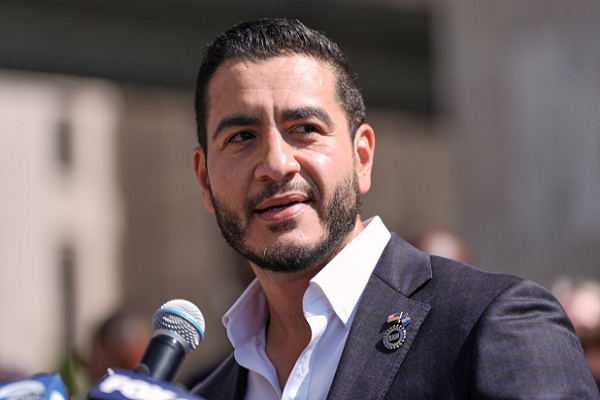
Within hours of Abdul El-Sayed’s victory in Michigan's Democratic Senate primary, the volume of anti-Muslim posts naming El-Sayed exploded.
New research from the Centre for the Study of Organized Hate (CSOH) shows posts targeting El-Sayed with Islamophobic abuse averaged 3,099 a day in the week after his win, up from a daily average of 155 in the two months before it, an increase of 1,895 percent.
On August 5, the day his rival conceded, the volume of anti-Muslim posts about him peaked at nearly 7,000 in a single day.
That single week produced more Islamophobic content about El-Sayed than the previous seven months combined.
It accounts for 56.7 percent of all 38,280 such posts recorded about him since January.
El-Sayed, a former Michigan public health official running for the US Senate seat vacated by Gary Peters, is Muslim. That has become central to the abuse directed at him.
CSOH's analysis, which drew on posts across X, Facebook, Instagram, YouTube, Reddit and Bluesky, found the content clustered around a handful of recurring conspiracy tropes rather than genuine political critique.
The largest single theme linked him to Hamas, Hezbollah and the Muslim Brotherhood, with widely shared posts branding him "a jihadist."
Others baselessly accused him of planning to impose Sharia law, while a significant share of posts went further still, calling for "remigration” of Muslims from Western countries, as the only response.
El-Sayed surge was not confined to posts about him.
Across X alone, CSOH tracked 409,640 posts promoting anti-Muslim bigotry and conspiracy theories in the US between June 1 and August 10.
Overall Islamophobic posting on the platform hit its highest single-day total of the summer on August 5, the day El-Sayed's win was declared, with nearly 12,000 posts. That was more than double the previous 30-day average and the first day in that period to cross 10,000 posts.
Six days on, researchers said, the surge had not subsided.
General anti-Muslim posting volume remained 59 percent above its pre-primary baseline, while abuse aimed specifically at El-Sayed stayed roughly ten times higher than its levels earlier in the summer.
CSOH linked the online surge to a wider, organized effort.
Read More:
That campaign, researchers said, has built its narrative around ideas drawn from the Great Replacement theory, escalating around events such as the war in the Middle East and the rising number of Muslim candidates for office.
El-Sayed's win in Michigan was one of several closely watched results in this month's round of US primary contests, part of the run-up to next year's midterm elections. But what followed it, researchers say, now looks less like a reaction to one candidate than a script that runs whenever a Muslim politician wins or gains ground.
CSOH said it expects anti-Muslim bigotry to intensify further as campaigning for the 2026 midterms builds.
Source: TRT World
