


Holy Prophet Was Always Seeking to Unify Ranks of People
IQNA – A Lebanese university scholar said Islamic ethics towards non-Muslims is based on the principle that people are either brothers in religion or equal to you in creation.
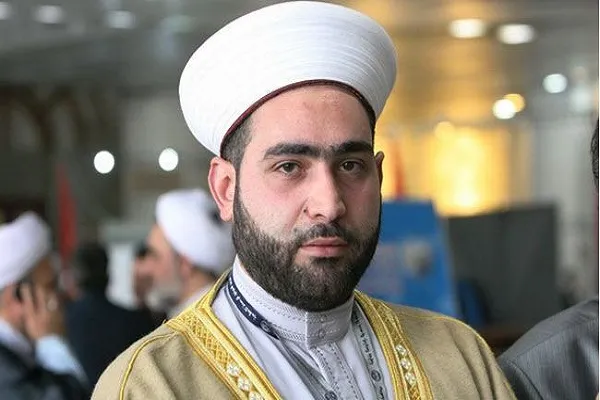
And the life of the Holy Prophet (PBUH), both before and after his prophethood mission, was a perfect example of healing the rifts and establishing unity; from judging the dispute over the installation of the Black Stone and protecting the blood of the tribes of Mecca to calling for moral coexistence with followers of other religions, Sheikh Ahmed Qattan, a Lebanese Sunni cleric and head of the ‘Quluna wa al-Amal’ association said in an interview with IQNA as Muslims mourn the anniversary of the demise of the Prophet (PBUH).
Following are excerpts from his remarks during the interview:
Whenever we want to talk about the Prophet's (PBUH) life, especially when dealing with non-Muslims, we start with this statement of God Almighty: “O mankind! We have created you from a male and a female, and have made you into nations and tribes, that you may know that the most honorable of you in the sight of God is the most righteous of you. (Al-Hujurat: 13)
So our Islamic religion treats non-Muslims on the basis that people are of two types: either they are your brothers in religion, or they are your equals in creation, as our master Ali ibn Abi Talib (AS) said. And it is incumbent upon us to treat non-Muslims in a manner that reflects our Islam and our morals, which originated from following our Prophet Muhammad (PBUH).
Therefore, we treat even non-Muslim Christians and Jews with our firm morals and avoid any behavior that contributes to a false image of our beloved Islam.
But about the actions that the Prophet of God (PBUH) took to establish unity and brotherhood between different nations and tribes, it should be said that the Messenger of God (PBUH) always sought to repair the gaps and unify the ranks of the people, even before the mission. We all know that before the mission, the elders of Mecca, when installing the Black Stone, said that they would make the first person who enters now the judge. When they saw that he was Muhammad (PBUH), they accepted him as their judge. So, to prevent conflict and disagreement, the Messenger of God told each tribe to take a corner of the garment, then he placed the Black Stone in the middle of the garment and placed it in its special place with his blessed hand. In this way, he saved the blood of those who were fighting with each other over the placement of the Black Stone. After the mission began, he always sought to heal the rifts between people, because he is a prophet and a messenger from God Almighty and wants the good of everyone.
As for the brotherhood pact that was concluded between the Muslims of the Ansar and the Muhajirin, it is natural that the Messenger of God established a brotherhood pact between them when he entered Medina, and that brotherhood was so great that it established the brotherly life of Muslims, in such a way that we are all one Ummah.
Read More:
The Messenger of God was always diligent in all economic and social levels. If this indicates anything, it is that he was not an ordinary man, but a prophet and a messenger from God Almighty. He always advised the Muslims to seek knowledge and increase their knowledge, because the first verse that was revealed to his blessed heart was the word “Read”.
The Messenger of God (PBUH) said: The angels spread their wings for the seeker of knowledge out of pleasure from what they hear, and he always encouraged the pursuit of knowledge and said: Seeking knowledge is obligatory upon every Muslim, male and female. If this indicates anything, it does not indicate anything other than his great enthusiasm and interest in knowledge and his awareness of its value.
4369352
