


Halal Business Masters Launched in Brazil
IQNA – A master’s degree program in Halal business management has been launched at a university in São Paulo, Brazil.
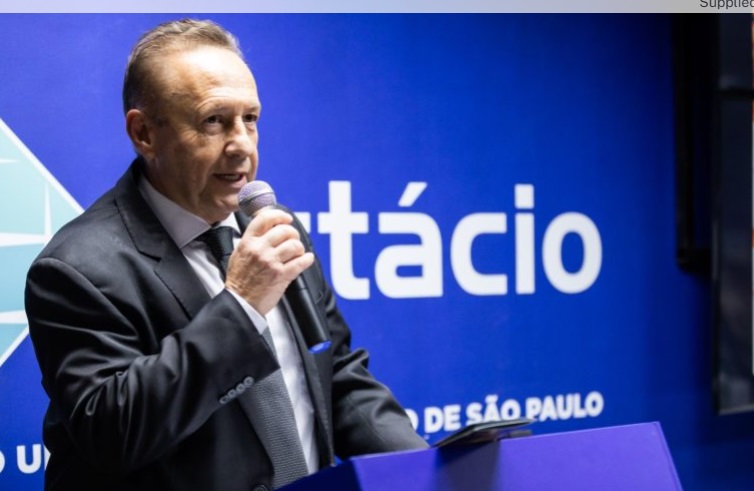
The Brazilian job market will soon have masters trained in the standards of the halal concept, according to news reports. The MBA in Halal, covering standards and market and business development topics, will be offered by the Estácio do São Paulo University and the International Halal Academy (IHA).
The course will begin in August. Registration is now open for the graduate program, which will last three semesters or 18 months, with the first class graduating at the end of 2027 with qualifications recognized by the Brazilian Ministry of Education.
According to Delduc Martinez, Deputy Coordinator and Executive Director of the Program and Secretary General of the International Halal Academy, who also serves as Director of Projects and Institutional Relations at the halal certification company FAMBRAS Halal, a strategic partner of the program, the Halal MBA will be the first of its kind in Latin America.
The course’s launch event brought together halal professionals, students and a host of guests. The MBA is divided into three sections. The first will focus on principles and regulatory frameworks, covering topics such as global standards and regulations, conformity assessment, quality management and cultural and Islamic issues.
The second will focus on operations, production and compliance, including industry and service requirements, internal and international audits, traceability, logistics and supply chain management.
The third section will address Islamic business and financial strategies, covering investments, consumer behavior, marketing, international trade as well as regulatory processes.
At the end of the second semester, students will be eligible to participate in an optional international in-person program in Egypt. The program will consist of 10 days of classes, totaling 40 hours, at the College of International Transport and Logistics in Alexandria, with a joint certification from Estacio University, IHA, and the Egyptian Institute.
The program will focus on logistics, according to Martinez. “We really want students to be familiar with all the principles and fundamentals of halal logistics,” he said. In addition to classroom training, participants in Egypt will participate in technical visits and have the opportunity to experience the local culture.
The MBA aims to provide a professional market that includes senior managers, executives, and professionals in a wide range of fields such as production, logistics, sales, marketing, procurement, finance, administration, regulation, food engineering, agriculture, veterinary sciences, and more.
Read More:
Martinez believes that there will be a high demand for both the program and its graduates in consulting firms, institutions, the public sector, audit organizations and even universities for research activities.
The MBA will be offered remotely and will have live online classes at scheduled times, bringing together professors and students in a virtual classroom. Class sizes will be limited to a maximum of 40 students, allowing for greater interaction between participants.
The faculty will be made up mainly of Brazilian instructors. In cases where foreign instructors do not speak Portuguese, classes will be translated. According to Martinez, each course will be taught by two instructors: one with a more academic background – holding a master’s or doctorate from Estácio University – and the other with expertise in the specific market or subject covered.
The MBA course was officially launched at the Conceição Campus of Estácio University, in the Jabaquara district of São Paulo.
Among those present were Alessandra Friso, Director of Institutional Relations at the Arab-Brazilian Chamber of Commerce (ABCC), representing the organization, and Rubens Hanon, former president of the Arab Chamber and Honorary Consul of Tunisia in Brazil.
Friso said: “There is still significant room for expansion in the Arab and Muslim markets towards higher value-added products and services. By training professionals who understand halal requirements, this program will help Brazilian companies sell more effectively to the growing global market with greater confidence and credibility.
He believes that the program will open doors for young professionals in a promising and yet undiscovered sector. “This is an initiative that brings together education, business and the future,” he said.
4359360
