

Strait of Hormuz Dispute A Battle for Security Order Identity in West Asia: Analyst

Jihad Haidar, a political analyst in Lebanon, wrote an article about this issue on the Al-Ahed news website. The article is as follows:
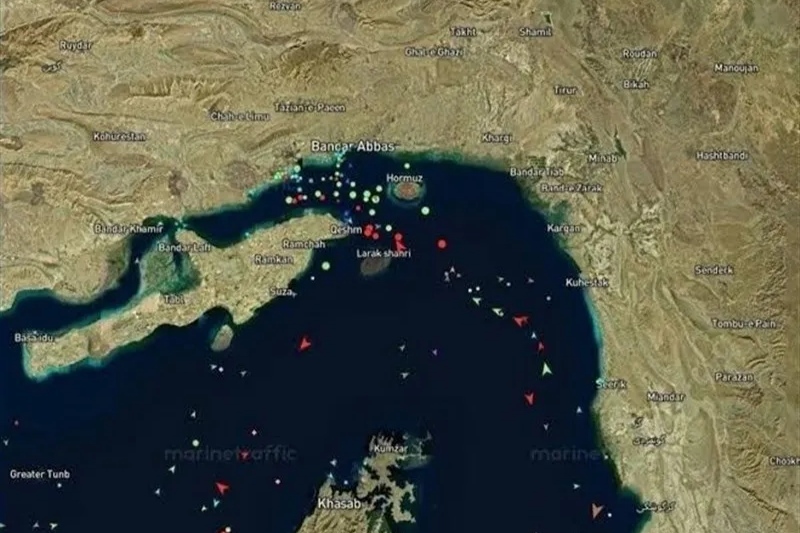
The dispute over the Strait of Hormuz today is not simply about freedom of navigation or the security of energy resources, but rather about redrawing the balance of power in the Persian Gulf and West Asia. The strait has become a political tool that Iran uses to redefine the rules of deterrence and influence, while the United States considers preventing this development essential to maintaining the regional order on which its interests and those of its allies, primarily the Zionist regime, are based. Therefore, the consequences of the dispute over the Strait of Hormuz go beyond the global economy and directly and indirectly affect the internal security of the occupying Israeli regime.
Iran knows that the traditional balance of power vis-à-vis the United States and the Zionist regime is not in its favor, and has therefore shifted its focus from military superiority to global economic interdependence. It does not need to permanently close the Strait of Hormuz; it is enough to condition navigation through it on its ability to exert influence and to establish the principle that the security of the Persian Gulf cannot be guaranteed without taking its interests into account. In this sense, the Strait of Hormuz, rather than being a mere instrument of military pressure, becomes a means of political recognition of Iran’s regional role.
For the Zionist regime, the danger lies in the fact that the success of this equation will destroy one of the most important pillars of its internal security: the continued dominance of the United States over the security system in the Middle East. For decades, the occupation regime’s strategy has been based on the assumption that the United States is capable of protecting trade and energy routes, deterring regional powers, and enforcing the rules of engagement. If Iran were to gain the ability to disrupt navigation or dictate the terms of shipping, it would mean a shift of strategic initiative from Washington to Tehran.
This impact is not limited to the military sphere; it also extends to the political environment in which the Zionist regime operates. The greater the cost of confronting Iran for the global economy, the greater the international pressure to avoid large-scale wars and seek arrangements that take Iran’s interests into account. This limits the Zionist regime’s room for maneuver, since any large-scale military operation will later be judged not only by its results on the ground, but also by its impact on energy security and international trade.
Conversely, the conflict over the Strait of Hormuz provides Iran with an opportunity to strengthen its position among the Persian Gulf states. These countries, despite their continued dependence on security cooperation with the United States, know that any open confrontation could put their oil facilities and ports at the heart of the conflict. The greater this awareness, the greater the need for the Persian Gulf states to establish channels of understanding with Tehran. From the Israeli perspective, any weakening of the regional alliance against Iran represents a strategic shift that would reduce the effectiveness of the network of cooperation that Tel Aviv and Washington have worked to build in recent years.
Moreover, the battle for the Strait of Hormuz is not limited to the Persian Gulf; it extends to the Red Sea and the Bab al-Mandab Strait, where Iran, through its allies, can extend its pressure on international trade. This multiplies the challenges facing the Israeli regime, which increasingly relies on sea routes for trade, imports, and exports. The broader the scope of maritime threats, the greater the need for Israel to distribute its military resources across multiple fronts, thereby increasing the cost of deterrence and defense.
Most importantly, the conflict over the Strait of Hormuz represents a shift in the nature of regional power. Rather than seeking territorial control, Iran now uses geography to exert political influence. If it succeeds in establishing the principle that maritime security can only be achieved with its consent, it will gain influence that goes beyond its military capabilities, giving it greater power to influence the decisions of international and regional powers.
Read More:
The battle for the Strait of Hormuz is therefore not simply a battle over a sea passage, but a battle over the identity of the security order in West Asia. The success of the United States in neutralizing the Iranian card would mean preserving the strategic environment on which the Zionist regime relies, while the success of Iran in turning the Strait into a tool for influence will boost its regional project and create a more pluralistic region, where American hegemony will gradually decline in favor of new balances of power.
From this perspective, the Strait of Hormuz is more than an issue of oil prices or maritime security for the Zionist regime; it is a test case for the future balance of power on which its security strategy has been based for decades. The Strait is not the real target of the conflict, but a tool that could redraw the balance of power in the region and have direct consequences for the security of the Zionist regime and the strategic environment in which it operates.
4365792
