


John Esposito: A Scholar Who Challenged Islamophobia through Civilizational Understanding
IQNA – The death of John L. Esposito, one of the world's most prominent scholars of Islamic studies and professor emeritus at Georgetown University, has prompted widespread reactions across international academic circles.
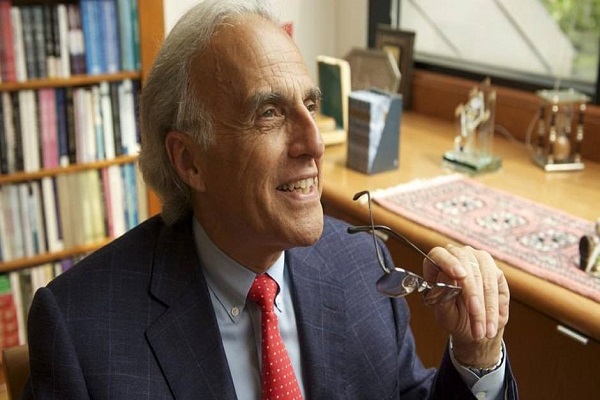
Esposito died on Wednesday, July 15, 2026, in Philadelphia at the age of 86 due to complications from heart surgery.
Dr. Yahya Jahangiri Sohrvardi, Visiting Professor at the Islamic Studies Chair of the Indonesian International Islamic University (UIII), described Esposito as one of the most influential figures in the development of contemporary Islamic studies in the West, saying that for more than five decades he sought to introduce Islam and Muslims to Western audiences not through the lens of fear, violence or conflict, but within the broader context of history, civilization, religion, politics and the lived realities of Muslim societies.
The Passing of a Pioneer of Modern Islamic Studies
Beyond his academic work in religion, international relations and Islamic studies, Esposito founded the Center for Muslim-Christian Understanding and was among the architects of the Bridge Initiative, a major research project dedicated to combating Islamophobia. Georgetown University itself has recognized him as one of the most influential figures in shaping modern scholarship on Islam and Muslim societies.
From Christian Theology to Islamic Studies
Reviewing Esposito's academic journey, Jahangiri explained that he was born in Brooklyn, New York, in 1940 to an Italian-American Catholic family. Raised in a deeply religious environment, Esposito even considered becoming a priest during his youth. He pursued theological studies and eventually earned his Ph.D. from Temple University in 1974.
According to Jahangiri, Esposito's entry into Islamic studies was not part of a long-term career plan. As Esposito himself recounted on several occasions, he was encouraged by his department chair to study under the renowned Palestinian-American scholar Ismail Raji al-Faruqi. Although he initially accepted the suggestion with hesitation, al-Faruqi's teaching profoundly transformed his understanding of Islam and Islamic civilization, ultimately redirecting the course of his academic life.
Islam as Part of the Abrahamic Tradition
Jahangiri emphasized that one of the central foundations of Esposito's intellectual approach was his conviction that Islam should not be taught in Western universities merely alongside Eastern religions such as Hinduism or Buddhism. Rather, from both historical and theological perspectives, it should be studied as an integral part of the Abrahamic tradition and in close relationship with Judaism and Christianity.
He said this perspective became one of the cornerstones of Esposito's scholarly project, which sought to present Islam not as a civilization alien to the West, but as one of the world's three great monotheistic traditions.
Challenging Dominant Stereotypes About Islam
Jahangiri noted that Esposito entered the field of Islamic studies at a time when Islam had not yet become a dominant subject in American politics or media. However, the Iranian Islamic Revolution, developments in Afghanistan, the rise of Islamic movements and, later, the September 11 attacks transformed Islam into one of the world's most politically and socially debated subjects.
He said that throughout this period Esposito consistently challenged two prevailing narratives. The first portrayed Islam as inherently violent, incompatible with democracy and fundamentally opposed to Western civilization. The second treated all Muslim societies and Islamic movements as a single, homogeneous entity.
"From Esposito's perspective," Jahangiri said, "Islam is neither monolithic nor devoid of diversity. The behavior of an extremist group or the policies of a particular Muslim government cannot legitimately be attributed to the Qur'an, the Prophet of Islam (PBUH), or Muslims as a whole."
He added that Esposito repeatedly warned that generalizing the actions of a small minority of extremists to the entire Muslim world was not only academically unsound but also contributed directly to discrimination and the spread of Islamophobia.
An Author Who Shaped University References on Islam
Highlighting Esposito's scholarly record, Jahangiri said the American scholar's academic contributions were exceptional in both scale and influence. According to Georgetown University, Esposito authored more than 55 books and over 100 scholarly articles, many of which have been translated into dozens of languages and adopted as standard university textbooks around the world.
In addition to his own writings, he served as editor and general editor of several of Oxford University's most important encyclopedic works on Islamic studies, making a lasting contribution to the institutional development of the discipline.
Explaining Islam Beyond Political Stereotypes
Jahangiri said Esposito's scholarship extended far beyond introducing Islam to Western audiences. Among his best-known works is Islam: The Straight Path, first published in 1988, which has become one of the most authoritative introductory texts on Islam.
He explained that in this book Esposito begins with the life of Prophet Muhammad (PBUH) and the Qur'an before examining the historical development of Muslim societies, Islamic beliefs and rituals, reform movements, and the major issues confronting the contemporary Muslim world.
Jahangiri added that in Islam and Politics, Esposito sought to present a balanced understanding of the relationship between religion and politics in the Muslim world. By examining the interaction between religion and the state, the emergence of Islamic movements, the legacy of colonialism and the experience of post-independence governments, Esposito argued that political Islam should not simply be equated with violence or extremism. Instead, he stressed the need to distinguish between reformist, electoral, revolutionary and militant movements.
He further noted that in The Islamic Threat: Myth or Reality?, Esposito explored whether Islam had replaced the Soviet Union as the West's new adversary following the Cold War. While acknowledging the existence of violent extremist movements, Esposito maintained that portraying "Islam" as a single enemy fundamentally distorted the complex realities of the Muslim world.
Jahangiri also referred to What Everyone Needs to Know About Islam, saying the book explains subjects including the Qur'an, Prophet Muhammad (PBUH), the status of Jesus and Mary in Islam, jihad, Sharia, women, democracy and Muslim-West relations in a clear question-and-answer format. For many Western readers, he said, it provided their first systematic introduction to Islam free from the influence of sensational media narratives.
Separating Islam from Extremism
Turning to Esposito's post-September 11 scholarship, Jahangiri said that in Unholy War: Terror in the Name of Islam, Esposito clearly distinguished between the Islamic concept of jihad and the ideological misuse of the term by terrorist organizations.
He said Esposito argued that religious texts alone cannot explain extremism and that any serious analysis must also take into account political conditions, military occupation, domestic repression, state failure, and the widespread sense of discrimination and humiliation experienced in many societies.
Jahangiri also highlighted Who Speaks for Islam? What a Billion Muslims Really Think, noting that rather than relying on governments or media narratives, Esposito based the study on extensive public opinion surveys conducted across the Muslim world.
The findings, he said, demonstrated that large numbers of Muslims, while remaining deeply committed to their faith, also seek justice, development, political participation and respectful relations with the West. Consequently, Esposito concluded that the notion of an inherent conflict between Islam and democracy is inconsistent with the actual views of Muslim populations.
An Architect of Foundational References in Islamic Studies
Jahangiri said Esposito's contribution was not limited to authoring influential books. Through his editorial leadership of major reference works—including The Oxford Encyclopedia of the Islamic World, The Oxford Encyclopedia of the Modern Islamic World, The Oxford History of Islam, The Oxford Dictionary of Islam, and the three-volume The Islamic World: Past and Present—he played a decisive role in organizing and advancing academic resources in the field of Islamic studies.
He added that Esposito's books and articles have been translated into 35 languages, reflecting their broad international impact.
According to Jahangiri, Esposito's greatest contribution lay not merely in writing entries for these works but in serving as an academic architect who brought together scholars with diverse expertise, perspectives and methodologies to produce a more comprehensive understanding of Islam and Muslim societies.
Presenting Shi'ism Beyond Western Political Narratives
Jahangiri said that although Esposito was not traditionally trained as a specialist in Shia theology or jurisprudence, Shi'ism—and particularly the political and social experience of Shia Islam in Iran—occupied an important place in his scholarship.
He pointed to The Iranian Revolution: Its Global Impact, published in 1990, as well as Iran at the Crossroads, among Esposito's most significant works on Iran. According to Jahangiri, these studies treated the Islamic Revolution and developments in the Islamic Republic of Iran not simply as domestic events but as phenomena with important regional and international implications.
He added that in the major reference works published under Esposito's supervision, independent entries were devoted to Shi'ism, Shia political thought, the Islamic Revolution, Imam Khomeini (RA), the Shia clergy and Iran's political and social developments. This, he said, helped establish Shi'ism within Western academic scholarship as a distinct historical, intellectual and social tradition rather than merely a contemporary political phenomenon.
Turning Interfaith Dialogue into Lasting Institutions
Jahangiri went on to highlight Esposito's contribution to advancing interfaith dialogue, saying that one of his most enduring achievements was the establishment of the Center for Muslim-Christian Understanding at Georgetown University in 1993.
He said the significance of this initiative lay in the fact that Georgetown is a university with a long-standing Jesuit and Christian heritage. Creating a permanent academic center dedicated to the study of Islam and Muslim-Christian relations represented a major step toward institutionalizing interfaith dialogue.
According to Jahangiri, the center gradually developed into one of the world's leading research institutions focusing on Islam-West relations, political Islam, Muslim communities in Europe and the United States, interfaith dialogue and Islamophobia. He added that Esposito also launched the Bridge Initiative, placing the systematic academic study of Islamophobic networks, discourse and their social consequences on the international research agenda.
The visiting professor further noted that, in Esposito's view, Muslim-Christian dialogue should not be confined to symbolic meetings among religious leaders. Rather, it should lead to tangible reforms in school curricula, changes in media discourse, the education of diplomats, greater academic engagement between societies and practical efforts to combat social discrimination.
Bridging Academia, Society and Policymaking
Jahangiri said another defining characteristic of Esposito's career was his ability to connect academic scholarship with broader society.
Alongside his university work, Esposito served as an adviser to governments, international organizations, media outlets and policy institutions, allowing his research and ideas to influence public discourse well beyond academic circles.
He added that Esposito was the only scholar to have served as president of both the Middle East Studies Association of North America (MESA) and the American Academy of Religion. In recognition of his contributions to Islamic studies, education and public understanding of religion, he received seven honorary doctorates along with numerous international academic awards.
A Scholar Admired—and Debated
Jahangiri acknowledged that Esposito's scholarly approach was not universally accepted.
He said some critics believed Esposito was overly optimistic in evaluating certain Islamist movements or that, in seeking to challenge Islamophobia, he devoted insufficient attention to the authoritarian dimensions of some Islamic political currents.
"Despite these criticisms," Jahangiri stressed, "even Esposito's critics cannot deny his decisive role in bringing the academic study of contemporary Islam into the mainstream of American universities, media and policymaking institutions."
A Legacy Beyond Books and Articles
Summing up Esposito's intellectual legacy, Jahangiri said he was neither a Qur'anic exegete in the traditional scholarly sense, nor a jurist, nor a specialist in Islamic manuscripts. Instead, his principal field of scholarship focused on contemporary Islam, the relationship between religion and politics, Islam-West relations, Islamic movements, democracy, Islamophobia and interfaith dialogue.
He said Esposito's enduring legacy could be distilled into one fundamental principle: Islam and Muslims deserve to be studied with the same intellectual rigor, nuance and complexity that scholars apply to Western civilization, Christianity and Western societies.
According to Jahangiri, Esposito believed that a genuine understanding of Islam is possible only by moving beyond stereotypes, prejudices and simplistic narratives.
He added that at a time when dominant portrayals of Islam in much of the Western media were closely associated with war, terrorism, revolution and crisis, Esposito sought to broaden that perspective by drawing attention to the Qur'an, Islamic civilization, the everyday lives of Muslims, the diversity of Islamic schools of thought, Muslim intellectuals, women, civil society actors and the rich pluralism of the Muslim world.
In conclusion, Jahangiri said Esposito's passing marks the loss of a scholar who was neither Muslim nor sought to speak on behalf of Muslims, yet consistently insisted that the world should first understand Islam before passing judgment on it.
"Perhaps Esposito's greatest contribution," he concluded, "was building a bridge of knowledge and dialogue between a world that spoke extensively about Islam and the people who were too rarely given the opportunity to present themselves in their own voice."
