


US Seeks to Stop Global Transformation Created by Iran’s Resistance: Jordanian Analyst
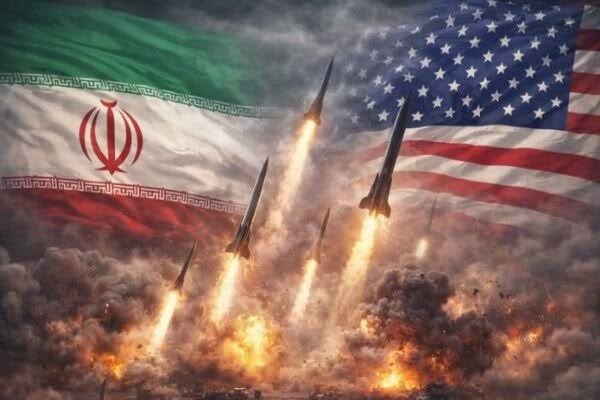
IQNA – A Jordanian analyst believes the recent escalation of US tensions against Iran is not only aimed at exerting economic and negotiation pressure on this country, but also at breaking Iran's will and stopping the global transformation caused by its resistance in the face of colonial domination.
Imad al-Hataba wrote an article published by the Lebanese Al-Mayadeen News Agency titled “War of Wills”, which is as follows:
The recent escalation of US tensions against Iran is not only aimed at exerting economic and negotiation pressure on this country, but also at breaking Iran’s will and stopping the global transformation caused by the resistance of Iran and the axis of resistance in the face of colonial domination.
Political experts are almost unanimous that the United States does not want to enter a full-scale war in the region, and they believe that the recent escalation of US tensions in the Persian Gulf has two goals: to escape the image of American defeat created by Iran in its latest round of aggression, and to put Iran under economic and social pressure by a naval blockade and, to some extent, a land blockade in order to gain more points.
What is happening today is not simply a battle between armies and politicians, or simply a war between a narrative of right and a narrative of wrong. At the heart of this conflict, the embryo of the future world is growing, a world in which the forces of evil will not have the first and last word, but rather people and their vital forces will intervene to determine their own destiny.
“The old world is dying, the new world is delayed in its birth, and in this interim period, monsters appear,” wrote the Italian Marxist Antonio Gramsci in his famous book, Prison Notebooks. These monsters have taken the form and structure of states, but this has not prevented them from revealing their savage nature whenever necessary. However, these monsters cannot prevent death or birth. Therefore, the new world is inevitably coming. As much as this idea brings optimism, it can also bring pessimism. What if the monsters win? Will the world not become the jungle that the colonial powers dream of?
When the United States signed the memorandum of understanding with Iran, both sides knew that the United States would not abide by any of its provisions, a fact that the martyred Leader of Iran repeatedly expressed. While Iran needed time to recover, the United States sought to extricate itself from the quagmire of direct confrontation at all costs and pursue victories in other parts of the region and the world. This was evident in the “Framework Agreement” between Lebanon and the Israeli regime, the violation of the agreement by the Zionist regime in southern Lebanon, and the pressure on Hamas to dissolve its government in Gaza and hand over control to the US “Peace Council”.
According to this complete picture, the return to the battlefield in the Persian Gulf is once again not with the aim of overthrowing the Iranian establishment nor with the aim of erasing Iran from the world map, as Senator Lindsey Graham called for, but with the aim of stopping the wheel of global change that is today being driven by Iran. This change was sparked from Gaza on October 7, 2023 (Al-Aqsa Flood Operation) and has reached its peak today through the achievements of the Iranian Armed Forces and the Islamic Revolution Guards Corps (IRGC).
Historically, colonial powers have treated other countries not as their backyards, but as their private property, which no one, not even the legal owners of the land, has the right to encroach on. This is what happened when Gamal Abdel Nasser, the then president of Egypt, nationalized the Suez Canal (1965), which led to a tripartite aggression against the country. Similarly, when Mohammad Mossadegh nationalized Iranian oil, the United States and Britain staged a coup against him. These are just a few examples. It is therefore not surprising that they resorted to launching their own wars of aggression against Syria, Yemen, Gaza, and Iran. The axis of resistance has challenged the colonial powers by striving for freedom and achieving real independence.
Read More:
The “Framework Agreement” was clear in its text about the obligation of ships entering the Strait of Hormuz to use the lane designated by Iran, which is responsible for protecting these ships. This obligation is known to countries and companies whose ships pass through the Strait. Therefore, the choice of some ships to use the southern route suggests one of two things: either the companies to which these ships belong have decided to take the risk and bear the consequences of Iran’s anticipated action, or the countries to which these ships belong—Qatar, Saudi Arabia, and Cyprus—have decided to accept the risk. In reality, neither of these possibilities is plausible. A third scenario remains: that the United States has forced these ships to use the southern route, either by force or through promises of protection.
The question that remains is: If the United States, as I have already indicated, is not involved in this war, why is it doing all this? There are many reasons, the most important of which are:
First: This is the most important reason, namely, breaking Iran's will and confirming colonial hegemony over all trade routes, especially after the historic funeral of the martyred Leader of Iran, which can be considered a referendum on the popular approval of the policies of the Islamic Republic of Iran, which will lead this leadership to adhere to its positions and refuse to make the concessions that colonialism wants to hear.
Second: Returning to the naval blockade of Iran under the pretext of violating the agreement, which will increase economic pressure both within Iran and on the economic enemies of the United States, including China, due to the increase in oil and gas prices, especially as winter approaches.
Third: Reigniting the conflict in Yemen, against the backdrop of Iran’s support for Ansarullah and the violation of the imposed blockade on Yemen, in order to tighten control over the Bab al-Mandab Strait and, as a result, complete colonial control over three important trade routes in the world: Hormuz, Bab al-Mandab, and the Suez Canal.
What Iran needs today, in addition to military equipment, is political will, as Ayatollah Seyed Mojtaba Khamenei, the Leader of the Islamic Revolution, stated in his message on the eve of the funeral of the martyred Leader. Iran and the axis of resistance have the will and capacity to endure and accept sacrifice. Therefore, Arab and international liberation movements must have a similar will and readiness, abandon the liberal rhetoric that tries to please all parties, and adopt a historic stance. Only then will victory be within reach.
4364591
