


Singapore Mosque to Be Restored, 'Leaning Tower' to Stay
TEHRAN (IQNA) – Singapore’s own "leaning tower" - the Hajjah Fatimah Mosque's minaret, which tilts at an angle of six degrees - will be restored to its former glory.
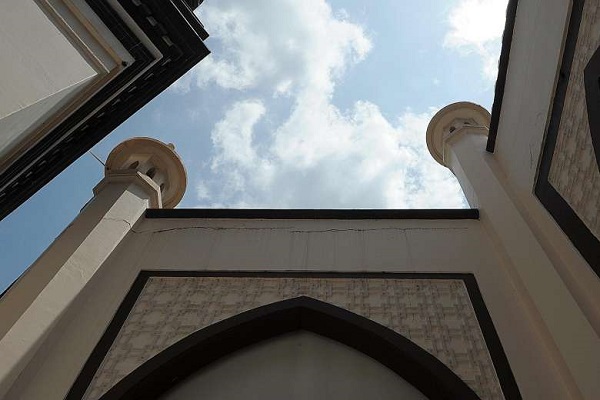
Although the slant will remain, the structure, alongside the rest of the 1846 compound, will undergo a year-long $500,000 restoration to address issues such as moisture damage or plaster cracks on walls.
The project will be co-funded under the National Monuments Fund, administered by the Preservation of Sites and Monuments (PSM) division. The National Heritage Board (NHB) said $2.22 million of the $9.77 million set aside to co-fund the restoration of national monuments will be disbursed this year to eight recipients, including the mosque and St Joseph's Church.
To qualify for the grant, the monuments must be non-profit or religious. Of the 72 here, 31 are eligible.
Mr Alsagoff Mohdar, 74, chairman of Hajjah Fatimah's mosque management board, said: "The restoration could transform it into a more conducive place of worship for Muslims, make it more presentable for the tourists who often come by."
Based on old maps, the land on which the Beach Road mosque sits used to be a mangrove swamp, a factor contributing to the moisture damage across the site.
The tilt of the minaret is a result of its hand-made bricks. They are less compact than machine-made ones, resulting in moisture seepage and shifting over time, said Mr Chern Jia Ding, assistant director of PSM's architecture and inspectorate.
While the tilt cannot be rectified, steps have been taken to monitor the slant. To deal with weakening bricks, salt will be extracted from the structure. Chemicals will be injected into it to form a water barrier. Existing layers of paint will be stripped away and replaced by a new coat of mineral paint.
Source: The Straits Times
