


French Muslim Associations Slam IFOP for Its Bias, Breach of Ethical Standards
IQNA – A new IFOP survey on Islam in France has sparked a formal backlash, with several Muslim associations filing a complaint that says the poll breaches legal obligations for impartiality in public opinion research.
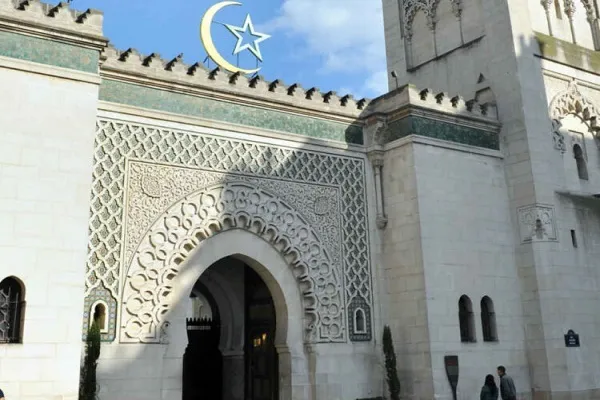
The poll, released shortly after the annual commemorations of the November 2015 attacks, is now the subject of a complaint filed by four departmental Muslim councils, who argue that it breaches legal obligations of neutrality and fairness in opinion research.
The departmental councils from Loiret, Aube, Bouches-du-Rhône, and Seine-et-Marne submitted a complaint against an unknown party to the Paris judicial court.
These councils represent the local level of the former French Council of the Muslim Faith, an institution once tasked with acting as an official intermediary between Muslim communities and public authorities.
According to the lawyers representing the associations, the survey violates the principle of objectivity set out in the French law governing the publication and distribution of opinion polls.
They argue that the questions are framed in a way that steers respondents toward predetermined interpretations and that minority results are given disproportionate attention for provocative purposes.
In their statement, they warned that such an approach risks spreading fear and feeding harmful generalizations and islamophobia in public discourse.
The study was commissioned by the media outlet Ecran de veille, which describes itself as a publication intended to resist forms of extremism. It was conducted on a sample of 1,005 Muslim respondents.
Much of the media and political response has focused on a subgroup of participants aged between 15 and 24. Within this group of 291 individuals, a large majority described themselves as religious, reported regular prayer, and said they observe Ramadan (fast during the holy month).
In his conclusion to the survey, IFOP’s director of political and current affairs studies suggested that the findings point to a trend of increasing religiosity structured around strict norms and accompanied by a growing attraction toward political Islam. That interpretation has been widely contested.
While far-right figures seized on the results as proof of what they call “Islamization,” Muslim representatives and several scholars rejected this reading.
Read More:
The rector of the Grand Mosque of Paris criticized the way the questions were formulated, warning that poorly constructed surveys do not merely measure fear but can actively produce it.
IFOP has indicated that it will provide a written response to the criticism.
As the legal process unfolds, the case has reopened a national debate around the responsibilities of polling institutions, the framing of religion in the public sphere, and the fine line between research and stigmatization.
Source: moroccoworldnews.com
