


Conference Stresses Transforming Arbaeen Achievements into Operational Projects
IQNA – The final statement of the 10th International Arbaeen Conference called on the relevant Iraqi ministries and institutions to use the findings of research related to sustainability and resource management for formulating public policies and managing resources and services during the Arbaeen pilgrimage.
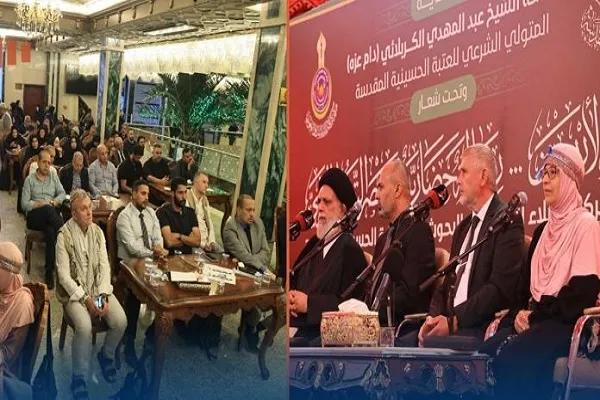
The conference concluded its work in the holy city of Karbala after two days of scientific meetings and specialized discussions. The event was attended by prominent researchers and professors from inside and outside Iraq, who examined various human, scientific, and service aspects of the Arbaeen pilgrimage.
The final statement of the conference included a set of recommendations, the most important of which was a call for religious, cultural, and educational institutions to utilize research findings on the spiritual and intellectual dimensions of the Arbaeen pilgrimage as a scientific reference for developing educational, cultural, and media programs; an action that will strengthen human identity and values and promote a culture of awareness, moderation, and peaceful coexistence.
The conference also recommended that government institutions use its research findings as a scientific basis for formulating public policies in the management of this great pilgrimage and establish a “National Observatory of Arbaeen Sociology” under the joint supervision of the Iraqi Ministry of Higher Education and Scientific Research, Iraqi universities, the Karbala Center for Studies and Research, and local governments.
The aim of this action is to provide databases, indicators, and field studies that will help improve planning, promote social security, and increase the efficiency of services.
Regarding digital transformation, the conference recommended using research findings to develop an integrated smart system for managing the Arbaeen pilgrimage, thereby supporting data-driven decision-making while promoting digital governance and service efficiency.
Read More:
The recommendations also included the creation of a “digital model” that simulates all elements of the event, including crowds, roads, mourning groups, hospitals, and border crossings, so that government agencies can test different scenarios before the event, anticipate potential bottlenecks or service gaps, and take appropriate measures. In addition, the recommendations emphasized the establishment of smart management platforms to support government operational centers; platforms that provide real-time indicators on population density, hospital readiness, transportation efficiency, and service levels.
The conference also recommended that economic institutions and ministries use the findings of economic research on the Arbaeen pilgrimage as a scientific reference for formulating economic policies and managing resources and investments related to this event with the aim of maximizing the economic impact, developing the local economy, improving cost efficiency and achieving economic sustainability for this great pilgrimage.
4369197
