


Egypt Launches Museum of Quran Reciters
IQNA – The first Museum of Quran Reciters opened at the Egypt Cultural and Islamic Center in the New Administrative Capital of Egypt near Cairo.
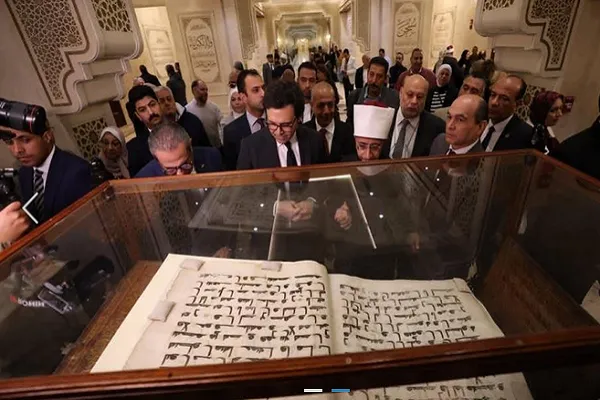

Ahmed Fouad Heno, the minister of culture, officially inaugurated the museum, which celebrates Egypt’s rich spiritual and cultural heritage and honors iconic voices of Quran recitation.
Heno and Awqaf Minister Osama Al-Azhari toured various sections of the museum after its inauguration.
The museum contains personal works of 11 of Egypt’s senior qari, including Muhammad Rifa’at, Abdul Fattah Shasha’ei, Taha Al-Fashni, Mustafa Ismail, Mahmoud Khalil Al-Husari, Muhammad Siddiq Minshawi, Abu al-Ainain Shuaisha, Mahmoud Ali Al-Banna, Abdul Basit Abdul Samad, Muhammad Mahmoud Tablawi, and Ahmed Al-Ruzifi.
The families of these legendary qaris were present at the museum opening ceremony.
The museum was designed by engineer Karim Al-Shapouri and has four main halls, housing a collection of manuscripts, rare works, and Quranic licenses donated by Al-Azhar to a number of reciters.
The museum also features a specialized hall for listening to selected recitations, which offers visitors a comprehensive experience to learn more about the qaris and listen to their recitations.
Al-Azhari said at the ceremony that the opening of the Museum of Quran Reciters is an important step towards preserving the moderate religious identity and preserving the symbols of recitation that brought the Holy Quran to the hearts of the people before their ears.
He added that the Egyptian school of Quran recitation has been influential in spreading the correct understanding of the Book of God and instilling the values of beauty, humility, and moderation among the Muslim community.
Read More:
Egyptian qaris combined proficiency in Quranic sciences, excellent performance, and sincere recitation, which made their recitations a school of thought for different generations, he stated.
This museum plays an important role in introducing the history of the symbols of recitation and their role in raising religious and spiritual awareness, he went on to say.
4323165
