


Pristina Hosts Exhibition on Destruction of Mosques in Bosnia, Kosovo
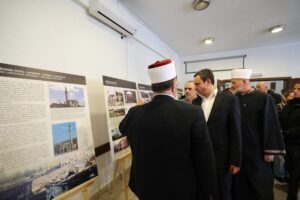
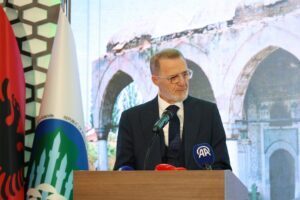
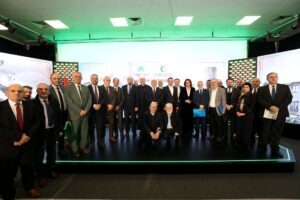
IQNA – An exhibition titled “Memory in Pictures: Destroyed Mosques in Bosnia and Herzegovina and Kosovo in the 1990s: A Planned Religious Genocide” was opened in Pristina, the capital of Kosovo.
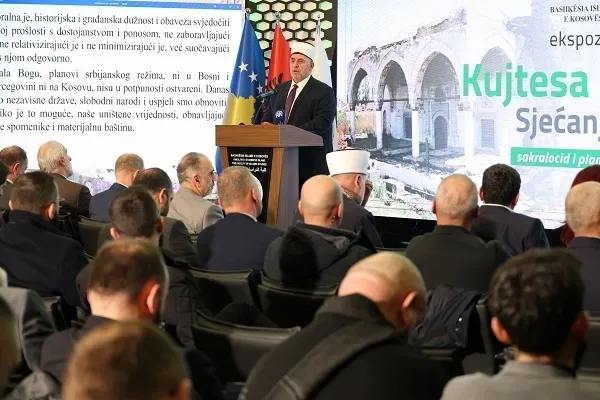
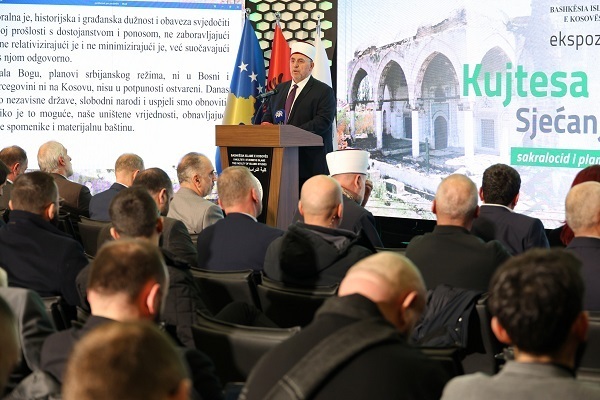
It was launched in a ceremony with a large attendance of religious and official officials, the Muslimsaroundtheworld website reported.
The exhibition has been mounted with the efforts of the Islamic Community of Kosovo in cooperation with the Islamic Community of Bosnia and Herzegovina.
It highlights the systematic destruction of Islamic religious and cultural heritage during the 1990s Balkan wars as part of a deliberate strategy aimed at erasing the religious, cultural and historical identity of Muslims in Kosovo and Bosnia and Herzegovina, targeting mosques, religious endowments, educational and cultural institutions.
Ramazan Shkodra, media figure and head of the Department of Publication and Culture of the Presidency of the Islamic Community of Kosovo, said this exhibition is an important milestone in preserving collective historical memory and plays a key role in raising public awareness of the seriousness of attacks on religious and cultural heritage.
Read More:
Also, Sheikh Naim Ternava, president of the Islamic Community of Kosovo and the country's mufti, stressed that the exhibition reflects a painful chapter in the shared history between Kosovo and Bosnia and Herzegovina, which aimed at the physical and cultural destruction of the Muslim people, and stressed that what happened should not be forgotten under any circumstances.
Kosovo’s interim Prime Minister Albin Kurti, referring to the pivotal role of the Islamic community in documenting the crimes of destruction of Islamic religious sites and preserving the historical memory of the people, said that the Islamic community in Kosovo is a fundamental pillar in preserving national values.
Sheikh Ramzija Petić, Mufti of the city of Gornja Goražde in Bosnia and Herzegovina, in his speech focused on the place of mosques in the conscience and culture of Muslims, stressing that their destruction is not the result of individual actions or random behavior, but is an integral part of a higher system and policies aimed at destroying the strongest religious and cultural symbols of Muslims.
Sabri Baijuri, director of the Institute for Islamic Research and Studies in Pristina, affiliated with the Islamic Society of Kosovo, who is also the photographer for the exhibition, spoke about the period in which he witnessed the horrific scenes of destruction in Kosovo, stressing that the destructive operations were carried out by Serbian forces without any regard for moral, legal or international standards.
According to the data provided, during the Balkan wars, hundreds of religious buildings in Bosnia and Herzegovina, including more than 600 mosques, were destroyed, while in Kosovo more than 200 mosques were damaged or destroyed, along with religious schools, Sufi houses, other endowment buildings, libraries and a rare historical archive.
The exhibition is scheduled to open in Sarajevo, the capital of Bosnia and Herzegovina, in May 2026 and later expand beyond the Balkan region to a number of countries around the world.
4323903
