


Imam Ali Made Protecting Human Dignity Basis of Governance: Scholar
IQNA – A Najaf Seminary scholar described Imam Ali (AS) as the embodiment of justice and a ruler who made protecting human dignity the basis of governance.
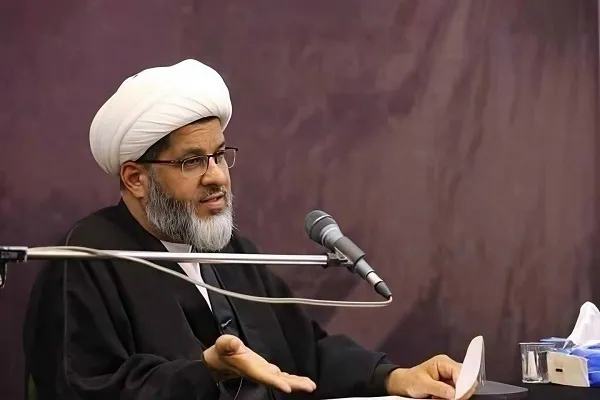
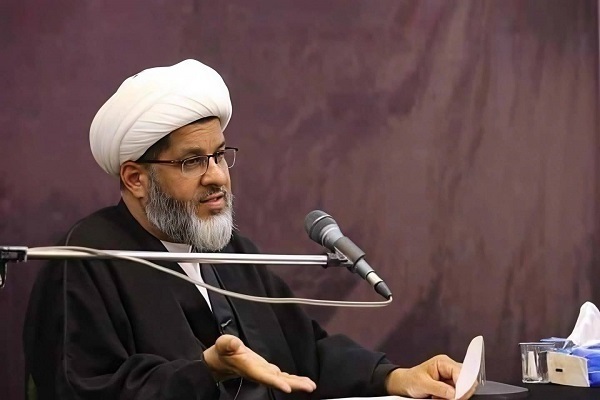
Sheikh Maytham Talib Al-Fariji made the remark in an interview with IQNA on the occasion of the birth anniversary of the first Imam (AS), which was marked this past weekend.
“Imam Ali grew up in the house of the Messenger of God (PBUH) and learned knowledge and understanding directly from him. He lived and acted in the atmosphere of the Holy Quran; to the extent that Imam Ali (AS) can be called the speaking Quran. Therefore, the Imam was the epitome of justice and followed the path of the Holy Prophet (PBUH) and was considered the guardian of the principles of justice among the people.”
He added that Imam Ali (AS) opposed any deviation, violation of the rights of others and oppression and fought against falsehood. “He even considered it his duty to return public property that had been unjustly seized to its original owners, the people.”
Confronting opportunists and resisting conspiracies
He continued, “This approach caused concern among a group of opportunists and selfish individuals, and they began opposing and conspiring against the Imam, but Imam Ali (AS) continued on his path and in the path of God, he was not afraid of the blame of any blamer.”
Al-Fariji, referring to one of Imam Ali’s (AS) sermons at the beginning of his reign, said, “Imam Ali (AS) said on the second day of the oath of allegiance in Medina: “Know that … every property that was entrusted to someone from the property of God must be returned to the treasury, because the old right is not destroyed by anything. Justice is widespread, and whoever finds justice difficult for himself, it will be more difficult for him to tolerate oppression.”
Justice and Reform; Main Axis of the Alawi Government
Examining the historical events after the demise of Prophet Muhammad (PBUH), he said those developments indicate the obvious misuse of the religion of Islam. “It was not long before the Islamic Ummah deviated from its original path and religion became a tool for achieving personal interests and settling political scores.”
Read More:
This deviation was especially evident during the Umayyad rule, he said. “They dominated the people, led the Islamic Ummah astray, and directed all efforts on seeking pleasures, lusts, and establishing power.”
These conditions prompted Imam Ali (AS) to declare the realization of reforms and the establishment of justice as the main slogan of his government, he noted. “There were many factors of deviation in the Islamic society, and the Imam, by stepping on the path of justice, tried to save the Islamic Ummah from collapse as much as possible and correct its path. Therefore, he said: ‘I swear by God, I will take the right of the oppressed from the oppressor and I will bring the oppressor, even if he is unhappy, to the source of the truth.”
Referring to the practical measures of Imam Ali (AS) at the beginning of his reign, he said, “In the very first days, in order to strengthen the foundations of justice, the Imam established equality in the treasury, dismissed some corrupt governors, and subjected the officials to strict auditing and supervision.”
Fighting oppression was the main axis of Imam Ali’s (AS) policy, and he adopted a measured and precise method to eradicate economic, administrative, and social corruption, an important part of which is reflected in Nahj al-Balagha, Al-Fariji stated.
Regarding the reform method adopted by Imam Ali (AS), he said, “After Imam Ali (AS) was appointed to the government and his fight against all kinds of oppression, corruption, and all kinds of manifestations of deviation, practical steps were taken by him, which included the application of specific principles to ensure justice and equality.”
Dismissal of corrupt governors and continuous monitoring
Referring to the administrative reforms of Imam Ali (AS), Al-Fariji said, “Imam Ali (AS) realized that the corruption of the administrative system was the result of the corruption of some governors, so he dismissed them and replaced them with faithful, pure and reforming individuals. He said in this regard: “People are not reformed except by the righteousness of the rulers, and the rulers are not reformed except by the righteousness of the people.”
He said Imam Ali (AS) also put continuous supervision of the agents on the agenda and committed them to the principles of justice, trustworthiness and accountability by sending letters. “Asking about the source of the agents' wealth was also another way of the Imam to prevent corruption.”
Economic Justice and Equality in the Treasury
This seminary scholar considered one of the most important economic measures of Imam Ali (AS) to be establishing justice in the distribution of wealth and said Imam Ali (AS) began his rule with the slogan of ‘equality in giving’ and emphasized that everyone is the servants of God and public property should be divided equally among them and that true superiority lies only with God.
“Imam Ali (AS) used to say: ‘You are all the servants of God and wealth belongs to God and should be divided equally among you. No one is superior to another in this regard. God will give the best reward to the good people. God has not made the world a reward for the good people and what is with God is better for the good people.’”
Read More:
He continued, “The confiscation of properties and wealth that the noble class had unjustly acquired in previous periods, as well as practical sympathy for the weakest sections of society, were other features of Imam Ali’s (AS) economic and social policy; in such a way that he himself lived like the poorest people and was completely opposed to any class discrimination.”
Concern for the family and educating the future generation
In another part of the interview, Al-Fariji discussed Imam Ali’s (AS) efforts to strengthen the foundation of the family and said the Imam (AS) emphasized strengthening spiritual relationships in the family and explained the duties of parents at different stages of children’s development so that a balance between worldly and otherworldly needs could be maintained and parents could educate their children in a manner appropriate to their moral, educational, and religious needs.
He added that from the perspective of Imam Ali (AS), raising awareness, protecting the mutual rights of family and community members, and moral education of humans are the way to save humanity from fear, moral decline, and injustice. “He states principles and criteria regarding how to guide through correct human education, which aim to save humans from the depths of fear, elevate the soul, preserve dignity, and familiarize them with the methods of truth.”
The scholar said from the perspective of the Imam, someone who feels responsible is able to treat their family and society based on moral principles, which, with self-respect, preserving human dignity, and taking responsibility for others, preserves their position as a human being.
The scholar went on to say that Imam Ali (AS) considered government to be a means of achieving rights, realizing justice, preserving human dignity, and gaining divine satisfaction. “Leadership is the same as justice in politics. Without a doubt, justice is the foundation of the sustainability of any leadership and the basis of trust and mutual respect in society. Leadership is not simply about authority or managing people’s affairs; it is a responsibility that requires balance and fairness in all decisions and interactions.”
He concluded by emphasizing that fair policies have a positive impact that lasts for generations, both at the community and state levels, because they are the foundation of mutual trust and respect.
Translated by Seyed Hossein Beheshti Shakib
4327149
