


Cultivating Islamic Character Based on Quran Emphasized
IQNA – The custodian of the holy shrine of Imam Hussein (AS) referred to cultivating Islamic character according to the Quran as the basis for creating a perfect society.
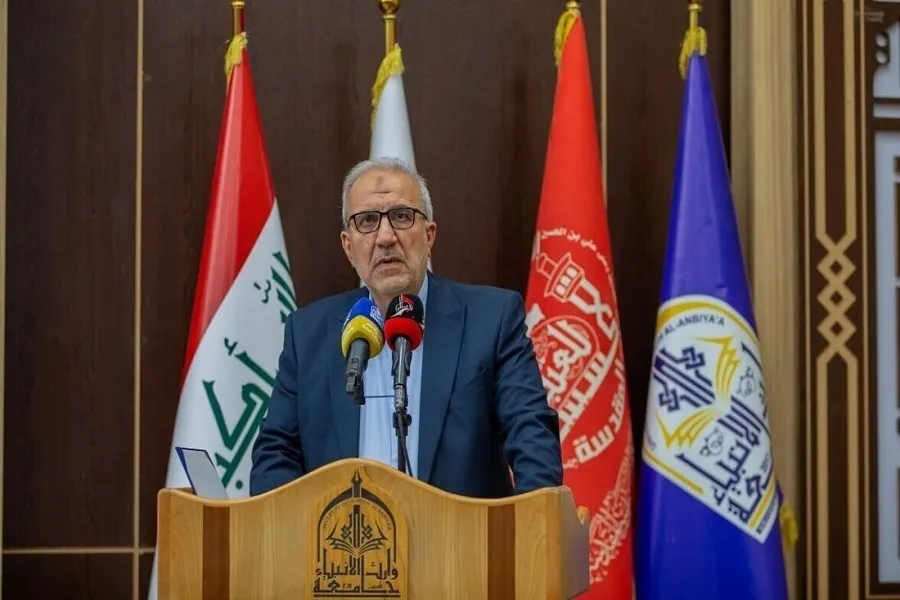
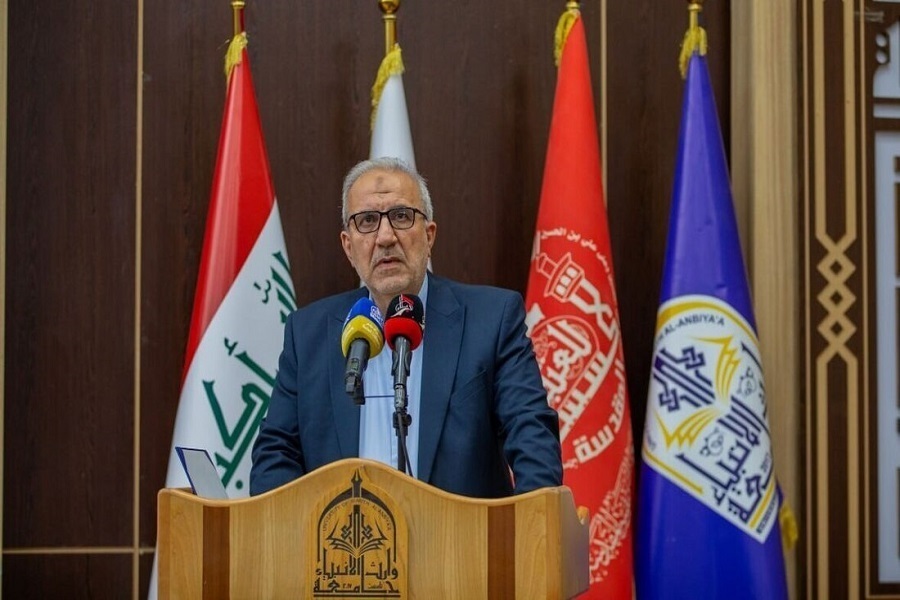
Hassan Rashid Jawad al-Abaiji made the remark while speaking at the opening ceremony of the fourth “Irshad” international scientific conference at the Warith al-Anbia (AS) University in Karbala, Iraq.
“Cultivating Islamic character based on the Quran, the Prophetic tradition and the life of the Ahl-ul-Bayt (AS) and strengthening monotheistic values are the foundation for forming a perfect and virtuous society,” he stated.
He added that the sources of Islamic law are based on two main pillars; The Quran and the Prophetic Sunnah, along with the speeches and sermons of the Ahl-ul-Bayt (AS) as mentioned in Nahj al-Balaghah, Sahifeh Sajjadiyeh, and Risalat al-Huqquq.
“The Quran is at the forefront of these sources, because it is a living word for all times and places.”
Al-Abaiji added that the noble discourse of the Holy Prophet (PBUH) provides a comprehensive educational framework that encompasses all aspects of human life, including material, spiritual, educational, moral, and social.
The Holy Prophet (PBUH) was the role model and first educator of the Ummah and the leader of the educational and guidance process in all its psychological, social, and moral dimensions, he stated.
He said new studies have emphasized that the Prophet’s (PBUH) method includes practical instructions and guidance for facing life’s challenges, correcting behavior, and developing intellectual, psychological, and social skills, and is valid at any time and place, and his noble speech helps build a healthy and balanced personality, and frees the Ummah from backwardness and cultural colonialism.
Read More:
Al-Abaiji emphasized that the application of these teachings in the educational process, school curricula and educational centers opens new horizons for the realization of Islamic educational theory and the creation of a faithful, balanced and capable generation in the face of contemporary challenges and the construction of a virtuous society that is based on the integration of human material needs.
The fourth edition of the Irshad international conference was held under the slogan “Guidelines for examining the problems of Muslim women in the shadow of the challenges of cultural invasion” and within the framework of the programs of the Astan (custodianship) of Imam Hussein (AS) holy shrine to strengthen religious foundations and institutionalize moral values derived from the Quran and the life of Ahl-ul-Bayt (AS).
4334228
