


Soul of a City: Süleymaniye Mosque in Istanbul
IQNA – Perched on one of the city's seven hills, the Süleymaniye Mosque does not simply dominate Istanbul's skyline — it structures its days.
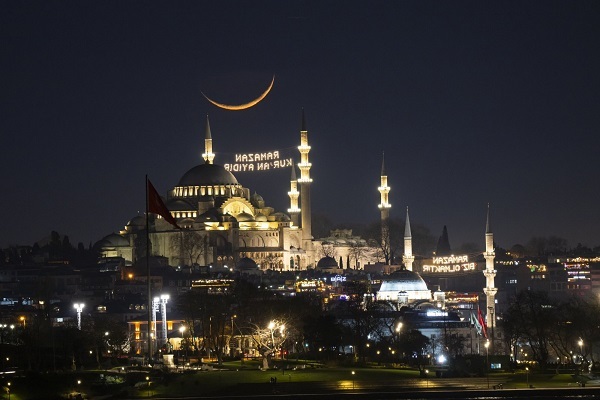
Standing as one of the most comprehensive achievements of classical Ottoman architecture, the Süleymaniye Mosque, designed by Mimar Sinan, continues to define the historical, cultural and urban identity of Istanbul nearly five centuries after its completion. Far beyond its role as a place of worship, the mosque has functioned for 469 years as a fully integrated külliye, bringing together education, health care and social services within a single institutional framework that reflects the Ottoman vision of city life.
Constructed between 1550 and 1557 using Sinan’s distinctive mathematical and engineering principles, the Süleymaniye Mosque was completed in just seven years. Rising prominently on Istanbul’s skyline, the structure commands attention not only through its monumental exterior but also through its lesser-known subterranean corridors and hidden architectural elements, which continue to attract scholarly interest. From the moment visitors pass through its imposing gates, the mosque delivers a carefully orchestrated experience that combines spiritual calm with architectural sophistication.
Commissioned by Kanuni Sultan Süleyman, the mosque sits at the heart of a vast külliye that includes madrassas, a darüşşifa (hospital), an imaret (public soup kitchen), a library, a bathhouse and mausoleums. Together, these components represent one of the most holistic embodiments of the Ottoman urban and social order, where religious, educational, and welfare functions were intentionally designed to coexist.
Throughout the centuries, the madrassas within the Süleymaniye complex played a decisive role in positioning Istanbul as a leading center of scholarship in the Islamic world. At the same time, the darüşşifa and imaret served as architectural expressions of the Ottoman social state, offering healthcare and food services to the public.
Located in Istanbul’s Fatih district and overlooking the Golden Horn, the mosque remains one of the city’s most visually dominant landmarks. Its commanding position has long made it a defining element of Istanbul’s silhouette.
Read More:
Several of the madrassas that once functioned as higher education institutions during the Ottoman period are now, following extensive restoration work, used by universities and research bodies in Istanbul for academic and scientific activities. This adaptive reuse underscores the continuity of knowledge production within the complex.
The transformation of the first and second madrassas into the Süleymaniye Manuscript Library has further strengthened this legacy. Housing rare and valuable collections, the library continues to serve researchers, ensuring the uninterrupted transmission of scholarly tradition from the Ottoman era to the present day.
Source: dailysabah.com
