


Resistance Not A Slogan But A Culture, A Worldview: Lebanese Analyst
IQNA – A Lebanese political analyst described resistance as not just a slogan but a culture and a worldviews.

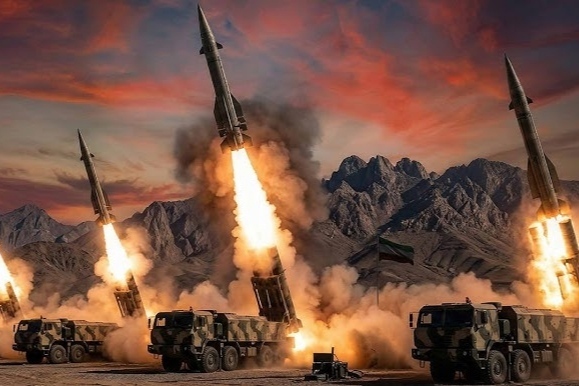
“Resistance is a moral compass for a society that lacks institutions capable of providing a model,” Bilal Al-Laqis, who has a PhD in political science, wrote in an article, excerpts from which are as follows:
Resistance is not a slogan, a hobby, a temptation, a whim or a mood; it is a culture. It is a worldview, a perspective on one’s life and the enemy. It is a methodology and a way of thinking for progress and revival. It is not a specific doctrine; it is a movement that has humanity and its values as its guiding principle. No one can be free and have free will except by resistance, especially in the America-Epstein world.
Similarly, a society cannot progress if it does not resist. Remaining in a cycle of doubt and indifference is a fatal flaw and mistake. Societies are built not by escape but by confrontation, not by neutrality but by interaction, not by isolation but by presence, not by silence but by witnessing to the truth, not by seeking what is convenient but by striving for what is best.
How can someone who denies another the right to dignity have the right to humiliate another? Humiliation may be a personal choice for some, but it can never become a collective choice. Your desire for a low life does not justify plundering the precious lives of others. Your fear does not justify preventing people from exercising their courage. Your helplessness does not justify preventing people from discovering their potential.
Your “rationality” does not justify preventing people from quenching their thirst for truth, justice, and resistance to oppression. Your humiliation does not give you the right to diminish honor and dignity. Your materialism does not give you the right to suppress the language of love, passion, and honor in society.
Societies are built only by a wise approach to matters, because a state must be a supreme authority before it is a collection of administrative institutions, otherwise it will not exist and governance becomes impossible. The highest ideals are not built on self-righteousness, laziness, fear, seeking ruin, or waiting in other people’s houses to beg.
It is your right to live without soul, passion or love, but to prevent people from experiencing the language of love and sacrifice is a distortion of the natural order, and neither you nor anyone else has the authority to do so. Infidelity does not give you the right to turn betrayal into conformity and realism. Rather, honesty and loyalty are cultural values that society must strive for.
In a country, virtue and vice cannot be equal, and a ruler cannot break the social contract on which society is built or violate natural rights, but must submit to them.
Resistance is a sovereign power that gives any authority its freedom. Political power is a sovereign power, not a limited power. It is not an administrative power; it is a decision made throughout the year. It begins with society and ends with it. It does not begin from without and does not end from without.
To be a master, you must be free. You may be your own slave, or you may enslave yourself, or you may be a slave to fear, or to helplessness, or to your dreams and goals, or to your lack of resources, but you are not allowed to take away the pride, the sense of self, and the defense of the dignity of a society from it. Politics requires freedom and liberation, both external and internal. It is not the art of managing interests or profits, but a method of human liberation.
If resistance fails in its path or even takes a certain turn, it does not mean that it should be abandoned. It is a culture and an effort that cannot be ignored; it is a collective existence and identity. It is not judged primarily by its (initial) impact, but by its integrity, its will, and ultimately by its impact. Every resistance movement throughout history has faced difficulties, progressed, fallen, then risen, and persevered.
This is the meaning, the essence, and the secret of resistance. It is the manifestation of life, vitality, will, determination, and an unwavering commitment to rights. Yes, this is the resistance and this is its culture. Resistance is a moral compass for a society that lacks institutions capable of providing a model. It is a standard and an example for a state that is lost in the management of failure, concessions and abandonment. Everything is calculated for such a state and devoid of spirit, dignity or honor, while society lives primarily with honor, sacrifice, salvation and the highest values.
Whether in Lebanon or elsewhere, there is no obedience to an authority that is a prisoner of weakness or submission. The authority that is obeyed, even before the consensus that is considered the second condition, adheres to the principles and fundamental rights of humanity. That is, there is a standard that governs it and defines its rights and duties.
Read More:
It cannot reduce its society to that of some other Arab society or country, compare it to a failed, subservient or instrumental institution, justify its performance with that of others, while it should look up, look down. Rather, it should move towards becoming a country with rights, dignity, justice and freedom. After this, let it be whatever form it takes - a consensus democracy or even a majority government. Does a society need consensus to liberate its land, confront its enemy, defend its borders or allow the plundering of its wealth, heritage and values? Is the norm to refrain from resistance and reject the dignity of our people and our rights, to flee and submit to imposed conditions? Or is it the norm to try to resist and explore every possible way to strengthen its capabilities, empower itself and express itself? Is it the norm for dignity or humiliation? For chastity and honor or for corruption and baseness? Is it for life or merely to exist?
As for expecting institutions to do this, given that they are supposedly responsible and mandated to ensure the security of the people, this faces two major challenges: trust in the political authority and whether it has this understanding and will or is it submissive and even lacking a guiding orientation in matters of national identity? And does the political administration have the culture to adopt this approach or is it more of a culture alien to Lebanon, its history and its long tradition of resistance? And is there enough in the history of its relations with its people to trust it?
The experience of the past fifteen months has proven what every understanding person expected and what we expected: that the Zionist regime is not a trustworthy authority. If the culture of resistance was not alongside the society and was not committed to supporting stability, preserving its destiny and preserving its unity, the country would not have survived even a day against the occupation of the usurper regime (Israel).
Translated by Seyed Hossein Beheshti Shakib
4342694
