

Peaceful Teachings of Religions Lost in A World in Crisis

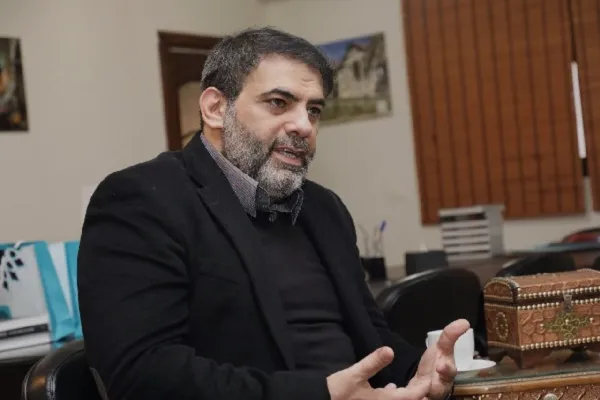
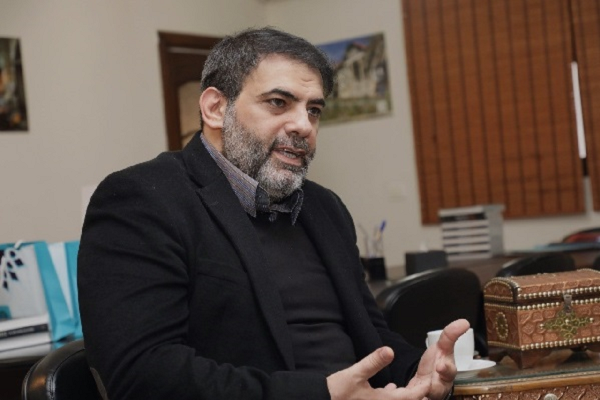
Humanity must learns true and just peace or admit that it has not learned anything from its painful history and has not taken a lesson, Naji Ali Amhaz wrote in an article, which is as follows:
A quarter of a century ago, at a time when elites were like remote islands and secrets and mysteries were kept in the bosoms of mystics, I heard from an old and experienced preacher who was perhaps seventy years old; but his voice was still young and untainted by the poisonous currents of politics or blind obedience that had not led him to failure.
The preacher said at the time: I remember the first moment in which I learned that there is a difference between fear, security, happiness and unhappiness. I remember when the priest told us about the crucifixion of Christ (AS), I was surprised and horrified. We did not believe it, we thought it was a fictional story, because the pure soul of a child could not accept that one human being would torture another human being to death, just because he wanted a greater and heavenly justice that would encompass everyone. This question grew with us as to why Christ (AS) was crucified, the answer was very simple and at the same time very unbelievable and that was that goodness and righteousness always have their enemies.
The preacher thought about this story and from conscience to history, he told us about what had happened in the East about conflicts aimed at domination and possession. He referred to the warnings of great thinkers such as Michel Shiha, Charles Malek and Gibran Tuani (Al-Jad); the same people who founded political and intellectual awareness centuries ago. He concluded his speech with a sentence that summed up a lifetime: “Christianity did not triumph in its essence because of the injustice done to Christ as a (crucified) body, but because of the call to love for its enemies, and this was in itself the greatest spiritual victory for the church.”
But he added with concern: “The danger is not in killing Christ all at once; it is in killing his mission and message every day; when his followers engage in endless wars. The danger lies in trying to erase the human thought of him who was crucified and killed for it.”
That day, one of the attendees held up a sign that read: “Islam denies the crucifixion of Christ.” The speaker paused for a moment, then said quietly: “It is not a question of material proof or historical denial; Rather, it is how we understand the reason for this incident. When history enters the realm of faith, it becomes an element for interpreting it to the extent that it is acceptable to the mind. I will not go into details about the issue of the denial of the crucifixion of Jesus (AS) in Islam; but it should be noted that this denial is due to a decisive response to the boasting of some Jews about the murder of Jesus (AS).
“This denial opens the door to philosophical questions, but I am not talking about this issue from a doctrinal point of view, but rather as an intellectual issue that the Church has entered into at different stages. When the readings of Christianity emerged, the Jews were innocent (in those texts) of (shedding) the blood of Jesus (AS). The question arises as to why and for what purpose they were (deemed) innocent, why have certain readings throughout history tried to absolve the murderers?”
He concluded by saying: “What is ultimately important to us is thought. After 2,000 years, billions of people still follow Jesus (AS). This means that his being oppressed has become the energy of existence, and those who killed him were few and, despite their power and dominance, they were destroyed.”
My memories of that assembly have ended; but today we see blood being shed in Gaza and Lebanon, and the same question is raised again, but in a much more painful way; how can a person get used to killing? How can pain and suffering become passing news and calamity become an everyday scene and not awaken the conscience?
What we are seeing is not just a political conflict; it is the ultimate test to measure human humanity, when hospitals are bombed, places of worship are destroyed, and children are killed without accounting; the question does not come to mind in a political way again; but rather in an existential way, and that is: are we still human?
The human mind in the East has been doubly wounded, because the image of Christ (AS) in our minds is inseparable from the image of Hussein (AS). Just as a child cannot believe that a human being was crucified because he called for love and compassion, another child cannot believe that the grandson of the Holy Prophet (PBUH) was martyred by those who claimed to be from his community.
Read More:
But the pain and suffering are not only in the crime; they are also in its repeatability. The truth that history has proven is that blood does not always bring victory and that the issue of being oppressed, when understood, becomes an eternal issue. So Christ (AS), whose crucifixion was witnessed by dozens of people, has become a symbol for millions, and Hussein (AS), who was killed alone in the desert, has become a matter of conscience for the free. So how is it that the world today watches the pain and suffering that billions of people see the moment it happens?
It is not better to rewrite history, or even to condemn repeated criminal acts. Every nation has its rationality, and in every nation there is someone who can say: “Enough of war.” If there are educated and thoughtful people in the world, their responsibility today is not only to interpret the events of war; but also to stop it, because if thought does not become a moral stance, it turns into silence that expresses solidarity with the perpetrators of suffering and calamity.
After the crucifixion of Christ (AS) and the martyrdom of Hussein (AS), and after this blood that has covered the face of the earth, especially in the East, there is no option for humanity; unless it learns true and just peace or admits that it has not learned anything from its painful history and has not taken a lesson.
4344609
