


Imam Reza’s Seerah A Model for Intercultural Dialogue: Scholar
IQNA – A seminary and university scholar said the Seerah of Imam Reza (AS) is a model for intellectual dialogue.
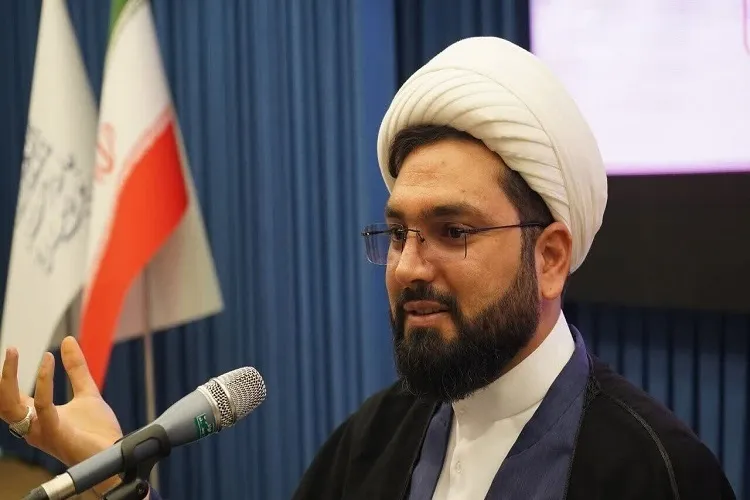
A seminary and university scholar said the Seerah of Imam Reza (AS) is a model for intellectual dialogue.
Speaking to IQNA on the birth anniversary of Imam Reza (AS), Hojat-ol-Islam Ashkan Sadeqnejad referred to the potential of benefiting from studying the Seerah of the eighth Imam and emphasized the necessity of moving from theoretical debates to deep intellectual understanding.
In today’s pluralistic world, sustainable cultural interaction can only be achieved when dialogue goes beyond the level of dry debates and leads to the reconstruction of the intellectual perspective of the other party, he stated, pointing to dialogue in the Seerah of Imam Reza (AS)
Instead of addressing the audience with rhetoric, Imam Reza (AS) always tried to reconstruct the intellectual perspective of the audience, he noted.
“He first recognized the concerns, questions, and sensitivities of each society and then spoke within the framework of that perspective. This ability to understand can be a solid basis for interfaith, academic, and cultural dialogues in today’s pluralistic world, because instead of repeating fixed positions, it provides the possibility of exchanging meanings and human experiences.”
Hojat-ol-Islam Sadeqnejad stated that one of the less-noted features of Imam Reza (AS) was his gradual method of explanation. “Instead of directly entering into the points of disagreement, Imam Reza (AS) would start with fundamental concepts that were understandable to both sides and then reach more specialized layers. This style of explanation, which is reflected in some reports of narrative sources, indicates his intelligence in guiding the audience towards the truth.”
Read More:
He went on to say that the character of Imam Reza (AS) and his Seerah have a high capacity to become a model of intercultural communication.
“In this model, three key elements are listening before speaking, expressing arguments in a language understandable to others, and transforming intellectual encounters into opportunities for mutual understanding.”
The scholar continued by referring to the issue of a network of representatives and said the development of this network during the era of the Eighth Imam (AS) was a vital infrastructure for the continuation of the mission of the Imamate.
“By organizing his representatives in different regions, the Imam (AS) was able to expand his social and intellectual base while maintaining contact with the Shias and followers. This network not only played a key role in transmitting teachings and responding to religious issues, but also acted as an executive and support arm in sensitive political situations.”
4349357
