


How Resistance Axis Intends to Break Dollar Hegemony from Heart of Hormuz Strait
IQNA – The issue of the Strait of Hormuz is no longer a matter of international law or its interpretation, but a struggle over who has the right to manage the world’s vital geography.
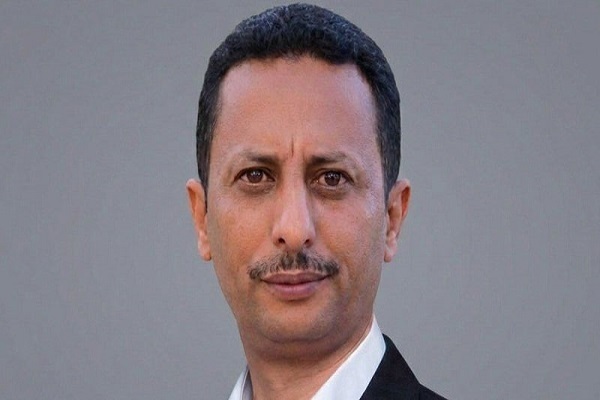
This is according to an article by Adnan Abdullah Al-Junaid, a Yemeni writer and political analyst, which is as follows:
How Resistance Axis Intends to Break Dollar Hegemony from Heart of Hormuz Strait
First: From news to structural transformation in geopolitics
In a very important development, Iranian television, quoting the deputy speaker of the parliament, announced that the transfer of transit fees through the Strait of Hormuz to the account of the Central Bank of Iran has begun; a move that cannot be interpreted as a technical financial procedure, but rather as a change in the philosophy of managing one of the most important sea passages in the world.
We are facing a moment of transition from the concept of a neutral international corridor to the concept of a corridor with economic sovereignty, where geography becomes a tool for revenue and control, a financial equation with direct strategic impact.
Second: Hormuz... The global energy artery under repricing
Approximately 21 million barrels of oil per day
This represents almost 20 percent of the world’s seaborne oil trade.
In addition to huge quantities of liquefied natural gas (LNG),
These figures do not simply reflect commercial activity, but any transit costs, even if theoretically insignificant, translate into:
A region of immense geographical size, with a huge impact equivalent to the budgets of entire countries.
The strait thus becomes not only a transit point, but also a potential source of sovereign financing in the context of what could be called an emerging resistance economy.
This also makes global energy security conditional on respect for Iranian sovereignty, not simply a matter of supply and demand or neutral trade flows.
Third: The Struggle Over the Definition of Sovereignty
The Hormuz issue is no longer a matter of international law or its interpretation, but a struggle over who has the right to manage the world’s vital geography.
Whoever sets the costs sets the equation.
Fourth: Countering sanctions; the economy as a tool to break the siege
Within the context of the economic war imposed on Iran, this step – if actually implemented – would represent a qualitative shift in the means of confrontation, through:
Creating an internal source of finance outside the system
Reducing dependence on Western financial channels
Turning shipping lines into an independent source of financing
Thus, potential fees are not seen simply as revenue, but as a mechanism to circumvent sanctions and regain economic power within the regional system.
Fifth: Strategic dimension; Unity of the arenas from military to financial
This step does not stop at the Iranian economy, but goes beyond it and deals with the broader engineering of the regional conflict structure, where a new unity of arenas is formed:
1- Integration of financial arenas
Just as there is a united military front in the axis of resistance, the financial management of Hormuz will mean:
Increasing the capacity of the regional center for financial self-sufficiency
Supporting the continuation of the resistance forces without directly surrendering to external financial pressures
Consolidating the principle that securing Quds requires an invincible economy
2- Economic support for the resistance
Any financial surplus resulting from controlling strategic waterways can be transformed into:
Logistical and political support for the resistance in Palestine, Lebanon and Yemen
Reducing the impact of international financial sanctions
3- Blocking the arteries supporting the occupation
Since the flow of energy through the Strait of Hormuz is transmitted to world markets If it is controlled, it will give the axis of resistance indirect power, leading to the following:
Influence on the economy of the countries supporting the Zionist regime
Introducing the energy pressure factor into the conflict equation
Sixth: Strengthening the duality of the straits: Hormuz and Bab al-Mandab
In the broader strategic picture, Hormuz cannot be understood separately from Bab al-Mandab.
Just as Yemen today exerts direct military pressure through Bab al-Mandab and reshapes the navigation equations related to the Zionist ships and its allies, Iran is also opening a parallel path through financial sovereignty in Hormuz.
Read More:
And here, for the first time in modern history, the following results are taking shape:
A dual strategic gas-storage movement in the world's most important shipping arteries
Bab al-Mandab as military/field pressure
Strait of Hormuz as financial/economic sovereignty
This integration not only demonstrates political coordination, but also a pivotal geopolitical engineering capable of controlling the global maritime geography from its southern and eastern ends in the Middle East.
Seventh: Al-Quds as a compass for geopolitical sovereignty
In a broader strategic perspective, these changes cannot be separated from the main compass of the regional conflict:
Al-Quds is not just a symbolic issue, but a guiding criterion for sovereignty and status.
Therefore, redefining sovereignty in the Strait of Hormuz means a declaration of rejection of the hegemonic system that created the existence of the Zionist regime and proves that strategic corridors in the Islamic world are no longer outside the scope of national and sovereign decision-making.
Thus, Hormuz becomes - symbolically - a geographical extension of the equation of conflict over al-Quds.
Eighth: Future benefits; Anticipation of a new economic system
Field: Financial independence
Expected benefit: Creating a sustainable source of independent income outside the dollar system and Western hegemony, and reducing dependence on the traditional global financial system.
Field: Negotiating Power
Expected Benefit: Turning the Strait of Hormuz into a strategic bargaining chip in any regional or international negotiations, giving Iran more power to impose its terms on nuclear, political, and security issues.
Field: Changing the Rules of Engagement
Expected Benefit: Shifting from a traditional military response to using economic sanctions as a parallel deterrent, through controlling transit costs or regulating global energy traffic.
Field: Reshaping the International System
Expected Benefit: Strengthening alliances with emerging powers such as China and Russia by ensuring the stability of energy corridors, thereby helping to weaken the centrality of the Western financial system and redistribute the global balance of influence.
Read More:
9: Strategic Conclusion
What is happening in the Strait of Hormuz - regardless of the details of its implementation - represents a new phase in the global conflict:
A shift from military control over geography
A pricing of geography and its transformation into a tool for financial sovereignty.
This shift, if it continues, will redraw the map of world power, and sea lanes will become:
They are not just transit routes, but centers of production, sovereignty, finance, and influence.
The transformation of the Strait of Hormuz into a card of financial sovereignty heralds the end of the era of open passages and the beginning of a new era in which geography is managed by independent decision, without domination.
This financial and political power, if consolidated, will become a strategic lever that feeds the artery of resistance, so that the path to al-Quds will be secured not only with weapons, but also with an economy capable of imposing its terms on the international stage.
4350047
