


Hormuz: A Small Passageway with A Big Global Impact
IQNA – The Striat of Hormuz is a vital passageway and the main artery of energy supply, an Iraqi political analyst said.
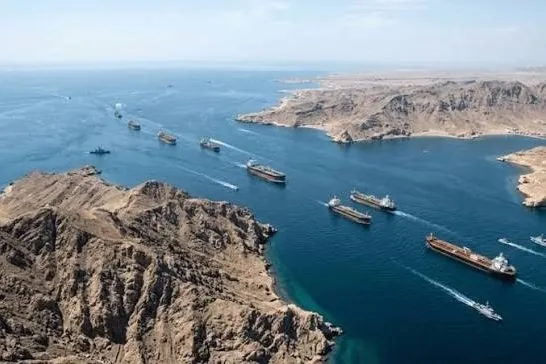
In an article, Muhammad Ali Al-Hakim added that it is a strategic asset for Iran that cannot be ignored.
His article is as follows:
The Persian Gulf region is witnessing an escalation of tensions with the announcement by the Iranian side of the re-closing of the Strait of Hormuz, a move that brings back to the fore one of the most dangerous issues of global maritime security.
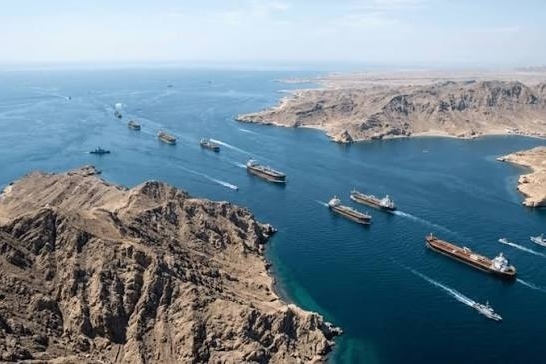
This vital passageway is the main artery of energy supply, which Iran considers a golden card and a strategic asset that cannot be ignored, as a large percentage of global oil exports pass through it and any disruption in it is a direct threat to the stability of international markets.
It is certain that oil markets will witness a sharp increase in prices due to disruptions in global supply, and the Persian Gulf countries will be at the heart of the crisis due to their dependence on this maritime corridor, both in terms of security and economy.
Amidst the escalation of military tensions and economic concerns, attention has focused on the consequences of this move on global trade, energy prices and the possibility of increasing tensions in the region.
Therefore, major powers such as China and the European Union will try to contain the escalation in order to protect their trade. Any disruption in the Strait of Hormuz will affect not only the energy sector but also global supply chains, and any future agreement will be the result of a balance of deterrence, not a victory for one side over the other.
On the other hand, Washington may use the blockade as a bargaining chip to impose stricter conditions on Iran’s nuclear program. Tehran will view this as an existential threat that requires an unconventional response. Iran’s options for maneuver include threatening navigation in the Persian Gulf through indirect means without full-scale confrontation, expanding its nuclear program as a bargaining chip, and indirectly targeting US economic interests.
Iran has realized and is convinced that abandoning its nuclear program, its missile program, and its deterrent cards for maneuvering would mean facing a fate similar to that of Iraq and Libya. Therefore, it is impossible for Tehran to accept the idea of giving up its peaceful nuclear and missile programs and the Strait of Hormuz card, which has become a strategic golden card for controlling the regional and international economy, and the consequences of closing the strait would be disastrous for everyone.
Therefore, Tehran is today trying to establish the equation that negotiations without preconditions and without compromise on the principle of the missile and nuclear programs are possible.
Read More:
However, the current gap seems to indicate that both sides (Washington and Tehran) are still in the strategic review phase, although Washington is trying to test the limits of Iran’s flexibility through leaks and unconfirmed and false statements.
The current disagreement also reflects the different timelines between a government that seeks quick results and a government (Tehran) that takes a long-term approach.
The whole situation therefore suggests that any agreement, if reached, will be reached on completely different terms than what is currently on the table. This difference demonstrates the lack of even a basic understanding of confidence-building mechanisms.
Tehran is therefore balancing tactical openness with strategic inflexibility to achieve its goals. The Islamic Republic of Iran treats the US proposal as a test of its intentions, not as a serious negotiating path. Overall, however, Tehran seeks to maintain its leverage, namely “Hormuz; a small passage with a big global impact,” as a guarantee for any future agreement.
4347940
