


Hajj Waiting Times Cut As Indonesian Pilgrims Report Smoother Arrivals
IQNA – After more than a decade on a waiting list, Indonesian pilgrim Khairiyah bint Muhammad Bakri experienced a seamless arrival in Mecca for Hajj 2026.
For more than a decade, Khairiyah bint Muhammad Bakri held on to a single, unwavering hope — to perform Hajj.
The Indonesian pilgrim from North Maluku first nurtured the dream in 2013, carrying it through years she describes not as a burden, but as a spiritual journey marked by patience, prayer and trust in divine timing.
Now, as she prepared to undertake the pilgrimage, that long wait has given way to a markedly different experience — one shaped by streamlined procedures and technology under Saudi Arabia’s Mecca Route Initiative.
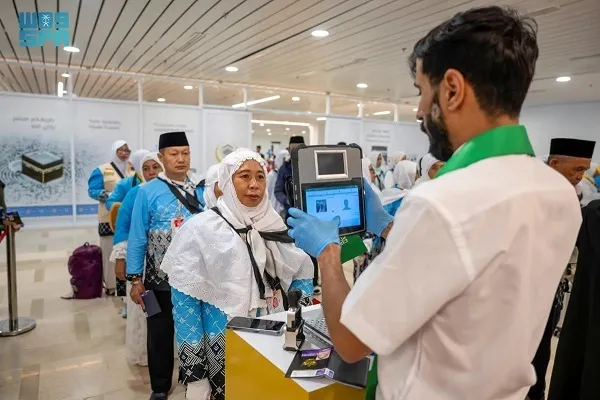
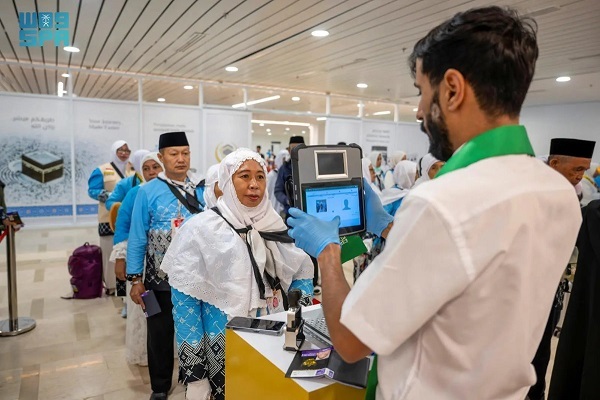
In remarks carried by the Saudi Press Agency, Khairiyah said the program has transformed the journey, allowing pilgrims to complete key formalities before departure and avoid lengthy processing upon arrival in the Kingdom.
“It allows us to begin our rituals with peace of mind,” she said, describing a process that replaces fatigue with focus on the spiritual purpose of Hajj.
At Sultan Hasanuddin International Airport in Indonesia, where she was ready to depart, Saudi teams were working to ensure that transition is seamless. Pilgrims complete entry procedures — including passport control, customs and baggage handling — before boarding, enabling them to move directly to their accommodations in Mecca and Medina upon arrival.
The system relies on an integrated digital backbone provided by the Saudi Data and Artificial Intelligence Authority, which uses AI-driven tools and advanced devices to maintain accuracy and efficiency throughout the process. Technical teams oversee operations to ensure a continuous flow from departure halls to the holy cities.
Indonesian pilgrims departing from Makassar praised the initiative, saying it significantly reduces waiting times and eases the physical strain of travel, allowing them to concentrate on their religious duties.
Read More:
The initiative, implemented by Saudi Arabia’s Ministry of Interior in cooperation with several agencies, has expanded this year to 17 international ports in 10 countries. Since its launch in 2017, it has served more than 1.25 million pilgrims, underscoring efforts to modernize Hajj operations.
For Khairiyah, however, the journey transcends logistics.
She describes Hajj not simply as travel, but as a moment of convergence — where millions of Muslims from across the world gather in shared devotion, bound by faith and purpose.
“Hajj is a profound spiritual meeting,” she said, reflecting a sentiment echoed by pilgrims globally.
The annual pilgrimage, one of Islam’s five pillars, draws millions of faithful to Saudi Arabia each year, making it one of the world’s largest recurring logistical operations. According to official figures, more than 1.67 million pilgrims performed Hajj last year, the vast majority arriving from abroad.
Indonesia is the single largest source of pilgrims, followed by Pakistan, India and Bangladesh, highlighting the scale and diversity of the global movement that Saudi authorities must manage each season.
Against that backdrop, initiatives such as Mecca Route aim to ensure that journeys like Khairiyah’s — shaped by years of faith and devotion — begin not with queues and delays, but with dignity, efficiency and a sense of calm.
Source: Arab News
