


Malek Museum’s Quranic Collection Stands the Test of Time
IQNA – More than half a century after his death, the vision of Haj Hossein Aqa Malek continues to bear fruit: at the Malek National Library and Museum in Tehran, a singular collection of handwritten Qurans.
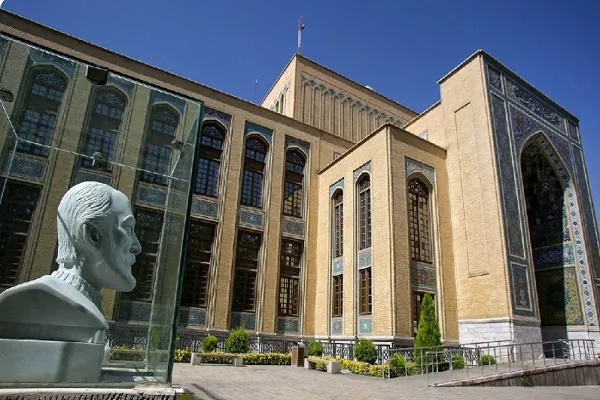
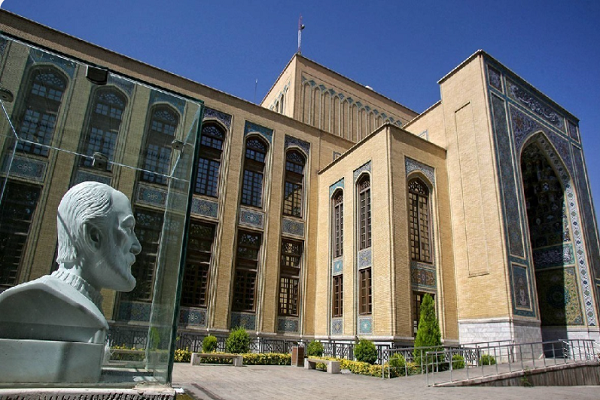
Amassed through endowments and donations he helped inspire, the collection remains preserved for scholars and devotees alike, safeguarding the legacy of generations of Quranic calligraphers.
This cultural treasure reflects the evolution of Quranic transcription in Iran and demonstrates artistic excellence in calligraphy, illumination, paper, and binding across centuries.
Among the most historically significant pieces are early Islamic Kufic parchment folios attributed to second Shia Imam Hassan Mojtaba, bearing a visitation note dated 984 AH (1576 CE).
Other rare works include fourth-century AH Kufic folios and a late fifth-century AH manuscript written in Kufic inclined toward Naskh script. These pieces highlight the historical depth of the collection and its importance in documenting early Quranic writing traditions.
The museum also houses first-rate artistic masterpieces. A Quran penned in Naskh by Yaqut al-Musta’simi in 680 AH (1281 CE) stands among the highlights.
Other distinguished works include manuscripts written by Alaeddin Tabrizi in 969 AH (1561 CE), Mohammad Ebrahim Qomi in 1094 AH (1683 CE), and several prominent calligraphers of the Safavid and Qajar eras, all executed in refined Naskh script. A notable volume features lacquer floral binding crafted in 1271 AH (1854 CE), demonstrating excellence in both calligraphy and decorative arts.
Read More:
The collection displays Qurans of varying dimensions, from one of the largest manuscripts of the 13th century AH to an exceptionally small 7-by-4-centimeter copy dated 1209 AH (1794 CE). A remarkable 10th-century AH pocket-sized Quran written on Khanbaliq paper and fully gilded on lapis background further exemplifies technical mastery.
Malek National Library and Museum was endowed to Imam Reza Shrine in 1316 SH (1937 CE) and continues to serve as one of Iran’s six major manuscript repositories.
Source: news.razavi.ir
