

Int’l Muslim Students Quran Competition: Expert Stresses Informing Participants of Regulations

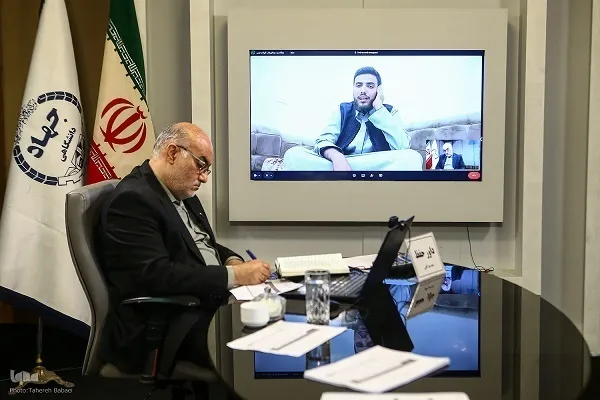
Moataz Aghaei, who is among members of the competition’s panel of judges in its 7th edition, told IQNA that students participating in the preliminary stage of this year’s contest were not very familiar with the judging regulations.
They should be justified in a meeting or meetings regarding different aspects of the regulations, because the regulations of the competitions in Iran are different from those of other countries, he stated.
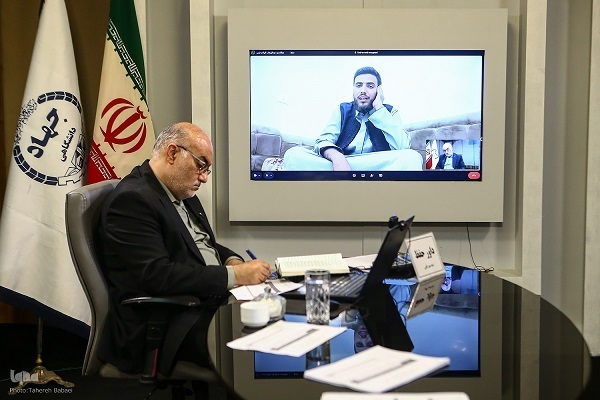
Last week, the semi-final stage of 7th edition in the category of memorization of the entire Quran was held via video conference with the participation of 26 memorizers who had advanced to semi-finals from the preliminary round.
Aghaei, a Quran memorization expert, were among the judges who evaluated the contestants.
He noted that there was a relatively long break between the preliminary stage and this stage due to the events in the country (the US-Israeli aggression on Iran).
“With the exception of a few cases, we did not see much progress in the quality of performance and presentation of the memorizations of the participating memorizers, while during the break, the participants in this section had more time to practice and then participate in this stage with better preparation,” he said.
“In the usual way, three one-page questions were asked of each memorizer. With the exception of a few limited cases, we did not see close competition among the competitors, which could lead to a challenge in the judging process due to the close scores of two or more memorizers.”
Read More:
Aghaei added that what causes competitors from other countries not to earn the expected points is because they are not aware of the judging regulations of Iranian competitions, which are different from other competitions in the world.
“For example, in the International Quran Competition for Muslim Students, we have 100 points, 70 of which are related to good memorization, and other items, including voice and tone, also have special points. However, most competitors focus only on the first issue, namely the correct presentation of the memorization, and usually (attention is not paid to) the voice and tone, which should have a rise and fall, and this leads to points being deducted.”
He concluded by saying, “My suggestion to the officials organizing these competitions is that a briefing session, even if virtual, be held with the presence of all competitors and that the briefing be conducted before each of the stages.”
The International Quran Competition for Muslim Students is organized by the Iranian Academics’ Quranic Organization under the Academic Center for Education, Culture, and Research (ACECR).
Launched in 2006, it remains the only global Quranic competition dedicated specifically to Muslim students.
4357838
