


Australian Envoy: Stop Stereotyping Muslims in Public Debate
IQNA – Australia's Special Envoy to Combat Islamophobia has urged politicians and commentators to avoid stereotyping Muslims, saying that evidence-based discussion is essential to reducing social division.
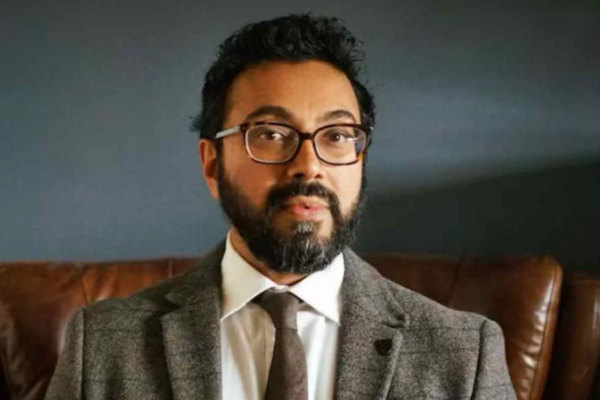
Writing in an opinion piece for The Guardian in response to recent remarks by Senator Pauline Hanson, Aftab Malik said public debate on Islam in Australia is too often shaped by broad generalizations and emotionally charged language rather than factual analysis.
Hanson had cited British writer Ed Husain’s memoir as part of her concerns about Islam in Australia. Malik said such references, while part of legitimate public debate, should not be used to draw conclusions about Muslim communities as a whole.
He argued that framing Islam through isolated examples of extremism risks obscuring the lived reality of Muslim Australians, the vast majority of whom, he said, reject violence and extremism. “The difficulty is that when the conversation turns to Islam and Muslims in Australia, facts are often the first casualty,” Malik said.
He said terms frequently used in public discourse — including “radical Islam” and references to threats to Western society — can lack analytical precision and instead reinforce narratives that portray Muslims primarily as a security concern. Malik noted that public perception is often shaped by selective attention to rare incidents involving individuals who claim religious justification for their actions, and that such individuals should be understood as criminals whose conduct is not representative of Islam or Muslim communities.
The envoy also noted that a range of social and personal factors, including isolation and personal grievances, can contribute to radicalization, and that these cannot be reduced to religious identity alone.
Malik said Muslim Australians continue to experience discrimination, verbal abuse, and hostility — particularly women who wear visible religious dress — and referenced reports of vandalism and threats against mosques and Islamic institutions. “These experiences are part of a documented reality for many Australians,” he said, adding that dismissing them risks further marginalization.
While affirming the importance of free speech, Malik said public figures also bear responsibility for the impact of their rhetoric, particularly when it affects minority communities. He called for greater engagement between public figures and Muslim communities, including visits to mosques and dialogue with ordinary Australians, arguing that such engagement can challenge misconceptions.
Read More:
Australia’s challenge, he said, is not whether it can discuss extremism or national security, but whether it can do so without generalizing about an entire religious community.
muslimnetwork.tv
