


US Jews View Mamdani More Favorably than Netanyahu: Poll
IQNA – A new Associated Press-NORC Center for Public Affairs Research poll has revealed deepening divisions among American Jews over the Israeli regime’s war on Gaza, US support for the Israeli occupation, Palestinian statehood, and Benjamin Netanyahu.
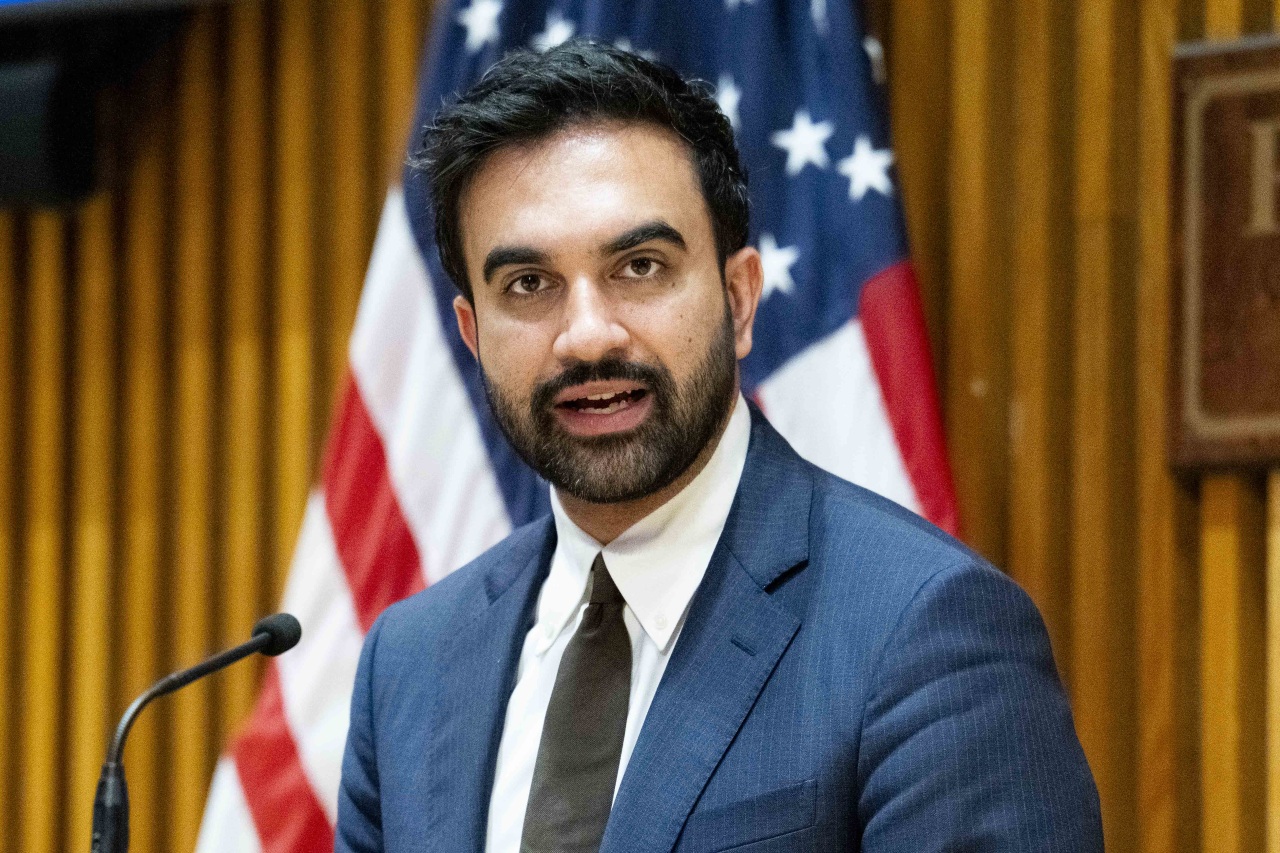
The survey, released this week and conducted between June 11 and June 17, found that New York City Mayor Zohran Mamdani is viewed more favorably among Jewish adults in the United States than the Israeli prime minister, Benjamin Netanyahu.
According to the poll, 44% of US Jewish respondents said they viewed Mamdani very or somewhat favorably, compared with only 32% who said the same of Netanyahu. By contrast, 39% viewed Mamdani unfavorably, while Netanyahu’s unfavorable rating stood at 59%.
The findings complicate the long-standing portrayal of American Jewish opinion as uniformly aligned with the Israeli regime. The poll shows growing discomfort with Netanyahu, Washington’s unconditional support for the occupation, and the ongoing war on Gaza.
The poll was conducted among 3,040 US adults overall, including an oversample of 1,022 Jewish adults, allowing AP-NORC to examine divisions within the Jewish community more closely.
The survey also showed broad opposition among Jewish respondents to US President Donald Trump, with 70% viewing him unfavorably and only 29% expressing a favorable opinion. This was significantly higher than the level of disapproval recorded among the broader US public, where 59% viewed Trump unfavorably and 38% favorably.
When asked about Trump’s handling of major issues, large majorities of Jewish adults expressed dissatisfaction. Seventy-four percent disapproved of his handling of the economy, 69% rejected his approach to immigration, and 73% disapproved of his handling of Iran.
On “Israel”, Jewish respondents were somewhat more divided, but a majority still opposed Trump’s approach, with 58% saying they disapproved of his policy.
The poll found that 58% of US Jewish adults described “Israel” as extremely or very important to them personally, while 28% said it was somewhat important. Only 12% said “Israel” was not personally important to them.
Despite that attachment, many respondents voiced clear concern over Washington’s alignment with the Israeli occupation. Thirty-eight percent said the United States was too supportive of Israelis, while 28% said Israelis were not supported enough. Another 32% said US support was at the right level.
At the same time, 43% of Jewish respondents said Washington was not supportive enough of Palestinians, reflecting growing unease over the US role in shielding “Israel” diplomatically and militarily throughout the war on Gaza.
The Gaza findings were among the most striking results of the poll. Thirty percent of US Jewish adults said “Israel” has committed genocide in Gaza, while 49% rejected that characterization. Another 21% said they did not know enough to answer.
AP-NORC’s broader findings showed that this view is not limited to Jewish respondents. About three in ten US adults overall said “Israel” has committed genocide against Palestinians, while roughly half said they did not know enough to say.
The poll also showed a major gap between how Jewish respondents viewed “Israel’s” immediate response to October 7, 2023, and how they view the continuation of the war. While 73% of Jewish adults said “Israel’s” immediate military response was justified, only 42% said its ongoing military operations in Gaza were justified.
This distinction points to a sharp erosion of support for the prolonged assault on Gaza, even among respondents who initially backed the Israeli response.
The survey also highlighted major differences between religiously affiliated Jewish adults and secular or culturally Jewish respondents.
According to AP-NORC, 52% of religious Jews said “Israel’s” ongoing military operation in Gaza was justified, compared with only 21% of secular Jews. The divide was also visible on the genocide question: 60% of religious Jews said they did not believe “Israel’s” actions in Gaza amounted to genocide, compared with only 27% of secular Jews.
Age also played a role. Thirty-seven percent of Jewish adults under 45 said “Israel” has committed genocide in Gaza, compared with 23% of those aged 45 and older.
AP reported that many secular Jewish respondents feel little emotional attachment to Israel and are less likely to identify as Zionist, while religiously affiliated Jews remain more likely to see “Israel” as central to their Jewish identity.
The survey also reflected a split over Palestinian statehood. Thirty-three percent of Jewish adults said they supported the establishment of an independent Palestinian state, including the West Bank, the Gaza Strip, and occupied eastern al-Quds. Thirty-six percent opposed the idea, while 30% said they neither favored nor opposed it.
The findings come as “Israel” continues to face growing international scrutiny over its genocide in Gaza, settlement expansion in the occupied West Bank, and repeated efforts to block meaningful Palestinian sovereignty.
The poll’s demographic breakdown showed that many respondents were not highly religious. Thirty-four percent said they never attend religious services, 18% said they attend less than once a year, and 16% said they attend once or twice annually.
Only 10% of respondents identified as Orthodox, while 43% said they were Reform, 23% Conservative, and 19% said they had no particular denomination.
Source: AP
