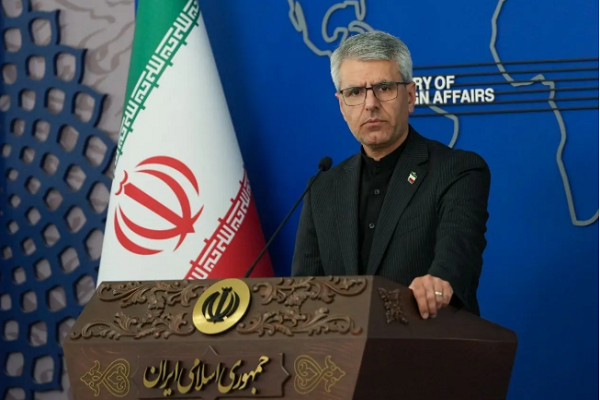
In comments delivered during his weekly press briefing on Monday, the spokesmaد described Graham as a figure who “defined his life philosophy through war, violence, and intimidation” and “took pride in being the greatest supporter of genocide and mass killing in our region.”
According to the spokesman, Graham leaves behind “nothing but a dark record in the minds of humanity.”
Regional Context and Public Mourning
The spokesman noted that the past week had been “a significant week for Iran and the region,” praising what he called the “magnificent presence” of the Iranian public during the farewell and funeral processions for the martyred Leader of the Islamic Revolution Ayatollah Seyed Ali Khamenei.
He said the world had witnessed “the grandeur of the Iranian nation.”
He also highlighted the “remarkable participation” of Iraqis in funeral ceremonies held in Najaf and Karbala, describing July 7 as “a day of brotherhood and solidarity between the Iranian and Iraqi nations.”
He added that “the enemies tried to extinguish the light, but during the farewell and funeral ceremonies we witnessed a surge of light rising from the hearts of millions.”
Justice, Accountability, and Iran’s Legal Pursuit
Responding to public demands for justice and retaliation against those responsible for the assassination of the Leader and other Iranian citizens martyred in recent conflicts, the spokesman emphasized that “pursuing justice for such heinous crimes is a principle that does not expire.”
He said combating impunity is “a recognized principle in international law,” and stressed that Iran will use “all international legal tools and opportunities” to document the crimes and pursue accountability.
He added that domestic legal processes are also essential, noting that the judiciary is “seriously fulfilling its responsibility” and that individual legal claims by families of victims of the two recent imposed wars form “a fundamental part of the justice‑seeking process.”
Source: MFA.ir


