


Vietnam Eyes Multi-Billion Dollar Muslim Travel Market with New Halal Push
IQNA – Vietnam is making more efforts to capture a slice of the global halal tourism industry, which is projected to be worth over $300 billion annually.
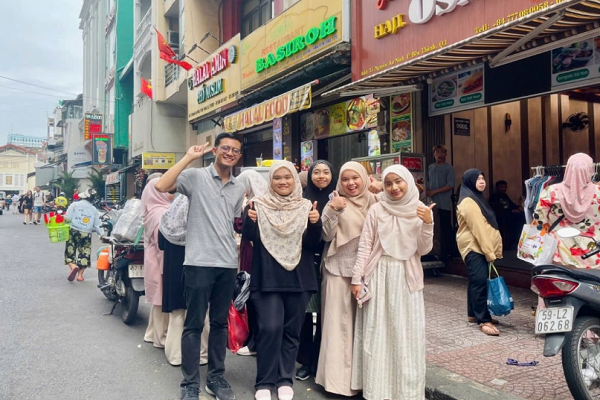
The country has signaled a stronger commitment to the Muslim travel market, using its first Vietnam Halal Tourism Conference 2026 to outline plans for a more coordinated Muslim-friendly tourism ecosystem.
Held in Nha Trang, the conference brought together government agencies, tourism authorities and industry leaders to discuss how the destination can better attract visitors from Southeast Asia, South Asia and the Middle East.
A key milestone is the introduction of Decree 127, Vietnam's first halal framework covering both exports and tourism.
“Decree 127 provides a clear and consistent certification system that will give tourism businesses greater confidence to develop Muslim-friendly products and services,” said Ramlan Osman, director of the Vietnam Halal Certification Authority (HALCERT).
The strategy is already gaining traction across the tourism sector.
At the conference, Vietravel signed a memorandum of understanding with HALCERT to strengthen its Muslim-friendly offerings through staff training, service standards, industry collaboration and the development of travel experiences tailored to Muslim travelers.
Read More:
Hotels are also beginning to invest in the segment. Wyndham Garden Legend Ha Long and Novotel Ha Long Bay have both received Muslim-friendly accommodation recognition, reflecting growing interest among hospitality operators to cater to the segment.
“Receiving Muslim-friendly recognition is an important step in making our hotel more accessible to international Muslim travelers,” said Elena Jiwon Han, general manager of Wyndham Garden Legend Ha Long.
“We see long-term potential in this market and believe it is important to be ready as demand continues to grow.” The hotel now offers Qibla direction signs, prayer mats in guest rooms and halal meal options upon request.
The timing coincides with continued growth in Muslim travel worldwide. According to the Global Muslim Travel Index 2026, international Muslim arrivals are projected to reach 196 million this year.
For Vietnam, the opportunity extends beyond offering halal food. As certification programs, staff training and industry partnerships expand, the focus is shifting towards creating a more comprehensive Muslim-friendly visitor experience.
“Vietnam still has work to do in expanding its network of halal-certified businesses and Muslim-friendly facilities, but the good news is the foundations are now being put in place,” said Ramlan.
“The next step is to build greater awareness across government, industry and the wider community so that halal becomes part of Vietnam's long-term tourism and economic strategy.”
Source: travelweekly-asia.com
