


Scholar Says Quran Offers a Comprehensive Framework for Building Just, Resilient Societies
IQNA – The Quran provides not only guidance for individual piety but also a complete blueprint for shaping a just and balanced society, an Iranian scholar has said.
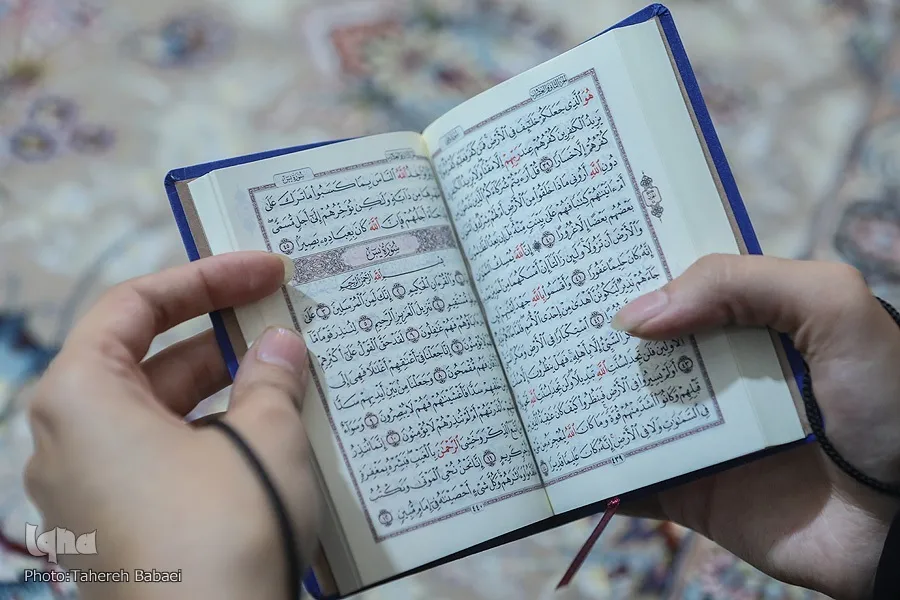

In an interview with IQNA, Seyyed Mohsen Mirsandsi, a university professor and researcher in the sociology of religion, said the Quran has been “a book of life and society-building from the very beginning of its revelation.”
Citing verse 25 of Surah Hadid—“Certainly We sent Our apostles with manifest proofs, and We sent down with them the Book and the Balance, so that mankind may maintain justice”—he noted that Quranic guidance includes both spiritual and civilizational dimensions.
Mirsandsi explained that the Quran links a monotheistic worldview to governance, justice, participation, and social order.
He recalled Allameh Tabatabaei’s view in Al-Mizan that justice in the Quran is not only an ethical principle but “the backbone of the social and political system,” adding that any structure lacking justice “has no legitimacy from the Quranic perspective.”
He said the Quran shapes the inner life of believers while guiding societies toward fairness, dignity, and balance.
Read More:
For this reason, Mirsandsi described the Quran as “a book of society,” regulating the relationship between human beings, God, one another, and nature through principles such as tawhid, justice, patience, gratitude, and piety.
When these values are embedded in public life, he said, a “sound society, upright in justice,” can emerge.
Asked how concepts like patience, justice, and gratitude become social foundations, the scholar said the Quran treats them as three pillars of collective strength.
“Patience,” he explained, is the basis of social resilience; “justice (qist)” shapes fair institutions; and “gratitude” preserves a community’s spiritual and material resources.
He emphasized that patience in the Quran is not passive endurance but “active steadfastness.”
Referring to verse 200 of Surah Al-Imran—“O you who have faith! Be patient, stand firm”—he said the commands move from personal endurance to collective resistance and cultural vigilance.
Martyr Morteza Motahhari, he noted, called patience “a dynamic force for a believing society, not a cause of stagnation.”
Read More:
Justice, Mirsandsi said, is the social expression of divine fairness. Verse 8 of Surah Ma’idah—“Be fair; that is nearer to Godwariness”—shows that justice is essential for collective righteousness.
When justice prevails, he said, inequality declines and social trust grows.
Gratitude, he added, is more than saying alhamdulillah. Citing verse 7 of Surah Ibrahim—“If you are grateful, I will surely enhance you [in blessing]”—he argued that social gratitude means protecting shared blessings, including knowledge, justice, and resources.
Drawing on Ayatollah Javadi Amoli’s interpretations, he said a grateful society uses its gifts for the common good and avoids waste and domination.
He added that the Quran presents “an algorithm for society-building”: patience sustains resilience, justice structures fairness, and gratitude maintains societal balance and progress.
4319721
