


Mahdism A Project of Islamic Society’s Moral Transformation
IQNA – The head of the Center for Interfaith Dialogue in Lebanon described Mahdism (awaiting the Savior) as a project of collective consciousness and moral transformation of the Islamic society.
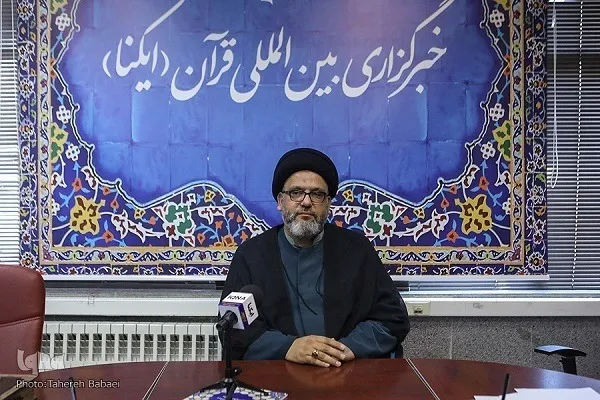
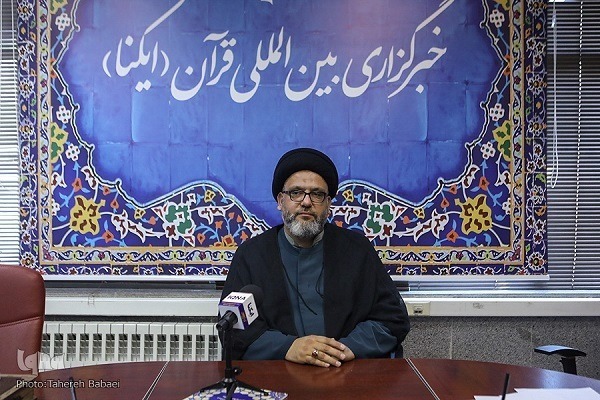
Sayed Ali al-Sayyid Qassem made the remark in an interview with IQNA on the occasion of the Mid-Shaaban Eid, which marks the anniversary of the birth of Imam Zaman (may God hasten his glad advent).
He emphasized that Imam Mahdi (AS) will not seek to repair a defective society, but rather to rebuild social relations based on justice and collective responsibility and return the oppressed from the margins to the center of history.
From this perspective, Mahdism is a criterion for criticizing the contemporary world; a criterion for measuring the level of justice and humanity of today’s social systems, he stated.
Asked about the social connection between the anniversary of the birth of Imam Mahdi (AS) and helping the oppressed, he said the Mid-Shaaban Eid is not merely a reminder of a blessed birth; it is also a time for social awakening in the course of human history.
“When the Holy Quran speaks of the oppressed, it does not introduce them as a marginal group, but rather places them at the center of social conflicts throughout history.”
He said naming Mid-Shaaban as the “International Day of the Oppressed” means that the birth of the Imam Zaman (AS) is the birth of an alternative social project; a project that aims to transform these structures, not adapt to them.
The cleric said the relationship of Imam Mahdi (AS) with the oppressed is not a purely emotional or moral one; rather, it is one based on collapse and reconstruction. “He does not come to repair a flawed society, but to rebuild social relations based on these principles:
• Justice, instead of privilege
• Human dignity, instead of imposed hierarchies
• Collective responsibility, instead of unbridled individualism
In this framework, the oppressed are no longer simply victims, but a historical and reclaimed force that returns to the context of decision-making and the path of civilization.”
He added that from a social perspective, the birth of Imam Mahdi (AS) is the announcement of the end of this model of the global system and the beginning of a new model in which morality returns to the social structure and society is built not on the basis of domination, but on the basis of justice.
He emphasized that commemorating the birth of the Imam (AS) is not a merely emotional ritual, but rather a conscious and social stance, reminding us that the liberation of humanity will not be achieved by power and technology, but by restoring the credibility of man - especially the oppressed - to the center of divine justice.
Sayed Ali al-Sayyid Qassem went on to say that from a deeper social perspective, the idea of Mahdism is a response to what can be called the “crisis of moral legitimacy of the world system”.
Today’s world is not faced with a lack of institutions, but with a lack of meaning, he stated.
“This is where the connection of Imam Mahdi (AS.) with the oppressed finds meaning; not only as a social class, but as a mirror of civilizational disorder. The oppressed is someone who, by his very existence, exposes the falsehood of the claim that the world automatically moves towards justice.
Read More:
“Mahdism fundamentally changes this logic and redefines concepts such as success, power, and superiority not based on possession, but on the moral function of man in society.
“From a social perspective, the Mid-Shaaban Eid is the day of announcing the end of the moral neutrality of history. In the Mahdist view, history is not a blind path of interests, but a law-based and meaningful path in which favoring the oppressed is a conscious divine choice, not an emotion or an accident. Therefore, commemorating the birth of Imam Mahdi (AS) poses a serious question to society: Where do we stand in the equation of oppression? Are we recreating it or are we walking on the path of its collapse?
“This question cannot be answered by holding rituals alone, but requires a transformation in social consciousness; a review of consumption patterns, hidden forms of power, and relationships that marginalize man in the name of custom, market, or habit.
“In this framework, Mahdism is not just a promise for the future, but a living standard for today's criticism; a standard by which we can measure the level of humanity of social systems.
“Therefore, the social dimension of the birth of Imam Mahdi (AS) is the birth of a permanent question within society: Does this society have the capacity for justice, or has it become complicit in oppression? And this question itself is the beginning of real preparation and preparation for the emergence.”
4332315
