


Hajj A Season of Unity, Political Resurrection for Islamic Ummah
IQNA – A Moroccan journalist and writer emphasized that Hajj is an opportunity to strengthen coexistence, acceptance of other cultures and openness to the customs and traditions of other nations.
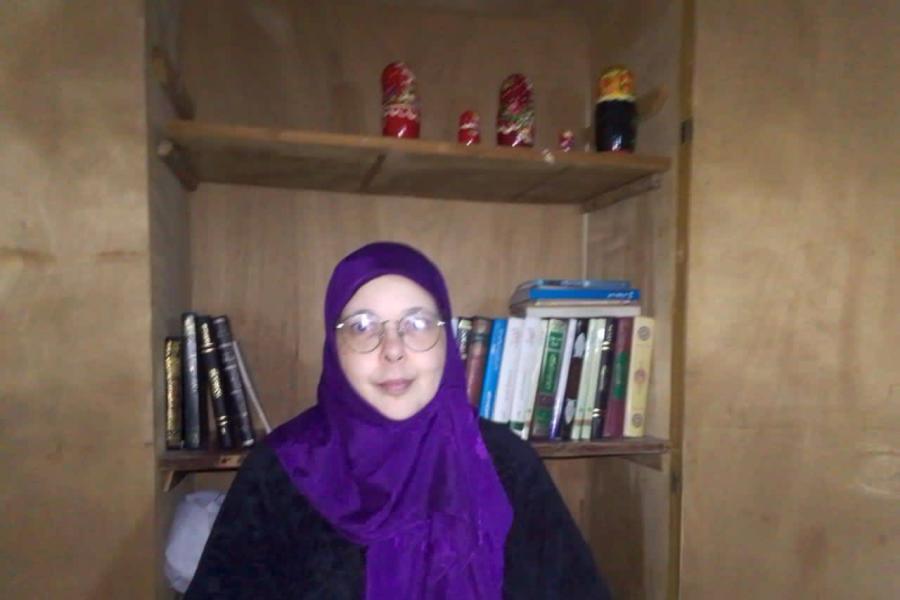
It is considered a season of great political and social unity and resurrection for the Islamic Ummah, Hayat Lalab said in an interview with IQNA as over 1.7 million pilgrims are performing the last rituals of Hajj 2026 in the holy city of Mecca.
Hajj is one of the religious rituals of Islam and a religious obligation that consists of a set of rituals and is performed through a journey to Mecca in the Hijaz. There, a Muslim performs a set of acts of worship that also have social, economic and political dimensions. Hajj is also the largest gathering of Muslims, when groups from all Islamic sects gather in Mecca during a specific season.
In order to highlight the role of Hajj in bringing Islamic sects closer together, the unity of the Islamic Ummah, the philosophy of this obligation, and its social and global effects, IQNA conducted an interview with Hayat Lalab, which is as follows:
IQNA: How do you evaluate the role of Hajj in bringing Islamic sects closer together and the unity of the Islamic Ummah?
Lalab: Hajj has various religious, political, economic, and cultural dimensions, and is a season in which Muslims of different languages, races, and sects come together. Islam teaches us that Hajj is a religious meeting place where the bonds of Muslim brotherhood with each other are strengthened, regardless of linguistic or religious differences; where all differences disappear and Muslims melt together in worship and monotheism. Imam Khomeini (may God be pleased with him) also emphasized that Hajj is a season of unity and great political and social resurrection for the Islamic Ummah.
IQNA: What is the philosophy of Hajj? Why do Muslims gather from all over the world and what effect does this journey have on the souls of pilgrims?
Lalab: Muslims gather from different parts of the world to fulfill a duty that God has made obligatory on all of them. Hajj is a great journey that has many meanings and is an annual conference in which Muslims gather in a holy land.
Read More:
In terms of the impact of Hajj on the souls of pilgrims, when they return to their countries, they have a stronger relationship with God Almighty than before. The rituals of Hajj nourish the soul and bring peace to the souls of pilgrims. Hajj also teaches us qualities such as humility, a sense of responsibility and other things that pilgrims learn on their journey to the Sacred House.
IQNA: What is the meaning of Wuquf (staying) in Arafat and Masha’ar al-Haram? What is the spiritual significance of these two places?
Lalab: Wuquf in Arafat is one of the pillars of Hajj, performed with the intention of drawing closer to Allah Almighty and in complete submission to Him. The Day of Arafat has many meanings that I cannot mention all of them, but I will mention some: The scene of Wquf in Arafat reminds us of the people standing before Allah Almighty on the Day of Judgment. Also, on this day, the verse of the completion of the religion (which is the guardianship of Imam Ali (AS)) was revealed. The greatest point in Arafat is that Imam Zaman (may Allah hasten his return) is present among the pilgrims and surrounds them with the blessings of his presence.
On the other hand, the pilgrims’ Wuquf in Arafat is an admission of sin and shortcomings before Allah Almighty, and the Day of Arafat is considered a day full of divine blessings and grace for the pilgrims.
IQNA: What does throwing the Jamarat (stones) symbolize? Why do pilgrims throw stones at certain pillars and what event in the life of Prophet Abraham (AS) does this act remind us of?
Lalab: According to a narration from Imam Ali (AS), the reason for throwing stones at people goes back to the story of Prophet Abraham (AS). When Angel Gabriel showed him the verses, Iblis (Satan) appeared before him and Gabriel ordered him to throw seven stones at him.
From throwing stones at Satan, we understand that this act is a symbol of resistance to evil. The same evil that manifests itself in the form of Satan, his followers, and anyone who calls people to other than the path of God.
IQNA: What is the philosophy of sacrificing on Eid al-Adha and distributing it to the needy?
Lalab: Sacrifice during Hajj is one of the obligatory acts of Hajj, according to which the sacrifice must be from among livestock such as sheep, cows, or camels.
Read More:
The sacrifice on the tenth of Dhul Hajjah is, on the one hand, an opening in the livelihood of families, and on the other hand, it shows attention to the needy and poor who have no power or strength; and these people are many, especially considering the large number of orphans, martyrs and wounded. Therefore, we must pay attention to these people and turn the Eid season into a holiday for the poor, orphans who lost their fathers in childhood, and women who lost their husbands without having a guardian or livelihood. Therefore, we must understand the concept of sacrifice with a deep and comprehensive manner.
IQNA: Tell us about Islam's advice to pilgrims to interact with each other in order to maintain unity and peace during the Hajj.
Lalab: Islam always encourages us to be good-natured, treat people well, and respect all age groups, and teaches us humility and mercy. As the Messenger of God (PBUH) said: “The most perfect believers in faith are the most virtuous.” One of the benefits of good morals is that the reckoning of deeds on the Day of Judgment becomes easy, and as Imam Sadiq (AS) said, God has chosen His prophets for the best morals. Therefore, Hajj is a field in which the believer is tested to prove the values of tolerance and forgiveness and to manifest the morals that Islam recommends.
IQNA: What are the social and global consequences of Hajj and how can it help strengthen solidarity among the Islamic Ummah and better understand different cultures?
Lalab: The Hajj season is an opportunity to strengthen coexistence, acceptance of other cultures, and openness to the customs and traditions of other nations. The Hajj is an annual event that brings together a large number of people from different countries around the world. Therefore, this event will be like a settlement in the heart of the desert where a set of cultures meet. Here, the pilgrims take advantage of this intersection so that this gathering becomes a platform for closeness and coexistence in a fraternal atmosphere.
4354805
