


RSF: Journalists in Gaza Faced Beatings, Sleep Deprivation over Their Reporting
IQNA – Five Palestinian journalists abducted from Gaza since October 7 have told Reporters Without Borders (RSF) that Israeli forces interrogated them specifically about their reporting and subjected them to mistreatment including beatings, prolonged shackling, and sleep deprivation.
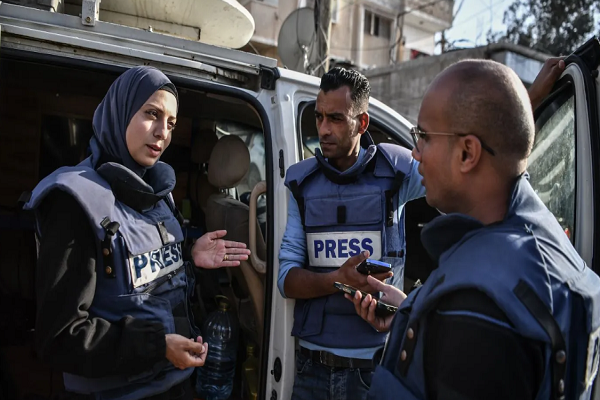
The journalists, who include Alaa al-Sarraj, Diaa al-Kahlout, Shadi Abu Sido, and Imad al-Ifranji, reported experiencing severe mistreatment, frequent interrogations regarding their media work, and significant physical and psychological abuse during their detention.
Abu Sido recounted that he was taken into custody while covering a story at al-Shifa Medical Complex on March 18, 2024, and endured 572 days in detention, being transferred between Sde Teiman, Ofer, and Ketziot prisons. Upon his release, he faced serious health issues, such as vision loss in one eye, scabies, seizures, insomnia, and a lack of appetite.
The report revealed that none of the five journalists have been able to resume their work after their release due to the physical and psychological repercussions of their detention. Sarraj, who spent 692 days in Israeli prisons, said that he lost his home, vehicle, media equipment, and the archive of his media organization.
The journalists explained that they clearly identified themselves as members of the press at the time of their detention in Gaza, yet they were still abducted and taken to Israeli detention facilities.
The RSF stated that the testimonies highlight the deliberate targeting of Palestinian journalists due to their professional activities, characterizing the interrogations and abuses as part of a systematic pattern of persecution.
The accounts provided by the abductees illuminate the characteristics of the interrogations they experienced, with investigators concentrating their inquiries on their media involvement, field reporting, and professional connections.
Shadi Abu Sido reported that an Israeli military intelligence interrogator inquired about media coverage in northern Gaza and sought information regarding journalists who reported on the events of October 7.
Alaa al-Sarraj similarly said that the interrogation sessions were centered on specifics pertaining to his professional background and relationships within Gaza, while Imad al-Ifranji and Diaa al-Kahlout faced numerous interrogation sessions conducted by Israeli security agencies.
The report highlighted that Israeli authorities abducted the journalists under the “unlawful combatants” law, which facilitated the prolongation of their detention through short court hearings conducted without the presence of legal counsel.
It also stated that the abductees encountered multiple rulings that extended their detention for indefinite durations, even after informing the courts of their status as journalists safeguarded by international law.
The organization reiterated its demand for the prompt release of all Palestinian journalists held by Israeli authorities, noting that 19 Palestinian journalists are still imprisoned, including two who were abducted in Gaza following October 7.
Source: Press TV
