


Cleric Highlights Hazrat Zeynab’s Monotheistic Perspective on Ashura
IQNA – A senior Iranian religious official described Hazrat Zeynab’s (SA) response to the governor of Kufa following the Battle of Karbala as a defining moment that reflects a deeply monotheistic understanding of the events of Ashura, framing the tragedy as a manifestation of divine beauty.
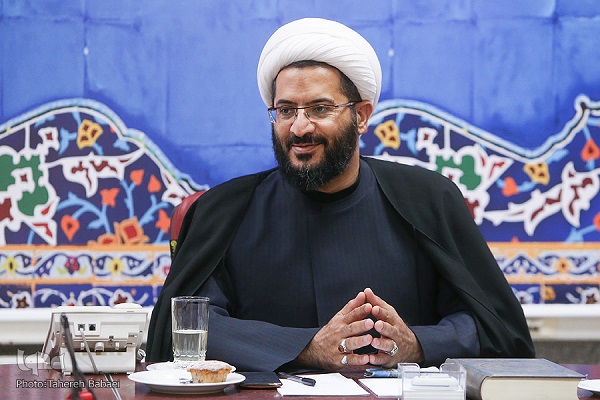
Addressing a specialized conference for women titled “From Karbala to Today; Iran’s Legacy, Zeynab's Path”, held in Rey, south of Tehran on Monday, Hojat-ol-Islam Gholamreza Adel, the Awqaf and Charity Affairs Organization’s deputy for cultural and social affairs, emphasized the pivotal role of Hazrat Zeynab (SA) in preserving the legacy of the Ashura movement, describing her response to the governor of Kufa as a profound expression of faith and submission to divine will.
He noted that historical accounts in Shia literature and chronicles of the Karbala event detail the period following the battle. He described the captivity of Prophet Muhammad’s (PBUH) household in Kufa, their confrontation with Ubaydullah ibn Ziyad, and their subsequent journey to Damascus as among the most painful chapters in Islamic history.
Hojat-ol-Islam Adel said that Hazrat Zeynab (SA) played an irreplaceable and decisive role in sustaining the Ashura movement, adding that according to scholars and historical sources, had it not been for Hazrat Zeynab (SA), the message of Karbala would have remained confined to that land and would not have been passed on to future generations.
One of the most enduring moments in history, he said, was her response to Ibn Ziyad’s taunt in the assembly of captives.
“When the governor asked, ‘Did you see what God did with your brother and your family?’—intending to humiliate the Prophet’s (PBUH) household, Hazrat Zeynab (SA) replied with composure and fortitude: ‘I saw nothing but beauty.’”
Hojat-ol-Islam Adel emphasized that this short sentence contains a vast ocean of divine knowledge.
“It has been recorded in history as one of the most lasting manifestations of insight, faith, and submission to God’s will.”
The cleric said that, from a surface perspective, Ashura is filled with tragedy—thirst, martyrdom, captivity, and the burning of tents. However, he said, from a spiritual and theological viewpoint, what occurred in Karbala was a manifestation of faith, sacrifice, and servitude to God.
“True beauty is not limited to outward appearances,” he said. “Inner and spiritual beauties hold a higher value, and Hazrat Zeynab (SA) interpreted the truth of Ashura through this very lens.”
Read More:
Despite enduring immense grief and suffering, Adel said, Hazrat Zeynab (SA) never showed weakness before the enemy, he said, noting that she stood with resolve and steadfastness, carrying out the great responsibility entrusted to her by Imam Hussein (AS) and delivering the message of Ashura to its final destination.
“This resilience has served as an enduring model for all freedom-seekers, particularly Muslim women throughout history,” he stated.
Hojat-ol-Islam Adel pointed to other enduring scenes from Karbala, including the night-long prayers and worship on the eve of Ashura and the loyalty of Imam Hussein’s (AS) companions. He cited the example of Hazrat Qassim ibn al-Hassan (AS), who, when asked by Imam Hussein (AS) about martyrdom, described it as sweeter than honey.
He also mentioned the resilience of a mother who, upon receiving the severed head of her martyred son, threw it back toward the enemy with defiance, declaring that what was offered in God’s path would not be taken back.
Translated by Seyed Hossein Beheshti Shakib
4361032
